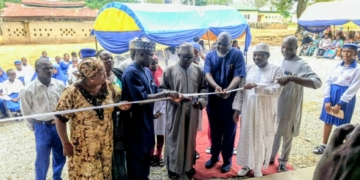
The Federal Government has relocated the operational headquarters of the National Agency for the Great Green Wall (NAGGW) from Abuja to Kano State in a major policy shift aimed at accelerating efforts to combat desertification, land degradation and climate change across Nigeria’s northern frontline states.
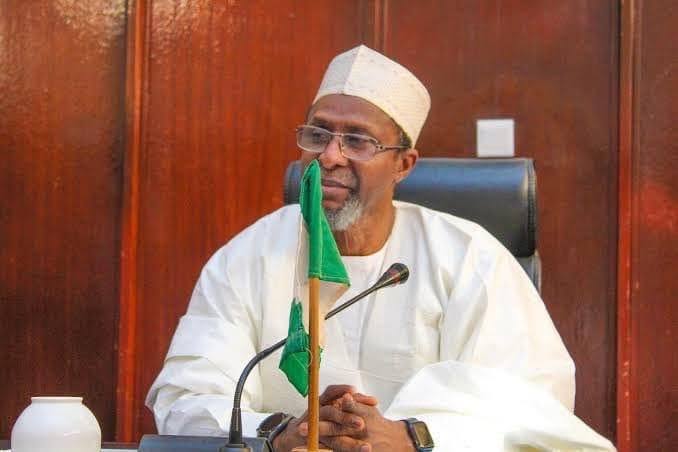
Minister of Environment, Balarabe Abbas Lawal, announced the relocation, yesterday, describing it as a strategic decision under President Bola Ahmed Tinubu’s Renewed Hope Agenda to position the agency closer to the communities and landscapes at the heart of its intervention programmes.
The minister said the agency will now operate from the Afforestation Programme Coordinating Unit (APCU) complex in Kano, a federal facility located within the Great Green Wall operational corridor, enabling more effective project monitoring, stronger collaboration with stakeholders and faster delivery of environmental restoration programmes.
According to him, the move is expected to strengthen the implementation of one of Africa’s most ambitious environmental initiatives, which seeks to halt the southward spread of the Sahara Desert while restoring degraded ecosystems and improving livelihoods in vulnerable communities.
“The relocation places the agency at the centre of its operations and brings decision-making closer to the people and communities directly impacted by desertification and climate change,” the minister stated.
The Great Green Wall Programme, an African Union-led initiative involving more than 11 countries across the Sahel region, targets 11 frontline states in Nigeria—Adamawa, Bauchi, Borno, Gombe, Jigawa, Kano, Katsina, Kebbi, Sokoto, Yobe and Zamfara.
Lawal noted that the agency’s mandate includes establishing a 15-kilometre-wide and 1,500-kilometre-long green belt across northern Nigeria to restore degraded lands, enhance food security, mitigate climate impacts and reduce poverty in rural communities.
Highlighting the agency’s achievements since its establishment, the minister said more than 100 shelterbelts have been created, while about 159 solar- and wind-powered boreholes have been constructed to improve access to water in arid communities.
He added that 600 youths have been engaged as forest guards, while 240 hectares of community orchards and woodlots have been developed to boost local incomes and support sustainable livelihoods.
The minister explained that the agency had previously operated from a rented office in Abuja, far from its core project locations, a situation he said limited operational efficiency and increased coordination challenges.
He noted that Kano’s APCU facility, originally established in 1988 under the World Bank-supported Arid Zone Afforestation Programme, offers permanent office accommodation and existing infrastructure capable of supporting the agency’s expanded activities.
Lawal said the relocation aligns with the Federal Government’s broader policy of situating agencies closer to their operational areas to improve service delivery, enhance accountability and ensure more direct engagement with beneficiaries.
He expressed confidence that the move would reinvigorate Nigeria’s contribution to the Great Green Wall initiative and strengthen environmental resilience across the country’s dryland regions, benefiting millions of people threatened by desertification, climate change and declining agricultural productivity.
We’ve got the edge. Get real-time reports, breaking scoops, and exclusive angles delivered straight to your phone. Don’t settle for stale news. Join LEADERSHIP NEWS on WhatsApp for 24/7 updates →
Join Our WhatsApp Channel