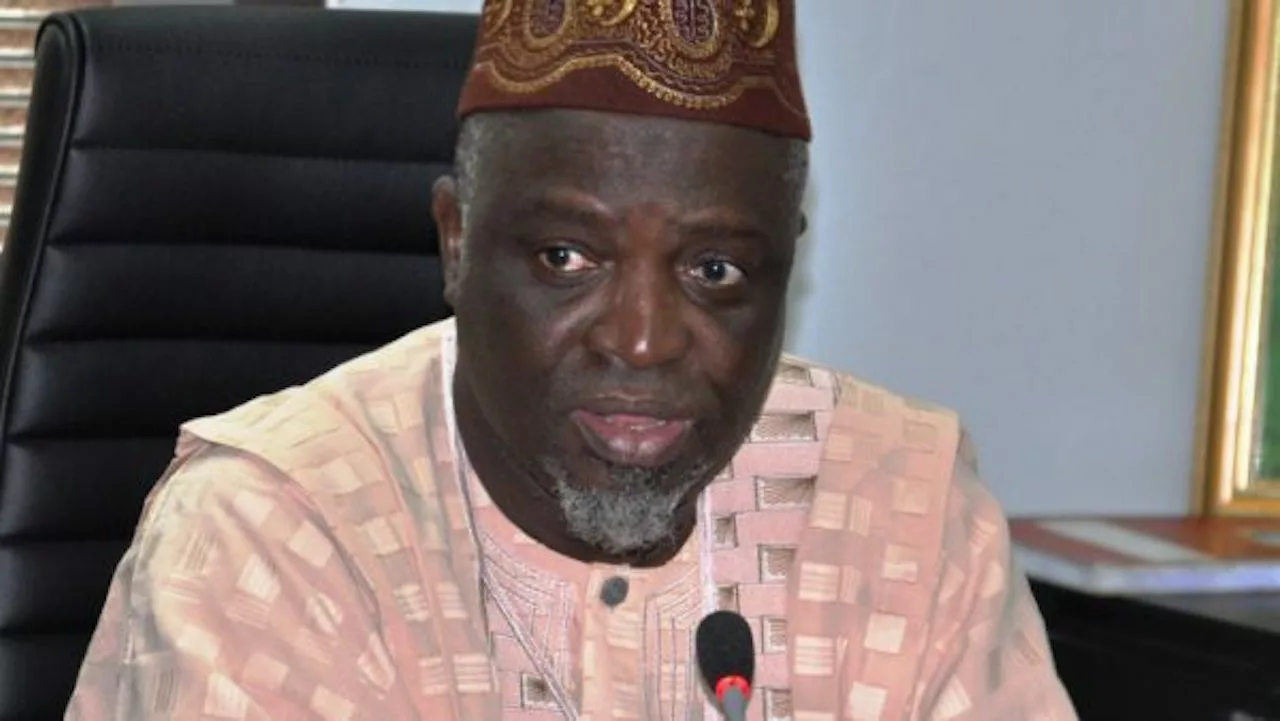
As Professor Is-haq Oloyede prepares to leave office as the Registrar of the Joint Admission and Matriculation Board (JAMB) on 31 July 2026, after nearly a decade, it is fitting to assess his stewardship and the legacy he leaves behind. In a public sector often criticised for ineptitude, opacity and poor accountability, Oloyede’s tenure stands out as an example of how committed and purposeful leadership can positively impact on an institution.
Oloyede was first appointed by former President Muhammadu Buhari in August 2016. He succeeded Professor Dibu Ojerinde, who had served for nine years in the position from 2007 until August 2016.
The professor of Islamic Studies and former Vice-Chancellor of the University of Ilorin assumed office at a time when JAMB was facing persistent concerns over examination malpractice, admission irregularities and operational inefficiencies. While some reforms had already begun before his arrival, his administration accelerated and consolidated efforts to modernise the Board and restore public confidence in its operations.
One of the most significant achievements of his tenure was the strengthening of the Computer-Based Test (CBT) system for the Unified Tertiary Matriculation Examination (UTME). Although CBT was not introduced by Oloyede, he deepened its implementation and standardisation, thereby reducing opportunities for large-scale examination malpractice. The system improved the speed of result processing, reduced human interference and enhanced the credibility of the examination process.
Oloyede also introduced and reinforced the Central Admissions Processing System (CAPS), which brought greater transparency to admissions into tertiary institutions. For years, tertiary admission processes were riddled with manipulation and a lack of accountability. CAPS introduced a more transparent system that allows candidates to track their admission status while ensuring that admissions are based on merit and institutional capacity. Though not without challenges, the platform has significantly reduced opportunities for arbitrariness and backdoor activities.
One area where Oloyede made a telling impact was in financial accountability. This singular act has stood him out in a country where financial integrity among public service officials is a scarce commodity. Under his leadership, JAMB emerged as one of the few government agencies recognised for substantial remittances to the Federal Government. Through tighter financial controls, the elimination of leakages and increased digitisation, the Board improved its financial performance and operational efficiency, leading to the reported remittance of over N6 billion in operating surplus in 2024. For a non-fund-generating agency of government, this was a statement in public accountability.
The Board under Oloyede also recommitted itself to fighting examination malpractice. It introduced stricter biometric verification measures, including fingerprint authentication during registration and examinations, to check the menace of impersonation. It also strengthened its monitoring of CBT centres and promptly sanctioned or blacklisted those found guilty of malpractice or technical non-compliance. All these measures helped to ensure merit rather than fraud in examination performance.
The outgoing registrar also embraced technology as a tool for improving service delivery. Registration, admission monitoring and result checking became increasingly digitised, thereby reducing bureaucratic bottlenecks and also making JAMB’s services more accessible to millions of candidates across the country. This digital transformation has contributed significantly to the Board’s reputation as one of the more technologically advanced agencies in the education sector.
Oloyede’s tenure was, however, not without blemishes. Despite substantial progress, technical glitches have occasionally marred JAMB examinations. Reports of internet server failures, login hitches, delayed questions, system crashes, long waiting hours and logistical difficulties at some CBT centres have frustrated candidates and parents on occasions. It is possible that these issues played a role in President Tinubu’s decision to appoint Professor Segun Aina, an expert in computer science and digital signal processing, as his successor.
Similarly, while CAPS has improved transparency, some stakeholders have expressed concerns about delays in admission approvals and the inability of some institutions to comply fully with admission timelines. However, these complaints do not diminish the value of the reforms but highlight areas that require further improvement.
Oloyede’s 10-year stewardship at JAMB will leave behind a legacy that is a marked upgrade on the one he inherited. It is not only more transparent and more accountable, but also more technologically driven and more financially disciplined.
The Board’s public rating generally improved during Oloyede’s tenure.
As he prepares to step down as JAMB chief executive, Oloyede has shown that effective leadership is about strengthening institutions and leaving them better equipped to tackle current and future challenges.
He has also demonstrated that when led with vision, discipline and integrity, public institutions can embrace reform and deliver better services to the citizenry.
Prof. Oloyede leaves behind the proverbial big shoes for his successor, who must consolidate the gains, address the identified deficits, and continue the process of institutional strengthening. It should not be the case that reforms are discarded just because their authors have exited the stage.
While his legacy will not be defined by perfection – and no one can achieve perfection – it will be remembered for meaningful reform, enhanced accountability and a determined effort to modernise one of Nigeria’s most important educational institutions.
It is no wonder that on his 70th birthday in October 2024, President Tinubu described Oloyede as an “uncommon scholar and exceptional administrator whose selfless sacrifices and innovative approaches to learning and leadership give hope for a brighter future,” adding that Nigeria owes him a debt of gratitude.
As a newspaper, we align with President Tinubu and all those who commend Oloyede for his committed service to the nation. We also urge other public office holders to take a leaf out of his book on how to serve the country when the opportunity arises.
We’ve got the edge. Get real-time reports, breaking scoops, and exclusive angles delivered straight to your phone. Don’t settle for stale news. Join LEADERSHIP NEWS on WhatsApp for 24/7 updates →
Join Our WhatsApp Channel