One recurring issue in discussions about Nigeria, nay, Africa, is endemic poverty, exacerbated by a lack of jobs. In Nigeria, unemployment and, to a large extent, underemployment are among the biggest challenges to economic growth and development.
With a population of over 220 million, nearly 70 per cent of whom are under 35 and largely unemployed, Nigeria is at its most dangerous pressure point. Something urgent must be done to avert the clear and looming danger.
Although the nation’s GDP has grown, this growth has yet to translate into sustainable employment for millions of young, able-bodied citizens who desperately need it. There is therefore an urgent need to address persistent unemployment.
It is estimated that about 3 million young Nigerians enter the labour market each year, even as the job market shrinks almost daily for various reasons.
Data from the National Bureau of Statistics show that a significant proportion of economically active Nigerians either cannot find work or are engaged in low-productivity informal activities that yield limited income.
What needs to be done to ensure the Nigerian economy can generate enough quality jobs to absorb the unemployed young people who are increasingly being used as cannon fodder by insecurity merchants?
Experts believe the only way out is for the nation to prioritise sectors such as manufacturing, agro-processing, construction, the creative industries, and the broader Micro, Small, and Medium Enterprises (MSMEs), which can absorb large numbers of workers.
Essentially, the MSME sector, which has remained the engine room of the nation’s economy, accounting for approximately 96 per cent of all businesses in Nigeria and nearly 84 per cent of total employment, is weighed down by a persistent lack of access to finance.
At the heart of Nigeria’s employment challenge is the mismatch between what educational institutions produce and what employers need. To address this, analysts argue that emphasis has to be placed on skills training by prioritising demand-aligned skills development.
This is the idea behind establishing the Kaduna State Institute of Vocational Training and Skills Development, where about 4,000 trainees recently graduated after months of intensive skills-acquisition training.
Interestingly, the trainees received intensive training in critical areas where Nigeria still imports skilled labour: welders, scaffolders, integrity testers, and construction workers. The Kaduna Institute developed 14 training manuals for the 14 trade areas at various levels, which have now become National Documents used nationwide.
Fundamentally, Kaduna can use the Institute to equip youths with skills that are useful in Kaduna, nationally competitive, and internationally relevant, to help close the intolerably high unemployment gap, with all its attendant consequences for poverty, crime, and insecurity.
The trainees were trained in 14 trades, including electrical installation, welding and fabrication, aluminium fabrication, computer hardware repair and maintenance, catering and hospitality, masonry, refrigeration and air conditioning, fashion design and garment making, carpentry and joinery, painting and decoration, tiling, plumbing and pipe fitting, solar installation, and automotive mechatronics.
It is interesting to note that training at the Institute is practical and complemented by theory, literacy, numeracy, entrepreneurship and soft skills, all geared towards preparing trainees for life in entrepreneurship and financial management.
Above all, the Institute operates three campuses, one each in Rigachikun, Soba and Samaru Kataf, providing access for all residents of the state across the three senatorial districts.
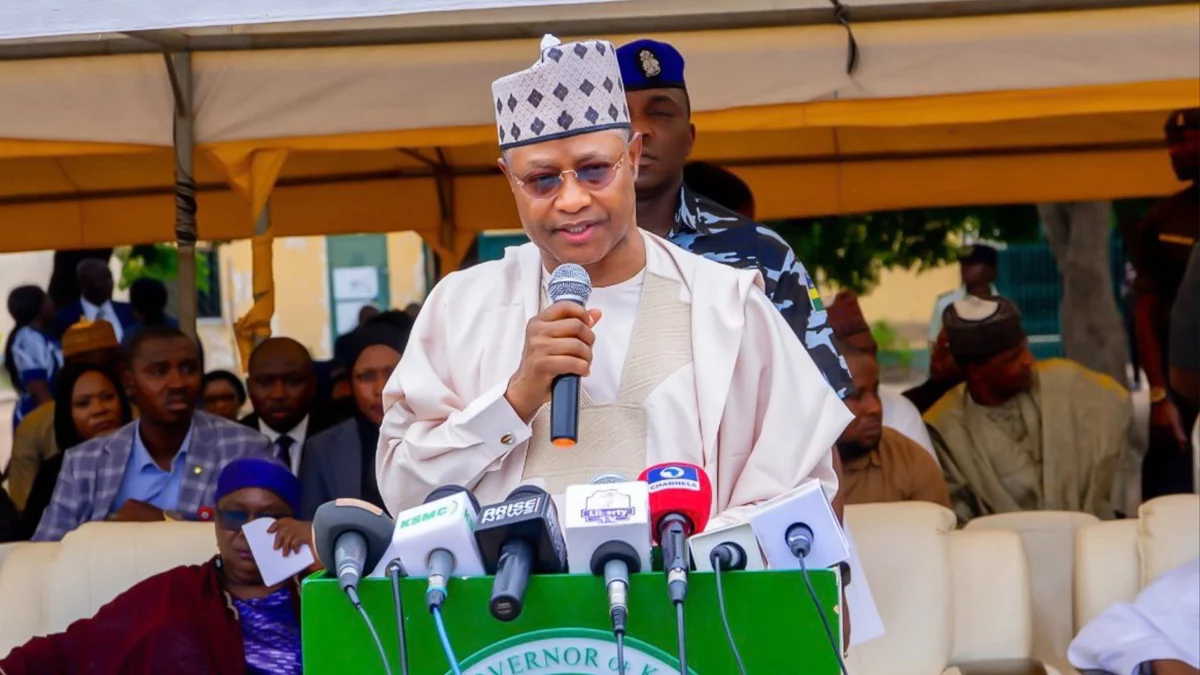
As Governor Uba Sani said in a speech at the graduation, the real measure of the Institute’s success will ultimately go beyond enrolment and graduation figures; it will be the number of graduates employed, enterprises created, incomes improved, contracts secured and communities transformed.
The governor said the trainees, having qualified for National Skills Qualification Level II, represented a new generation of skilled citizens, prepared to create value for themselves, their families, their communities and the wider economy.
He approved N200,000 per trainee for 4,050 trainees, totalling N810 million, to support their transition from training to productive work. For this gesture to have an impact, the beneficiaries must not only apply the training they have acquired effectively but also, ultimately, train others.
Efforts by successive governments to train and provide start-up tools to unemployed youths have not yielded the desired results because of the attitudes of some youths. The Kaduna State government must put in place monitoring mechanisms to ensure its efforts do not go the way of previous ones.
We’ve got the edge. Get real-time reports, breaking scoops, and exclusive angles delivered straight to your phone. Don’t settle for stale news. Join LEADERSHIP NEWS on WhatsApp for 24/7 updates →
Join Our WhatsApp Channel