
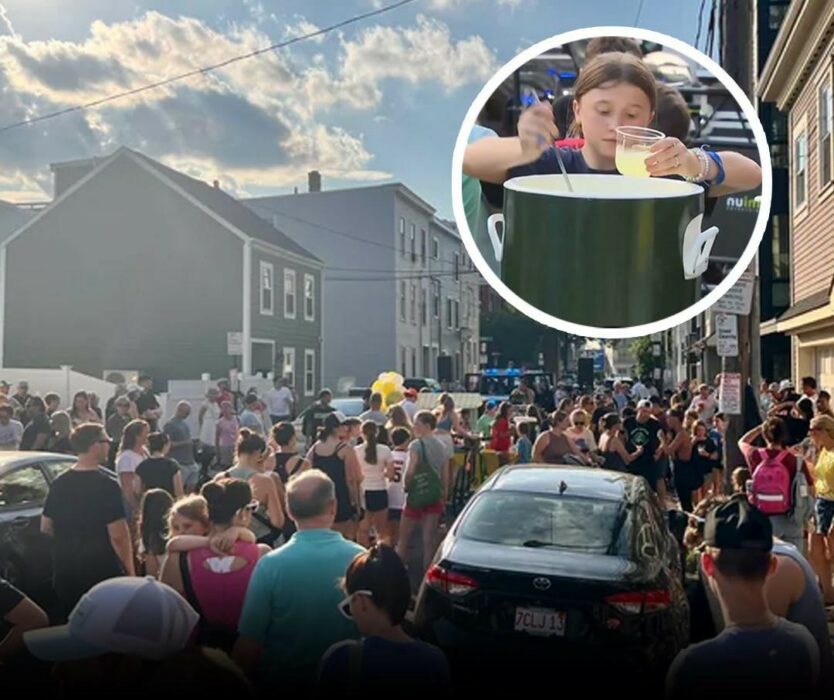
A small lemonade stand in South Boston, run by 12-year-old David Byrne and his 11-year-old sister Juliette, has become the centre of a disturbing robbery that quickly turned into a powerful story of community solidarity. The siblings were serving customers when two masked teenagers approached them. After briefly asking whether they accepted Apple Pay, one suspect reportedly grabbed their cash box while the other brandished what appeared to be a firearm. The attackers fled with about $50, leaving the children frightened and shaken.
What could have ended as a traumatic childhood memory, however, evolved into something unexpected: a wave of public compassion. Neighbours, local businesses, elected officials and hundreds of residents rallied around the children, reopening support for their lemonade stand and turning it into a symbol of resilience. Donations poured in, and many people visited simply to buy lemonade and encouraged the siblings. Authorities later arrested a 14-year-old suspect on charges including armed robbery and unlawful possession of a firearm, while investigations continued into a second suspect.
The story has drawn attention not only for its shock value but for how quickly a community responded with care rather than fear, restoring a sense of safety for the children involved.
It also recalls the quiet moral voice often associated with U.S. jurist Frank Caprio, who frequently emphasised empathy, accountability, and the human side of justice in everyday encounters. His philosophy, centred on understanding rather than punishment alone, echoes the way the community chose to respond: not just with outrage, but with restoration.
Yet beyond the United States, the incident also raises heavier reflections for other societies. Can such a story be read as a lesson for communities like ours, where the safety of children is not always guaranteed? In contexts where cases of child captivity and insecurity have left families grieving and fearful, the contrast is sobering. It asks a difficult question: what does community response look like when the victims are our own children? And how do we build systems where protection is not reactive, but constant?
From South Boston to elsewhere in the world, the lemonade stand incident becomes more than a crime story. It becomes a reminder that the measure of any society is not only in how it fails its children but how it chooses to respond when they are most vulnerable.
We’ve got the edge. Get real-time reports, breaking scoops, and exclusive angles delivered straight to your phone. Don’t settle for stale news. Join LEADERSHIP NEWS on WhatsApp for 24/7 updates →
Join Our WhatsApp Channel