
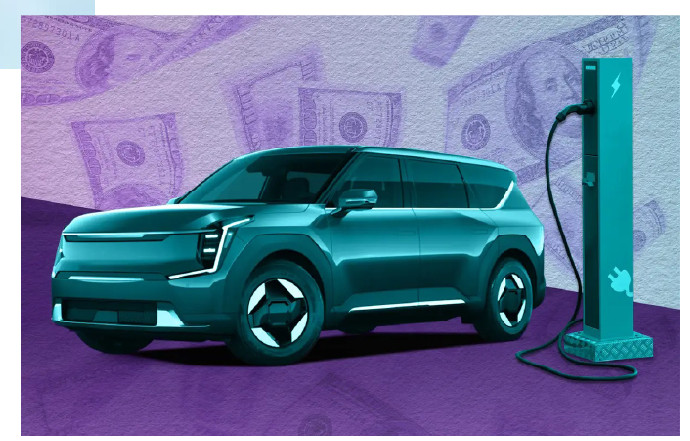
Nigeria is positioning itself to become a major player in Africa’s rapidly expanding electric vehicle (EV) industry through a combination of supportive government policies and significant private sector investments. Although the continent still faces major infrastructure and financing challenges, Nigeria is accelerating efforts to build a competitive EV ecosystem capable of capturing a meaningful share of Africa’s projected $314 million EV market by 2029.
According to the United Nations Economic Commission for Africa (UNECA), Africa’s EV market is expected to grow at a compound annual growth rate (CAGR) of 10.6 percent through 2029. Meanwhile, the continent’s EV charging infrastructure market is forecast to expand from about $31.9 million in 2022 to more than $256 million by 2030, highlighting the enormous investment opportunities ahead.
Nigeria’s strategy combines policy reforms with ambitious infrastructure development. The Federal Government recently expanded the Presidential Initiative on Compressed Natural Gas (PiCNG) to include electric vehicles, reinforcing national support for EV adoption and charging infrastructure. At the same time, the National Automotive Design and Development Council (NADDC) has partnered with South Korea and the Asian Economic Development Committee (AEDC) to establish large-scale EV manufacturing plants and fast-charging corridors across the country.
The project, aligned with Nigeria’s National Energy Transition Plan and National Automotive Industry Development Plan, is expected to produce up to 300,000 vehicles annually while creating approximately 10,000 jobs. Beyond manufacturing, it aims to develop local battery production, component manufacturing and charging infrastructure, strengthening Nigeria’s industrial base.
Private investors are also driving momentum. Possible Electric Mobility is constructing Africa’s largest EV charging hub in Abuja with the capacity to charge more than 1,000 vehicles daily, while LUG West Africa plans to deploy over 250 solar-powered charging stations across Lagos. The Energy Commission of Nigeria has equally commissioned hybrid charging stations powered by both the national grid and solar energy.
Expanding EV adoption could significantly reduce Nigeria’s dependence on imported refined petroleum products, lower transport emissions and stimulate growth in industries such as vehicle assembly, battery technology, charging services and maintenance. With sustained policy implementation and continued private investment, Nigeria is well positioned to emerge as one of Africa’s leading electric mobility and clean-energy manufacturing hubs over the coming decade.
We’ve got the edge. Get real-time reports, breaking scoops, and exclusive angles delivered straight to your phone. Don’t settle for stale news. Join LEADERSHIP NEWS on WhatsApp for 24/7 updates →