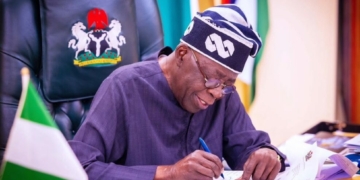
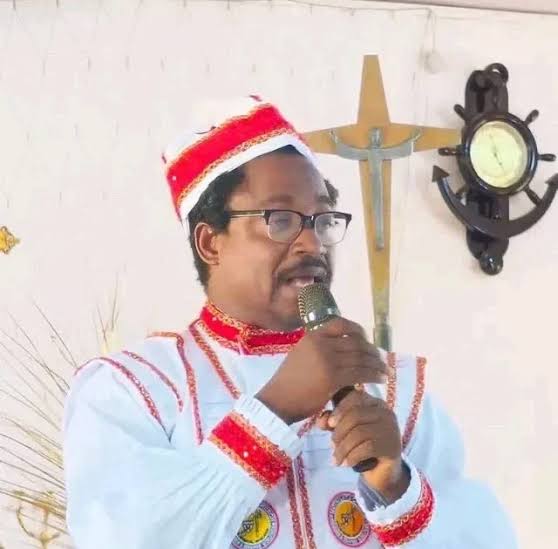
The Nigeria Christian Graduate Fellowship (NCGF) has appealed to President Bola Tinubu to withhold assent to the proposed prohibition of religious preaching in commercial vehicles clause under the Federal Road Safety Corps (Amendment) Bill, 2026.
The group made the appeal in an open letter, dated 21st July, 2026, written by its Directorate of Politics and Governance and addressed to President Tinubu.
The letter, signed by the president of NCGF, Prof. Ashong Ashong and Deacon Majemite Onasode was copied to the Senate President, Speaker of the House of Representatives, Secretary to the Government of the Federation, the Chief Justice of Nigeria and the Attorney-General of the Federation and Minister of Justice.
The letter partly reads:” On behalf of the Directorate of Politics and Good Governance of the Nigeria Christian Graduate Fellowship (NCGF), we write to respectfully convey our deep concern regarding the provision contained in the Federal Road Safety Corps (Amendment) Bill, 2026, which seeks to prohibit and impose sanctions on persons who preach, hawk, or engage in trading inside commercial vehicles.
“We recognise and commend the Federal Government’s commitment to promoting road safety and safeguarding the lives of Nigerians. Every responsible citizen supports reasonable measures to reduce avoidable road accidents and maintain public order. Nevertheless, such measures must remain firmly anchored in the Constitution of the Federal Republic of Nigeria, 1999 (as amended), which is the supreme law of our nation.
“It is our considered opinion that the proposed provision, if signed into law in its current form, raises significant constitutional, legal, and human rights concerns. In particular, it has the potential to criminalise peaceful religious expression, especially Christian evangelism, while exposing the law to selective implementation and unequal application among Nigeria’s diverse religious communities.
“For Christians, evangelism is not merely a voluntary religious exercise; it is a sacred obligation commanded by our Lord Jesus Christ. Consequently, any attempt to restrict peaceful evangelism touches not only constitutional liberties but also the deeply held convictions of millions of Nigerian Christians.”
The body expressed its opposition to any legislation that would criminalise peaceful religious preaching in commercial vehicles without clear and compelling evidence that such preaching, in itself, constitutes a threat to public safety.
While noting that road safety is a legitimate governmental objective, the body said, however, that it must never become a justification for restricting or suppressing the fundamental rights guaranteed by the Constitution.
“The impugned provision appears overly broad, unnecessary, and capable of infringing constitutionally protected freedoms.
“While government may regulate conduct that genuinely endangers public safety, it should not prohibit peaceful communication merely because it occurs inside a commercial vehicle.
“The Fellowship is concerned that this provision could disproportionately affect Christian evangelism while similar public religious activities by adherents of other faiths may escape equal scrutiny or enforcement.
“Our position is not directed against any religion or religious community. Rather, we affirm the constitutional principle that every Nigerian is equal before the law.
“If the Government considers certain public religious activities capable of creating road safety concerns, then every comparable activity—whether religious, political, commercial, or social—that obstructs traffic or endangers public safety should be regulated using the same legal standard, without fear, favour, discrimination, or selective enforcement. Justice must not only be done; it must also be seen to be done,” it added.
We’ve got the edge. Get real-time reports, breaking scoops, and exclusive angles delivered straight to your phone. Don’t settle for stale news. Join LEADERSHIP NEWS on WhatsApp for 24/7 updates →
Join Our WhatsApp Channel