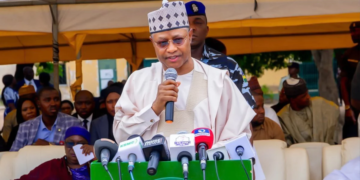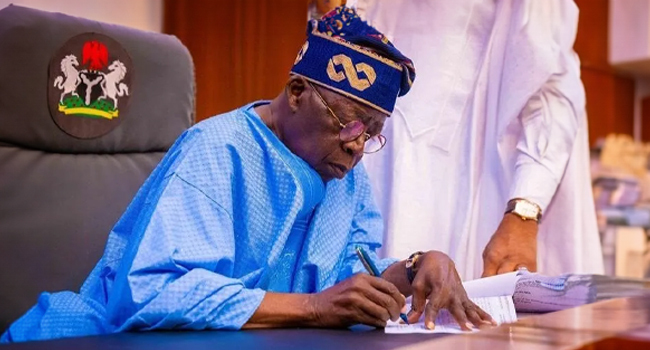
The recent forfeiture of 48 properties linked to a former Attorney-General of the Federation and Minister of Justice, Abubakar Malami, is another significant development in Nigeria’s evolving asset recovery efforts. Beyond the personalities involved, the case reflects a broader national conversation about how Nigeria manages public resources, enforces accountability and prevents the misuse of state power. While recovering allegedly diverted assets is necessary, it cannot become the primary measure of success in the fight against corruption.
Nigeria’s anti-corruption campaign has, over the years, followed a familiar pattern. It often begins with the announcement of a major investigation, followed by the identification of assets linked to politically exposed persons. Court orders are then obtained, and headlines celebrate the recovery of billions of naira, millions of dollars and valuable properties. These recoveries are important milestones in the fight against corruption. They demonstrate that public officials who abuse their positions can eventually be held accountable. The critical question, however, is whether asset recoveries address the root causes of corruption or merely treat the symptoms of a deeper institutional failure.
Nigeria’s illicit asset forfeiture between 2015 and 2026 reveals a significant transformation. The country has moved from a largely fragmented and politically contested approach to one that is increasingly institutionalised, supported by stronger legal frameworks and more coordinated enforcement mechanisms. The administration of former President Muhammadu Buhari laid important foundations, particularly through legislative interventions such as the Proceeds of Crime Act (POCA) 2022 and efforts to secure the repatriation of stolen assets from foreign jurisdictions, including recovered Abacha-era funds.
The administration of President Bola Tinubu has continued and expanded asset recovery efforts, with the Economic and Financial Crimes Commission (EFCC) placing asset recovery at the centre of its anti-corruption strategy. Between 2023 and 2025, the country reportedly recovered hundreds of billions of naira, hundreds of millions of dollars and thousands of properties. The reported recovery of about N566 billion, $411 million and 1,502 properties within two years, including more than N364 billion recovered in 2024 alone, suggests a renewed emphasis on tracing and reclaiming illicit wealth.
In a country where corruption has weakened public institutions and deprived citizens of essential services, recovering stolen resources is a necessary step towards restoring accountability. It reinforces the principle that public office is a public trust, not an opportunity for personal enrichment.
However, the danger is that Nigeria may become trapped in a cycle where corruption flourishes, assets are stolen, investigations begin years later, and recovered resources are celebrated as evidence of progress. A country cannot recover its way out of corruption. The ultimate objective should not simply be to recover what has been stolen but to create systems that make the theft of public resources far more difficult in the first place.
The central challenge is institutional reform. Nigeria’s corruption problem has never been caused solely by dishonest individuals; it has also been sustained by weak systems that allow abuse to occur. Public procurement processes remain vulnerable to manipulation. Oversight institutions often lack adequate capacity and independence. Financial accountability mechanisms are sometimes reactive rather than preventive. The prolonged prosecution of corruption cases also weakens deterrence, as lengthy legal battles erode public confidence in the justice system.
Furthermore, transparency in the management of recovered assets remains a major concern. Nigerians have repeatedly asked important questions: Where are recovered funds kept? How are they allocated? Who monitors their utilisation? There have also been media reports of suspected misappropriation of properties seized by anti-corruption and security agencies. Without clear and publicly accessible mechanisms for tracking recovered assets, resources recovered from one form of corruption could easily become vulnerable to another form of mismanagement.
The government must therefore ensure that asset recovery is accompanied by stronger accountability structures. Recovered funds should be transparently managed and channelled into projects that directly improve citizens’ welfare. The public should be able to trace the journey of recovered resources from court judgment to final utilisation. Transparency is not merely a public relations exercise; it is essential to rebuilding public trust.
Nigeria must also strengthen preventive mechanisms. The digitalisation of government transactions, improved procurement monitoring, stronger whistle-blower protection, more effective auditing systems and greater independence for anti-corruption agencies are all necessary if the country is serious about reducing corruption. The goal should be to build institutions that function effectively regardless of who occupies political office.
The fight against corruption cannot depend solely on the courage or commitment of individual leaders. Sustainable progress requires institutions that are strong enough to prevent abuse, detect wrongdoing early and ensure that offenders face consequences. Asset recovery should therefore be viewed as one component of a broader governance reform agenda, not as its final destination.
The recovery of billions of naira, foreign currencies and properties from individuals accused of abusing public trust is encouraging. But the true victory against corruption will not be measured by the value of assets recovered; it will be measured by whether Nigeria has built a system in which such assets can no longer be easily stolen.
Furthermore , the country must ensure that the next phase of the anti-corruption struggle must move beyond recovering stolen wealth to preventing the theft of public resources. Only through genuine institutional reform can the country break the cycle of corruption, recovery and repetition.
We’ve got the edge. Get real-time reports, breaking scoops, and exclusive angles delivered straight to your phone. Don’t settle for stale news. Join LEADERSHIP NEWS on WhatsApp for 24/7 updates →
Join Our WhatsApp Channel