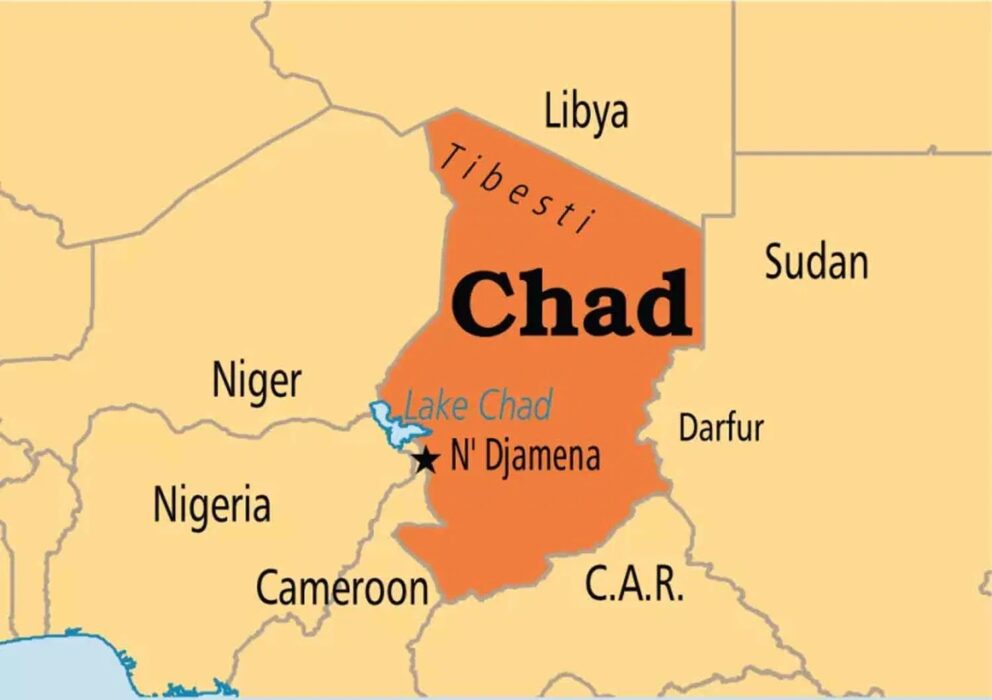
Chad has announced plans to begin the process of withdrawing from the International Criminal Court (ICC), citing concerns over what it described as the court’s limited effectiveness and uneven application of international justice.
The announcement, made on Monday, would make Chad the latest country to seek an exit from the Hague-based tribunal established to prosecute individuals accused of genocide, war crimes, crimes against humanity and the crime of aggression.
A government spokesman said the decision followed a comprehensive review of the ICC’s performance since it began operations more than two decades ago.
“This decision is the result of an in-depth review of the functioning of the International Criminal Court since it began operating in 2002, as well as its record whose effectiveness remains limited and uneven across different regions,” the spokesman said in a statement.
Under the Rome Statute, the treaty establishing the ICC, Chad’s withdrawal will not take effect immediately. The country must first submit formal notification to the United Nations Secretary-General, after which the withdrawal will become effective one year later. However, investigations or proceedings initiated before the withdrawal takes effect can still continue.
Chad signed the Rome Statute in 1999 and ratified it in 2006, becoming one of the African states that joined the court in its early years.
Although the Chadian government has not outlined detailed reasons beyond its official statement, the decision comes amid growing dissatisfaction with the ICC among several African and Sahel countries, many of which argue that the court has disproportionately focused on Africa while failing to pursue alleged crimes involving more powerful nations with equal vigour.
For years, African leaders have criticised what they see as selective justice by the ICC. While the court has opened investigations in different parts of the world, many of its earliest and most prominent cases involved African countries, including Sudan, Kenya, Libya, Uganda and the Democratic Republic of Congo. Critics argue that this has fuelled the perception that international justice is applied unevenly depending on a country’s political influence.
Chad’s announcement also follows similar moves by Mali, Burkina Faso and Niger, whose military-led governments have declared their intention to withdraw from the Rome Statute, accusing the court of being influenced by foreign interests and applying justice selectively.
The development reflects a broader political realignment across the Sahel, where several governments have distanced themselves from traditional Western alliances while emphasising national sovereignty and greater regional autonomy.
Analysts also believe concerns over sovereignty may have influenced Chad’s decision. Like several countries in the region, Chad continues to battle armed insurgencies and internal political challenges, with some governments arguing that domestic judicial institutions should have primary responsibility for handling such matters rather than international courts.
The announcement also comes at a time when the ICC is facing renewed political scrutiny over some of its investigations involving influential global leaders and states.

If Chad completes the withdrawal process, it will join a small group of countries that have either withdrawn from the ICC or attempted to do so.
Burundi became the first country to officially leave the ICC in 2017 after the court began investigating alleged crimes committed during political violence that followed the country’s 2015 crisis. The Burundian government accused the court of unfairly targeting African nations.
The Philippines formally withdrew from the ICC in 2019 after the court opened a preliminary examination into former President Rodrigo Duterte’s anti-drug campaign, which rights groups alleged resulted in thousands of extrajudicial killings. Duterte’s administration rejected the court’s jurisdiction, describing the investigation as interference in the country’s internal affairs.
South Africa announced plans to withdraw from the ICC in 2016 after a diplomatic dispute over its refusal to arrest former Sudanese President Omar al-Bashir during an African Union summit. However, the country’s Constitutional Court ruled the withdrawal process unlawful because it lacked parliamentary approval, prompting the government to revoke its notice.
The Gambia also announced plans to leave the ICC in 2016 under former President Yahya Jammeh, alleging that the court was biased against African countries. The decision was reversed after a new government assumed office.
More recently, Hungary initiated the process of withdrawing from the ICC in 2025 following disagreements over the court’s arrest warrant for Israeli Prime Minister Benjamin Netanyahu, becoming the first European Union member state to begin the withdrawal process.
Analysts say Chad’s planned withdrawal could further weaken the ICC’s influence across Africa, where the court relies heavily on cooperation from member states to investigate cases, arrest suspects and enforce its rulings.
Human rights organisations have warned that continued withdrawals could undermine international accountability for war crimes and crimes against humanity, potentially limiting access to justice for victims of conflict.
However, supporters of the move argue that African countries should strengthen their own judicial systems and regional legal institutions instead of depending on an international court they believe has applied justice inconsistently.
Chad’s withdrawal process is expected to commence with formal notification to the United Nations. Until the one-year withdrawal period expires, the country will remain a full member of the ICC and will continue to be bound by its obligations under the Rome Statute.
We’ve got the edge. Get real-time reports, breaking scoops, and exclusive angles delivered straight to your phone. Don’t settle for stale news. Join LEADERSHIP NEWS on WhatsApp for 24/7 updates →
Join Our WhatsApp Channel