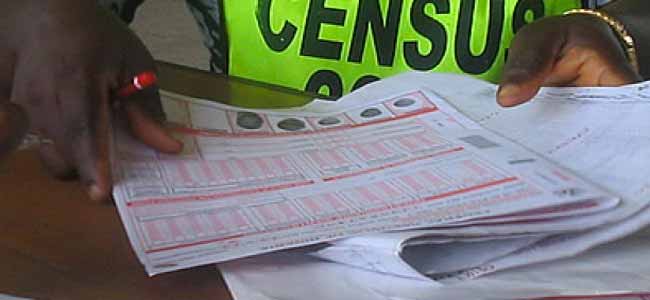
At the commemoration of this year’s World Population Day, former Kano State Governor, Rabiu Musa Kwankwaso, urged the Federal Government to conduct a credible, transparent and technology-driven national population and housing census without further delay.
According to him, the continued reliance on outdated population figures has hampered effective planning and informed decision-making across critical sectors of the economy.
His call has once again brought to the fore the urgent need for Nigeria to conduct a national census, an exercise that has been repeatedly postponed despite years of preparation and huge public expenditure.
The National Population Commission (NPC) is constitutionally mandated to conduct population and housing censuses and manage other demographic issues in Nigeria.
The importance of a credible census cannot be overstated, particularly in an era driven by technology, data and evidence-based policymaking. Reliable population statistics are indispensable for effective governance, national security, infrastructure development, healthcare delivery, educational planning, employment generation and the equitable distribution of resources.
Nigeria has not conducted an official population and housing census since 2006. Over the past two decades, successive administrations have postponed the exercise due to funding constraints, logistical difficulties, security concerns and political considerations.
As a result, Africa’s most populous nation continues to rely on estimates and projections rather than verified population data.
Despite the repeated postponements, the National Population Commission has undertaken several preparatory activities. These include Enumeration Area Demarcation (EAD), a trial census, the procurement of digital equipment and the training of census personnel.
According to the Commission, Enumeration Area Demarcation is the process of dividing the country into smaller geographical units with clearly defined and identifiable boundaries known as Enumeration Areas (EAs).
This ensures that every part of the country is covered without overlaps or omissions during the census exercise.
The proposed census is expected to collect comprehensive data on household composition, migration, birth registration, literacy, nationality, persons living with disabilities, economic activities, fertility, mortality, housing conditions, access to basic amenities and information and communication technology.
Such information would provide policymakers with an accurate picture of Nigeria’s demographic realities and development needs.
Many Nigerians expected President Bola Ahmed Tinubu’s administration to announce a fresh date for the census, particularly after the Federal Government made further budgetary provisions for the exercise.
Besides Kwankwaso, numerous stakeholders, including development experts, economists and civil society organisations, have continued to express concern that Nigeria has gone nearly two decades without a national census.
The concern is understandable. The United Nations Population Fund (UNFPA) recommends that countries conduct population censuses at least once every ten years. Nigeria has already exceeded that benchmark by a considerable margin, making its demographic data increasingly outdated and less useful for national planning.
Experts maintain that although the census is long overdue, it remains one of the most important tools for effective governance.
Accurate population figures enable governments to prepare realistic budgets, allocate resources fairly, determine infrastructure needs and formulate policies based on facts rather than assumptions.
In the absence of current census data, Nigeria has continued to depend on projections produced by international organisations, development partners and independent research institutions. While these estimates are useful, they cannot substitute for a comprehensive national census conducted by the appropriate government agency.
The 2006 Population and Housing Census recorded Nigeria’s population at 140,431,790. The exercise was regarded as a technological improvement on previous censuses, as it incorporated satellite mapping, Global Positioning System (GPS) technology and digital fingerprint scanners.
Since then, however, population estimates have varied considerably. The National Bureau of Statistics (NBS) projected Nigeria’s population at 216.8 million in 2022, comprising 108.35 million males and 108.43 million females.
Earlier, the United Nations estimated the country’s population at about 211 million in 2021, while the World Bank placed it at approximately 213 million during the same period.
More recent estimates by Worldometer indicate that Nigeria’s population has exceeded 221 million, whereas the United Nations projects it to be well above 223 million.
These discrepancies highlight the consequences of relying on projections rather than verified census figures. They also create uncertainty for governments, investors, researchers and development partners who depend on accurate demographic information for planning and investment decisions.
This newspaper recalls that the 2006 census itself generated controversy, with several states, particularly Lagos State, disputing the final figures on the grounds that their populations had been significantly undercounted.
Such disputes have continued to fuel public scepticism about the credibility of census exercises in Nigeria.
According to the International Centre for Investigative Reporting (ICIR), the absence of updated official data has compelled many research organisations to generate their own estimates.
The situation extends beyond population statistics. For example, uncertainty still surrounds Nigeria’s unemployment figures, as official labour market data have not always been updated consistently, leaving policymakers and investors with incomplete information.
It is equally noteworthy that substantial public funds have already been committed to preparations for the census.
During the administration of former President Muhammadu Buhari, cumulative allocations reportedly approached N200 billion, covering mapping, demarcation, technology acquisition, training and other logistical requirements. Yet, despite these enormous investments, the exercise has remained on hold.
This newspaper believes that one of the greatest obstacles to a successful census in Nigeria is political interference. Population figures have often been viewed through the prism of political representation, revenue allocation and electoral advantage rather than as a statistical exercise intended to support national development.
This perception has undermined public confidence and complicated the process.
For the forthcoming census to succeed, the Federal Government must guarantee the independence of the National Population Commission and ensure that the exercise is transparent, technology-driven and insulated from political manipulation.
Adequate security, sufficient funding and robust public enlightenment campaigns should also be prioritised to encourage nationwide participation.
Ultimately, an accurate census is not merely about determining how many people live in Nigeria. It is about providing the reliable data required for sound economic planning, improved public service delivery and sustainable national development.
The Federal Government must therefore demonstrate the political will to conduct a credible census without further delay. Nigeria cannot continue to build its future on outdated figures and estimates.
A transparent and universally accepted census is essential if the country is to plan effectively for the needs and aspirations of its growing population.
We’ve got the edge. Get real-time reports, breaking scoops, and exclusive angles delivered straight to your phone. Don’t settle for stale news. Join LEADERSHIP NEWS on WhatsApp for 24/7 updates →
Join Our WhatsApp Channel