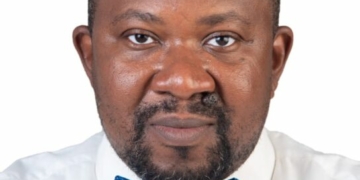
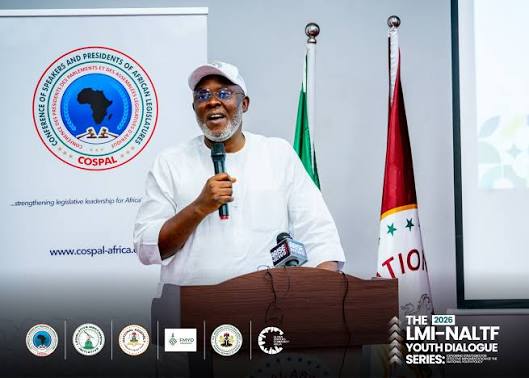
The executive secretary of the National Assembly Library Trust Fund (NALTF) and chairman of the Legislative Mentorship Initiative (LMI) Hon. Henry Nwawuba, has canvassed deliberate measures to bridge the gap between Africa’s youthful population and its low representation in parliamentary institutions.
Nwawuba, in a goodwill message delivered on his behalf by Dr Matthew Koka at a town hall organised to commemorate the 2026 International Youth Day yesterday in Abuja, said young people constitute more than 60 per cent of Africa’s population but remain disproportionately represented in legislative chambers.
He stressed that African parliaments must bridge the gap between demographic realities and legislative decision-making.
According to him, greater youth participation is necessary for African parliaments to remain innovative, responsive and capable of addressing contemporary economic and technological challenges.
Nwawuba said meaningful youth participation in governance requires deliberate pipeline development, evidence-based research, structured mentorship and direct access to governance frameworks.
“This is precisely why the work of the Legislative Mentorship Initiative is so indispensable. LMI is actively developing the next generation of ethical, knowledgeable and reform-minded public citizens, equipped to strengthen institutional capacity across Nigeria and Africa,” he said.
He said NALTF considers its partnership with LMI vital to its mandate, noting that institutional knowledge, parliamentary research and capacity development are essential to strengthening the legislative process.
Nwawuba said the town hall marked two significant milestones: the launch of a policy brief on the state of youth representation in African parliaments and the unveiling of the LMI 2026 call for applications.
He urged young leaders to remain committed to learning, public policy and institutional reform, saying structured learning would equip them with the skills and talents required for effective leadership. He also reaffirmed NALTF’s continued support for the LMI partnership.
Also speaking, the Secretary-General of the Conference of Speakers of African Legislatures (CoSPAL), Dapo Oyewole, said African countries must deliberately train and equip young people before entrusting them with public leadership responsibilities.
Oyewole described leadership as a discipline requiring preparation, mentorship and deliberate investment, rather than a position individuals should assume without the requisite knowledge and skills.
“If no nation will send a soldier to the battlefield without training or equipment, why then do we send leaders into public office without training and equipping them for the solid responsibilities of leadership?” he asked.
He said the LMI, founded by former Speaker of the House of Representatives and current Chief of Staff to the President, Rt. Hon. Femi Gbajabiamila, was established to ensure that Africa’s future leaders emerged through deliberate preparation.
Citing the Inter-Parliamentary Union’s 2025 report, Oyewole said only 2.8 per cent of the world’s parliamentarians were aged 30 or below, while more than one-third of parliamentary chambers had no member within that age bracket.
He said the situation was troubling at a time when half of the world’s population was under 30 and Africa remained the youngest continent.
“Africa’s youth cannot afford to be powerless characters in the story of our continent. In fact, you all must be the authors of Africa’s story,” he said.
Oyewole said LMI had graduated 218 fellows over the past five years, while it received more than 7,000 applications for only 50 fellowship positions in 2025, describing the figures as evidence that young people were interested in public service but faced limited opportunities.
He said inclusion remained central to LMI’s mission, particularly the inclusion of youths, women and persons living with disabilities, adding that the 2026 International Youth Day theme, “Different Contexts, Common Aspirations,” reflected the initiative’s efforts to create pathways for young Africans to rise, serve and lead.
Oyewole also announced CoSPAL’s support for the candidacy of Maryam Bukar Hassan for the position of African Union Youth Envoy.
He described Hassan as a prominent young African leader with a strong record in peacebuilding and youth advocacy, noting that she had supported LMI from its inception in 2022.
According to him, Hassan’s track record and commitment to young people made her a strong candidate for the continental position.
“We proudly today announce our support for her candidacy for African Union Youth Envoy. I personally, knowing her, cannot think of a more powerful voice for Africa’s youth at the African Union and across the world,” he said.
He urged stakeholders committed to placing young people at the centre of Africa’s development to support her candidacy.
In her keynote address, United Nations Global Ambassador for Peace and Security, Maryam Bukar Hassan, said Africa did not have a youth potential problem but faced challenges of participation, mobility, economic dignity, implementation and trust.
Using the imagery of a parliamentary gallery, Hassan said young Africans were often close enough to observe governance but too far from the centres where decisions were made.
“Every legislature has a gallery. It is the place from which you can see the chamber, hear the debate, and watch decisions being made. But you cannot vote from the gallery. You cannot amend a bill from the gallery. You cannot move a motion from the gallery. You can witness the future being written, but you cannot hold the pen,” she said.
Hassan said young people should not continue to be celebrated as “leaders of tomorrow” while being denied meaningful authority in the present.
She noted that despite the different circumstances in which young Africans lived, they shared common aspirations, including dignity, participation, opportunity, safety and the freedom to build a better future.
According to her, Africa’s growing youth population would only become an advantage if governments designed laws, institutions, infrastructure, education systems and financial structures capable of turning young people’s potential into tangible opportunities.
She proposed three questions that should guide youth-related policies, national budgets and development programmes: whether they help young Africans move, build and belong.
Hassan also called for greater freedom of movement across Africa, arguing that young people should be able to cross borders, access markets and opportunities, and have their qualifications recognised across countries.
Referencing the African Continental Free Trade Area, she said the continent’s economic integration agenda could not achieve its full potential if young Africans remained restricted by difficult cross-border mobility.
“Goods cannot be more African than Africans,” she said, stressing that a truly continental market must also facilitate the movement of the young people driving economic activity.
She further called for policies promoting economic dignity through access to finance, public procurement, infrastructure, social protection, intellectual property protection, apprenticeships, skills development and market access.
Earlier, the Director of the Legislative Mentorship Initiative, Mrs. Solape Shonuga, said the organisation was committed to ensuring that young people were not merely discussed or occasionally consulted but were meaningfully represented in institutions where decisions affecting their lives were made.
Shonuga said gaining a seat at the table was not enough unless young people were adequately prepared to handle the responsibilities that came with leadership.
“The goal is to be prepared for what that seat comes with. The goal is to be competent, to be ethical, to understand that with great power comes great responsibility, and to use whatever platforms we are given to open wider doors for other people,” she said.
She urged participants to engage in constructive discussions, listen across generations and work towards ensuring that young Africans were represented in spaces where the future of the continent was being decided.
Shonuga said LMI would continue to promote leadership development, mentorship and practical exposure to legislative processes as part of efforts to prepare a new generation of ethical and competent African leaders.
We’ve got the edge. Get real-time reports, breaking scoops, and exclusive angles delivered straight to your phone. Don’t settle for stale news. Join LEADERSHIP NEWS on WhatsApp for 24/7 updates →
Join Our WhatsApp Channel