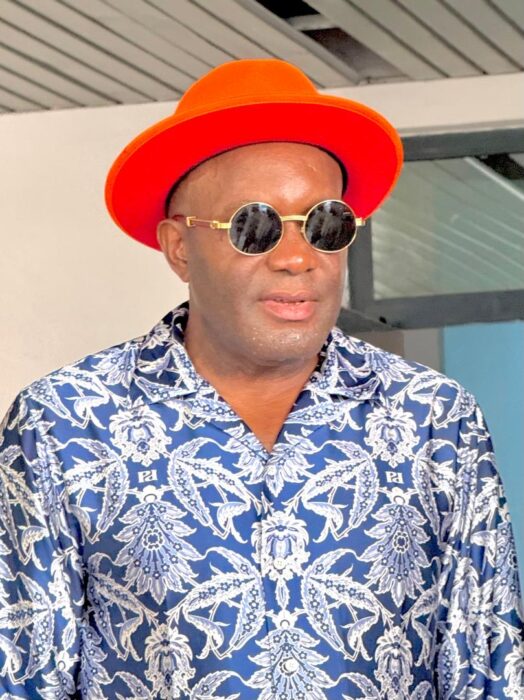
Football administrator and sports facilities expert Ebi Egbe has called for an urgent administrative and structural overhaul of Nigerian football, warning that the country’s repeated failures across its national teams are symptoms of a deeper crisis.
Egbe said Nigeria’s football system, which once dominated Africa and earned global respect, requires a fundamental rethink to restore its fortunes.
“There is hardly any doubt that Nigerian football is sick and requires urgent surgical intervention,” Egbe said.
His call comes amid a string of disappointing results involving Nigeria’s senior and youth national teams.
The Super Eagles failed to qualify for the 2022 FIFA World Cup and subsequently missed the 2026 tournament after losing to DR Congo on penalties in the African play-off final, resulting in consecutive World Cup absences.
The crisis has also affected the women’s game, with the Super Falcons failing to qualify for the 2027 FIFA Women’s World Cup for the first time since the competition began in 1991. The 10-time Women’s Africa Cup of Nations champions lost 2-1 to South Africa in the decisive play-off in Casablanca.
At youth level, the Golden Eaglets also missed out on the 2026 U-17 Africa Cup of Nations after a 2-0 defeat by Ghana in the WAFU-B semi-final. The failure extended Nigeria’s absence from three successive editions of the competition.
Egbe believes the setbacks should serve as a wake-up call for football administrators.
“These failures should not be treated as ordinary sporting setbacks. They are symptoms of a deeper structural problem,” he said.
He called for a comprehensive review of Nigeria’s football ecosystem, covering talent identification, grassroots development, coaching, scouting, competitions, player welfare, facilities, funding and national team management.
“Coaches will come and go. Players will change. Administrations will be elected. But without a sustainable football development philosophy, Nigeria will continue to repeat the same mistakes,” Egbe said.
He urged the authorities to return grassroots football to the centre of national planning by establishing properly organised youth competitions linked to professional clubs and the national teams.
Egbe also advocated increased investment in coaching education, scouting and domestic competitions, insisting that Nigeria must develop a system capable of producing and retaining talent consistently.
He welcomed the Nigeria Football Federation’s decision to establish a fact-finding committee to investigate the recent poor performances of the national teams, but warned against allowing its recommendations to become another report gathering dust.
“What the country needs is a roadmap with clear responsibilities, measurable targets and timelines. Those responsible for implementing the recommendations must also be held accountable,” he said.
According to Egbe, Nigeria still possesses an abundance of football talent and has produced some of Africa’s greatest players, but has failed to build a coherent structure capable of transforming that talent into sustained success.
He further called for greater transparency, professionalism and long-term planning in football administration, while cautioning against emergency measures and personality-driven decisions.
“Nigeria football does not lack talent. It lacks a sufficiently strong and consistent structure to nurture, manage and maximise that talent,” Egbe said.
“The glasshouse is clearly shattered.”
Egbe maintained that simply changing coaches or setting up committees would not solve Nigeria’s football problems, insisting that the entire football architecture must be rebuilt, institutions strengthened and a sustainable development model established to return the country to its position among Africa’s football elite and on the global stage.
We’ve got the edge. Get real-time reports, breaking scoops, and exclusive angles delivered straight to your phone. Don’t settle for stale news. Join LEADERSHIP NEWS on WhatsApp for 24/7 updates →
Join Our WhatsApp Channel