
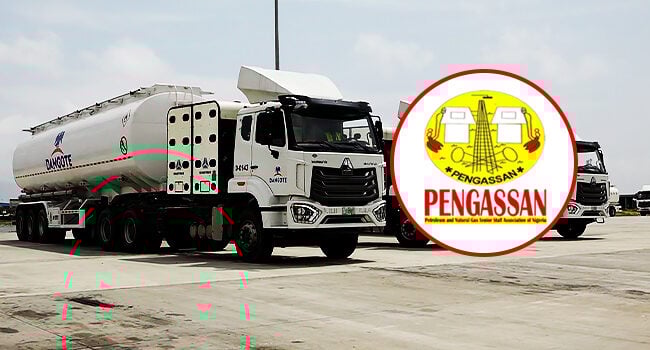
The Petroleum and Natural Gas Senior Staff Association of Nigeria (PENGASSAN) has called for sustained government policies and investments to expand Nigeria’s domestic refining capacity and adequate protection for refineries operating within the country.
The call was contained in the communiqué issued at the end of the three-day PENGASSAN Energy and Labour Summit (PEALS 2026), held from August 19 to 21 in Abuja.
PENGASSAN said Nigeria must reduce the economic inefficiency of exporting crude oil while importing significant volumes of refined petroleum products by creating an environment that supports domestic refining and other value-adding activities.
The communique signed by the union president, Comrade Festus Osifo and general-secretary Comrade Jerry Amah, specifically stressed the need to protect refineries, including Dangote Refinery and Waltersmith Refinery, within Nigeria’s jurisdiction.
The association said expanding domestic refining would enable Nigeria to retain a greater share of the value generated from its petroleum resources while creating jobs, conserving foreign exchange and stimulating industrial development.
PENGASSAN also linked the growth of domestic refining to wider opportunities in petrochemicals, gas processing and other downstream activities.
The communique reads in parts, “The Summit called for sustained policies and investments to expand Nigeria’s domestic refining capacity and reduce the economic inefficiency of exporting crude oil while importing significant volumes of refined petroleum products.
The need to protect refineries (such as Dangote Refinery, Waltersmilth refinery, etc) within Nigeria jurisdiction was emphasized.”
“Nigeria must progressively retain more value from its petroleum resources through domestic refining, petrochemicals, gas processing and other value-adding activities capable of generating employment, conserving foreign exchange and stimulating industrial growth.
“Ultimately, the strength of Nigeria’s oil and gas industry will not be measured merely by the resources beneath the ground, but by the projects delivered, the value created, the Nigerian capabilities developed, the decent jobs sustained and the prosperity generated for the Nigerian people.”
The association also said abrupt policy changes, overlapping mandates, repetitive approvals and conflicting directives increase the cost of doing business and weaken Nigeria’s competitiveness for global energy capital.
PENGASSAN further called for faster regulatory approvals, digitalised processes and clearer timelines, arguing that the effectiveness of regulation should be measured by its impact on investment, production, government revenue, job creation and national value rather than simply by the number of licences or approvals issued.
On gas, PENGASSAN called for an integrated approach to developing Nigeria’s more than 215 trillion cubic feet of proven reserves, including investments in processing facilities, pipelines, storage, LNG, LPG and CNG infrastructure. It said gas should be deployed more aggressively for power generation, manufacturing, transportation, fertiliser and petrochemical production.
The association also called for stronger protection of workers’ rights, occupational safety and employment during mergers, acquisitions, divestments and asset transfers. It maintained that sustainable investment requires skilled and fairly treated workers, while increased production must not come at the expense of workers’ lives and wellbeing.
PENGASSAN said the next phase of Nigeria’s petroleum industry must focus on execution with measurable targets and clearly assigned responsibilities to ensure policies translate into projects, production, investment and sustainable employment.
We’ve got the edge. Get real-time reports, breaking scoops, and exclusive angles delivered straight to your phone. Don’t settle for stale news. Join LEADERSHIP NEWS on WhatsApp for 24/7 updates →
Join Our WhatsApp Channel