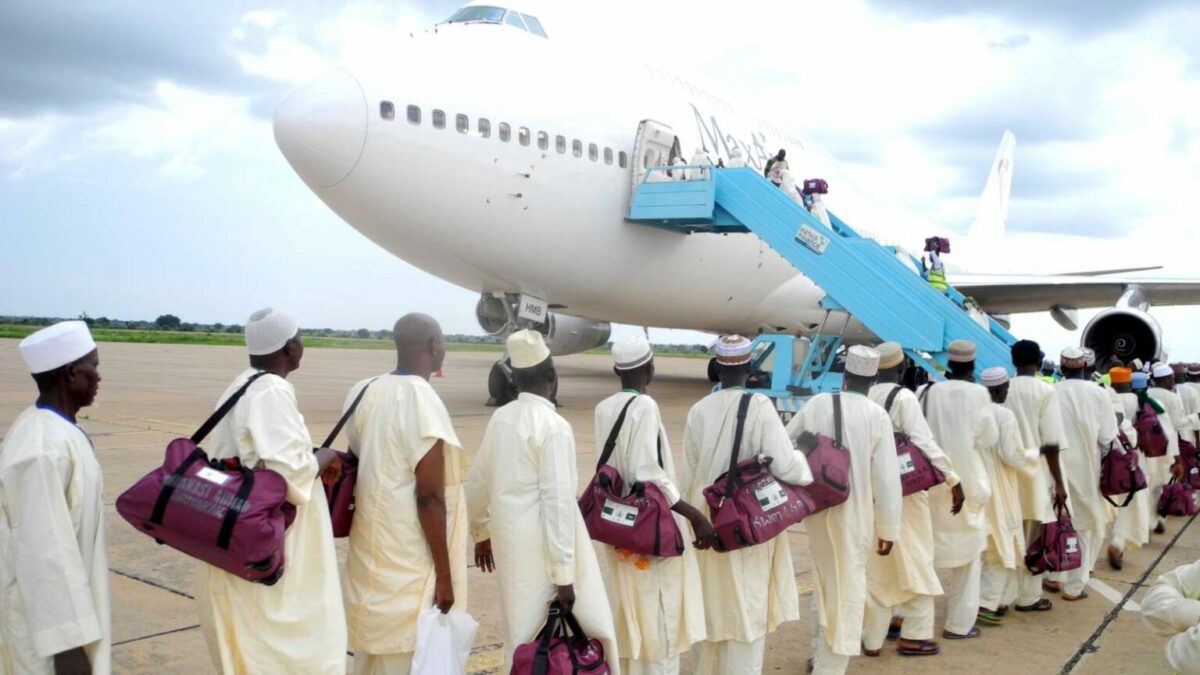
Saudi Arabia’s decision to migrate Hajj administration away from government-to-government arrangements toward a business-to-business, private operator model represents one of the most consequential shifts in the pilgrimage’s modern history. That the National Hajj Commission of Nigeria (NAHCON) has managed to negotiate a phased implementation, rather than an abrupt handover of 98 per cent of the country’s traditional public quota, is a genuine diplomatic achievement.
For decades, Nigeria’s Hajj system has rested on a public administrative architecture built around NAHCON, the State Pilgrims’ Welfare Boards, government-negotiated contracts and a collective bargaining logic that has kept the pilgrimage within reach of school teachers, traders, retirees and civil servants who save for years toward a single pilgrimage. Riyadh’s new framework asks a blunt question that Nigerian authorities have been slow to answer with equal candour: why should governments organise pilgrimages at all, when licensed private operators can compete on service, digitise dcompliance and manage logistics without the inefficiencies that have long trailed public administration of Hajj?
There is no honest case for pretending that question has no merit. Nigeria’s Hajj bureaucracy has, over the years, been cumbersome and occasionally politicised, and reform enthusiasm in Riyadh is not without foundation. But efficiency and equity are not the same objective, and a system designed around commercial sustainability answers to a different master than one designed around collective welfare.
NAHCON’s own 2027 licensing framework already requires a N250 million bank guarantee from prospective operators, a threshold that will concentrate the market among a handful of well-capitalised players. For pilgrims of modest means, the risk is not merely a costlier Hajj. It is a Hajj that gradually stops being theirs to afford.
That risk deserves to be named plainly, because the language in which this reform has been communicated to Nigerians, replete with references to digitisation, modernisation and Vision 2030, has so far obscured rather than clarified what is actually at stake. Hajj carries a particular weight in Muslim societies precisely because it is meant to erase distinctions of wealth before God. A system that quietly reserves the pilgrimage for those able to meet steep new financial thresholds does not merely change an administrative arrangement. It alters the character of the institution itself.
We therefore welcome NAHCON’s stated reasoning for resisting an overnight migration. Ambassador Ismail Abba Yusuf’s argument, that abrupt implementation would undermine existing arrangements, weaken the statutory role of the State Pilgrims’ Welfare Boards and expose ordinary pilgrims to considerable uncertainty, reflects sound institutional judgment rather than reflexive resistance to change. Systems built over decades, involving accommodation, transportation, medical care, security and religious guidance for pilgrims who are often elderly, sometimes barely literate in the language of international travel, and rarely in a position to absorb administrative failure, cannot be dismantled overnight on a foreign ministry’s timetable. That NAHCON secured Saudi acceptance of a phased approach, buying time for capacity building and stakeholder alignment, is to its credit and to the credit of the diplomatic channels the federal government deployed in pursuit of it.
But time bought is not the same as a problem solved, and this is where the celebratory tone struck by the Vice President, Kashim Shettima, in praising NAHCON’s handling of the 2026 exercise as a benchmark going forward risks understating the scale of what still needs to happen. Commendation for a well-run pilgrimage season is deserved.
The Kingdom’s direction, toward tighter licensing, stricter digital compliance and an expanding private-sector footprint, is not in doubt. What remains genuinely uncertain is whether Nigeria will use the years it has secured to prepare, or whether officials will treat a negotiated delay as a permanent settlement and return to business as usual.
Preparation, if it is serious, has specific requirements. Private operators seeking accreditation must be held to transparent licensing standards that keep the Hajj economy from being captured by politically connected businesses posing as service providers. Regulatory oversight at NAHCON and within the State Boards must evolve from administering logistics toward genuine consumer protection and financial accountability, since the boards themselves are being asked to shift from service providers into what amounts to strategic regulators and welfare guarantors.
Digital literacy across an ecosystem that still depends heavily on manual processes needs urgent attention, given that Saudi compliance systems are only growing more automated. None of this is achievable through statements of commitment alone, however sincerely delivered at press briefings.
We have argued on this page before that reform without regard for institutional capacity or the vulnerability of those it affects tends to produce the very disorder it claims to prevent. That principle applies with unusual force to Hajj, where a missed document or a collapsed arrangement is not a customer complaint but potentially a humanitarian emergency involving citizens thousands of kilometres from home. NAHCON was right to resist a hurried handover on those grounds. It would be wrong, now, to treat the resulting phased arrangement as an excuse for complacency.
The deeper question raised by this episode extends beyond Hajj and into a familiar Nigerian pattern: the temptation to accept a negotiated pause as though it were a permanent victory, and to let the hard work of institutional reform lapse once the immediate pressure has passed. Saudi Arabia has chosen efficiency as its organising principle.
Nigeria’s task, with the time it has been granted, is to prove that efficiency and fairness are not mutually exclusive, and that the sacred rite can remain within reach of the ordinary believer rather than becoming, by quiet default, the preserve of those who can pay their way past the queue.
We’ve got the edge. Get real-time reports, breaking scoops, and exclusive angles delivered straight to your phone. Don’t settle for stale news. Join LEADERSHIP NEWS on WhatsApp for 24/7 updates →
Join Our WhatsApp Channel