A police officer in South Korea has admitted to prematurely closing missing persons cases without conducting proper investigations in order to avoid additional workload, authorities have said.
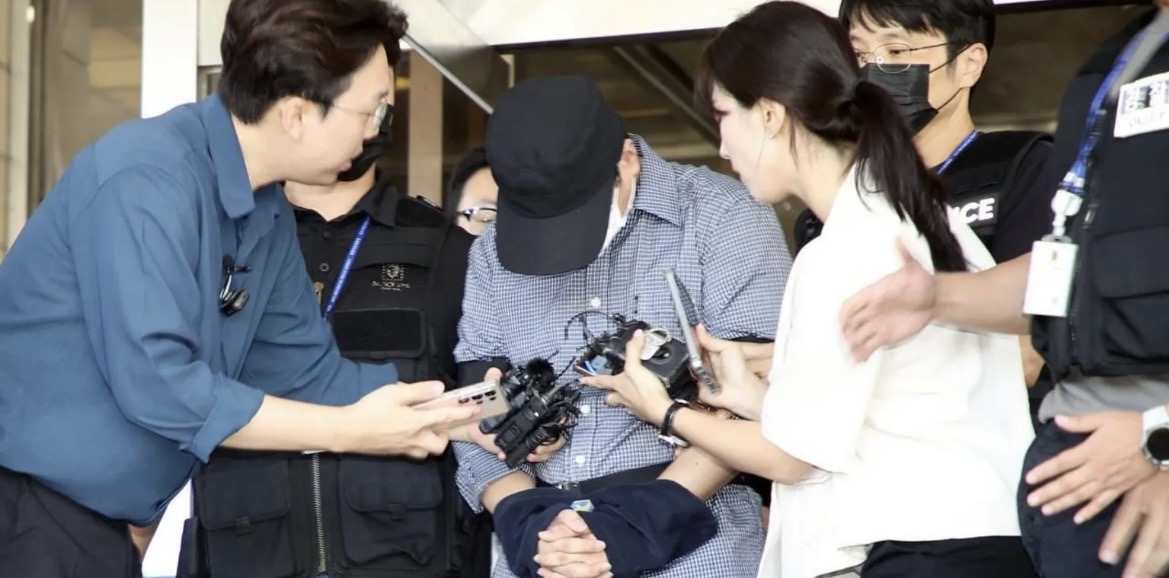
The officer, identified by his surname, Bu, was arrested earlier this month after allegedly closing missing persons cases on the popular holiday island of Jeju without carrying out the required investigations and giving false information to the victims’ families.
The scandal has triggered public outrage and prompted authorities to reopen searches for several missing persons on the island, with four bodies reportedly discovered in recent weeks.
The development has also put South Korea’s police under renewed scrutiny, as President Lee Jae Myung has pledged reforms amid plans by the government to expand the powers of the police.
The Jeju Provincial Police said on Tuesday that Bu had falsely closed at least two high-profile missing persons cases.
He was charged with forgery of public electronic records, obstruction of official duties and dereliction of duty.
According to the police, Bu falsely recorded that he had contacted the missing persons and that they had indicated they did not want to be contacted, before closing the cases without confirming their whereabouts or safety.
In a statement, police said Bu admitted during questioning that he deliberately closed the cases because of the workload involved.
He reportedly “stated to the effect that ‘the missing person was a typical adult so I thought about it carelessly. If the case was not closed, there would have been a lot to take care of, and out of a sense of pressure over the case handover, I falsely closed it’.”
One of the cases involved 37-year-old Jang Mi-ran, who went missing in May and was reported missing by her boyfriend.
Police said Bu told Jang’s boyfriend that he had spoken to her and that she did not want to meet the police or have further contact with her boyfriend.
Authorities later established that the claim was completely fabricated.
Bu allegedly entered the false information into the police system and also recorded that Jang had died in a traffic accident before closing the case.
Jang’s body was discovered near a palm tree plantation on Jeju last week.
In another case, a man in his 60s was reported missing in July. Police said Bu similarly falsely claimed to have spoken to the man and that he did not want to be contacted.
The man was eventually found dead earlier this month.
Investigators said they believe Bu may have prematurely closed another 25 missing persons cases, although some of the people involved were subsequently confirmed to be alive and safe.
The scandal has intensified concerns over the effectiveness of South Korea’s police force.
More than 70,000 adults are reported missing in South Korea every year, according to available figures, while about 99 per cent of missing-person cases are recorded as resolved within a month.
Although violent crime is relatively rare in the country, South Korea has one of the highest suicide rates among developed nations, making proper investigation of missing-person reports particularly important.
The controversy comes at a politically sensitive period for the police, following the government’s decision to transfer full investigative powers from prosecutors to the police.
The government said the reform was aimed at reducing the influence of prosecutors in politics.
However, the move has faced public opposition, with critics accusing the police of corruption and incompetence.
President Lee has since pledged to reform the police following the latest controversy.
On Tuesday, Lee described the situation as “regrettable”, saying that because of “a few loach-like figures who muddy the well water,” the “honour and pride of the majority of diligent police officers are being damaged.”
We’ve got the edge. Get real-time reports, breaking scoops, and exclusive angles delivered straight to your phone. Don’t settle for stale news. Join LEADERSHIP NEWS on WhatsApp for 24/7 updates →
Join Our WhatsApp Channel