
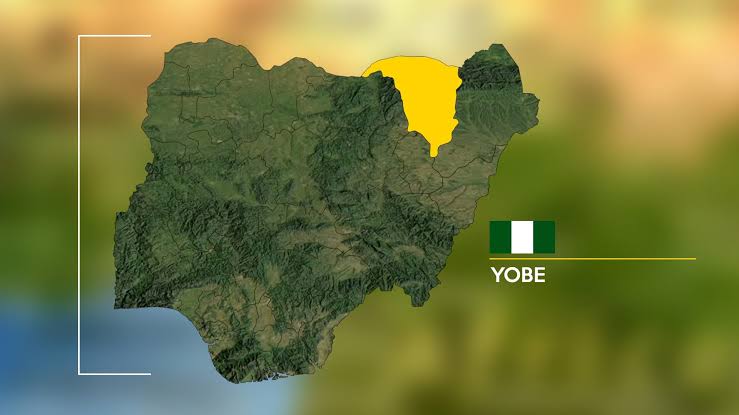
Yobe State government has launched a Climate Sector Working Group to strengthen the coordination of climate-related interventions, mobilising resources and promoting sustainable development and climate resilience across the state.
The initiative was unveiled at a ceremony held at Damaturu, the state capital, bringing together government officials and other stakeholders to develop a coordinated approach to addressing the growing impact of climate change in the state.
At the event, the deputy chief whip of the Yobe State House of Assembly, Hon. Ahmed Musa Dumbol, said the legislature had commenced moves to review the state’s environmental laws to strengthen the legal framework for tackling climate change, deforestation and other environmental challenges.
He said the Assembly was collaborating with the state Ministry of Environment and civil society organisations to develop updated legislation capable of addressing emerging environmental challenges.
Dumbol said some of the existing environmental laws were outdated and no longer adequately reflecting the realities confronting the state.
“We are in the process of reviewing the environmental laws together with the Ministry of Environment and other civil society organisations. We are working together to form a correct and genuine law for environmental issues in Yobe State,” he said.
The lawmaker explained that the proposed legislation would be subjected to the required legislative process and would need the assent of the governor before becoming enforceable.
He said the absence of updated legislation had made it difficult for government to effectively sanction indiscriminate tree felling, deforestation and other activities contributing to environmental degradation.
Dumbol expressed particular concern over the continued commercial felling of trees in communities in the northern part of the state, especially areas bordering the Sahara region.
He identified Yunusari and other communities in the area as places where vegetation had been significantly depleted as residents increasingly resorted to the sale of firewood as a means of livelihood.
He therefore called for the provision of alternative sources of livelihood and employment for people engaged in commercial tree felling, stressing that addressing the economic needs of affected communities would help reduce pressure on the environment.
Also speaking, the Director of Forestry and Wildlife Services in the Yobe State Ministry of Environment, Ahmed Mohammed Abubakar, said the establishment of the working group was aimed at giving greater attention to climate change and ensuring better coordination among stakeholders.
Abubakar, who represented the Commissioner for Environment, Hon. Sidi Yakubu Karasuwa, said climate change had become a major concern at the international, national and state levels, requiring collective and coordinated action.
He identified desertification and drought as some of the major climate-related challenges confronting communities across Yobe State.
“Most of our population are farmers who depend on rain-fed agriculture and, because of climate change, the rainy season has become erratic, leading to massive crop failures,” he said.
The director also disclosed that the ministry had been implementing an annual distribution of cooking gas cylinders to households as part of efforts to reduce dependence on firewood and other environmentally harmful energy sources.
According to him, 2,500 gas cylinders were distributed to households last year, while the figure was increased to 3,000 this year.
He added that the ministry was targeting 5,000 beneficiary households in the next budget cycle, subject to approval.
Meanwhile, the State Project Coordinator of the Yobe Sahara Restoration Drive Project, Mohammed Musa, described the establishment of the Climate Sector Working Group as a significant milestone and the first initiative of its kind in the state.
Musa said the initiative would provide a dedicated platform for stakeholders to coordinate climate action, align interventions with the state’s development priorities and strengthen Yobe’s response to climate-related challenges.
He commended the Minister of Environment, Dr Balarabe Abbas Lawal, and the Director-General of the National Council on Climate Change for their support and commitment towards the establishment of the working group.
He said their support had created an opportunity for stakeholders to develop a clear and coordinated vision for sustainable development and climate resilience in Yobe.
Musa, however, urged stakeholders to move beyond commitments and translate climate goals into practical interventions capable of delivering tangible benefits to communities.
He identified resource mobilisation as a critical component of the initiative, saying stronger collaboration among stakeholders would enhance the development of effective programmes, attract climate finance and leverage partnerships.
“By working together, we can develop stronger programmes, attract climate finance, leverage partnerships and mobilise the resources required to deliver meaningful and sustainable results for our people,” he said.
The project coordinator expressed optimism that the Climate Sector Working Group would evolve into a platform for effective coordination, partnership, innovation, resource mobilisation and practical climate action across Yobe State.
We’ve got the edge. Get real-time reports, breaking scoops, and exclusive angles delivered straight to your phone. Don’t settle for stale news. Join LEADERSHIP NEWS on WhatsApp for 24/7 updates →
Join Our WhatsApp Channel