
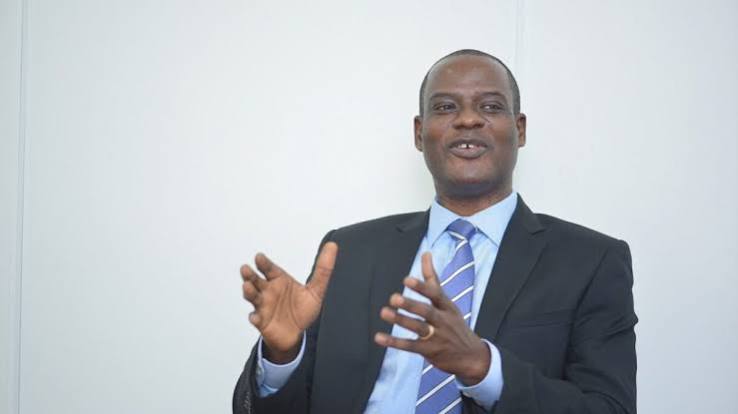
Minister of Finance and Coordinating Minister of the economy, Taiwo Oyedele, has cautioned that the newly launched African Credit Rating Agency may have limited impact on the continent’s borrowing costs in the medium term, saying investors’ confidence in its assessments will depend on trust, credibility and reliable data.
Speaking at Chatham House in London, Oyedele said the establishment of the agency was a positive development but would not immediately displace global rating agencies such as S&P Global Ratings, Moody’s and Fitch Ratings in the eyes of international investors.
When asked if the ACRA will be a game changer for Nigeria and Africa at large, Oyedele said “I will be honest. I do not think it will change much, at least not in the medium term. If you have an African rating agency, it is a good starting point, but it will not change a lot. If an investor in London, New York or China wants to invest, whom do you think they will trust, S&P, Moody’s or the African Rating Agency?”
According to him, the agency must earn investors’ confidence through consistent performance rather than rely on its continental identity or the circumstances surrounding its establishment. “You need to build trust, and it cannot be legislated. Trust is earned over time based on what you do, not just what you say, and on the consistency of your actions,” he said.
Oyedele, however, expressed optimism that the initiative could eventually strengthen Africa’s position in the global credit rating market. “It will take time for us to get there. But it is good that Africa is starting something. One day, we might get to the league of the big three rating agencies and people will start taking us seriously,” he added.
The minister identified the availability and credibility of economic data as a major challenge affecting how international rating agencies assess African economies, arguing that Nigeria must strengthen its data production and reporting systems to improve its standing.
He cited the country’s tax-to-GDP ratio as an example, saying the government’s failure to produce and publish such critical information had left international institutions relying on external sources. “Something as important as the tax-to-GDP ratio is not produced by the government.
“The World Bank released its report on Nigeria two weeks ago and said it was 7.5 per cent. That is 12.5 per cent. The rating agencies will take the figure from the World Bank because they cannot find anything from the government.”
Oyedele said international assessments of Nigeria’s creditworthiness had implications for the country’s borrowing costs and its ability to finance critical infrastructure and social services. “They will take figures from the IMF and say Nigeria is five notches below investment grade. That determines how much we pay to borrow. Because we pay so much to borrow, it takes away the fiscal space we should use to provide roads, education and health. It goes round in a circle.”
An analyst, who spoke with leadership on condition of anonymity, said the African Credit Rating Agency would have to overcome significant hurdles before gaining acceptance among international investors, particularly those seeking to lend to African governments through global capital markets.
The analyst explained that credit ratings help investors assess the ability of borrowers to repay their obligations, but their usefulness depends largely on the credibility of the institutions issuing them. “The reason why the credit rating is acceptable is because the lenders, those that have the funds, believe in that credit rating agency and what they are saying,” the analyst said.
“In other words, credit rating is only acceptable to the extent at which the lender believes in the rating that is being issued”, the analyst said noting that international investors were more likely to rely on agencies whose methodologies they understood and whose assessments they considered credible.
Consequently, the new agency could face difficulties convincing investors to accept its ratings when African countries seek financing in international markets. The analyst also raised concerns about the independence of the agency, arguing that investors would need assurances that its assessments would not be influenced by the governments whose creditworthiness it evaluates.
“Another way to think about it is one of the most important features when it gets to credit rating is independence. The rating agency must be independent of the issuer. The question is that are we sure this African rating agency is going to be independent? And particularly given that the way we are always scared in Africa, you don’t want to write against the government. Are you sure they will issue a bad rating for the government, even when the rating is actually even showing that it should be passed on?” the analysts queried.
Similarly, the Managing Director and Chief Executive Officer of DataPro Limited, Mr Abimbola Adeseyoju, said the agency’s success would depend less on the effort required to establish it than on the value investors attach to its assessments.
Adeseyoju described the launch as a significant milestone that took about a decade to achieve, but warned that its long-term relevance would depend on its perceived independence and the robustness of its rating methodology.
“The value it will command is, however, not in the intrinsic worth of efforts devoted into it. It is the premium placed on its opinion by investors in Africa and beyond,” he said. He said investors must be convinced that the agency could operate independently of the political interests involved in its establishment.
“The first is the perceived independence of political actors that midwife its birth. This is key. Otherwise, investors may treat its rating opinions as souvenir,” he said. Adeseyoju added that the agency’s methodology must meet internationally accepted standards if its assessments were to gain global recognition.
“The second is the rigorous and robustness of its rating process and methodology. To have a global appeal, it must be seen to have adopted standards comparable to the Big three to own its own,” he said.
He noted that the agency could improve rating coverage across Africa, as several countries on the continent currently lacked formal credit ratings.
“On the impact on rating of Africa Sovereign and instruments, there will be more rating visibility as currently not many of African countries have rating. On that positive note more countries within the sub region will carry rating label,” he said.
Professor of Law and development economist, Prof. Tayo Bello, offered a more optimistic assessment, saying the initiative could provide an alternative perspective on African economies and challenge what he described as the bias of established international rating agencies.
He said African countries had long argued that ratings by Moody’s, S&P and Fitch did not adequately reflect local economic realities, contributing to higher borrowing costs across the continent. “When you talk of Moody’s, S&P and Fitch, the notion from African countries is that they have a passive bias,” Bello said.
He cited United Nations studies estimating that rating assessments had, at times, been subjective and cost Africa more than $75.5 billion in borrowing expenses. Bello said an African rating institution could help address the problem by incorporating local economic conditions and indigenous data into its assessments.
“First, the fact is that local realities will be considered. That is, indigenous African data will now be available to the experts who also operate it,” he said. He argued that the agency could also help prevent what he described as premature downgrades of African economies and strengthen their resilience by providing assessments that better reflected their individual economic conditions.
According to him, a credible alternative could reduce the risk premiums attached to African sovereign debt, lower borrowing costs and encourage more investment in the continent. “Most of the African debts are based on sentiment of premium. It lowers the borrowing cost for sovereigns,” he said.
Bello added that more balanced credit assessments could improve investors’ willingness to provide long-term financing to African governments and institutions, particularly where existing perceptions of risk had discouraged investment.
We’ve got the edge. Get real-time reports, breaking scoops, and exclusive angles delivered straight to your phone. Don’t settle for stale news. Join LEADERSHIP NEWS on WhatsApp for 24/7 updates →
Join Our WhatsApp Channel