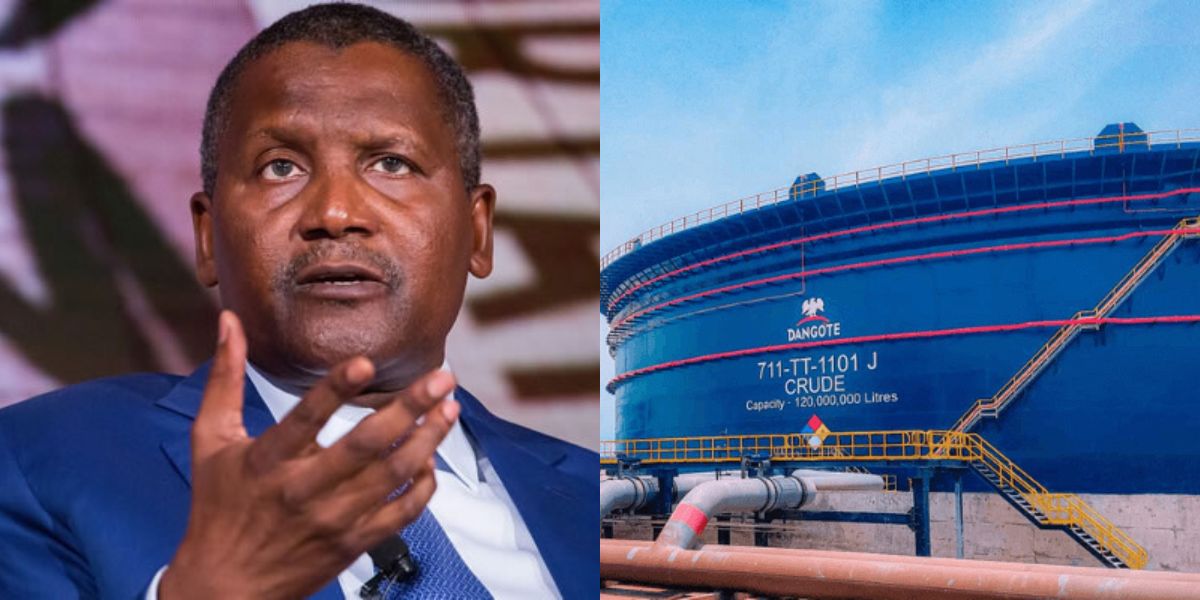
Aliko Dangote’s promise that drivers, cooks, traders, and ordinary workers can become shareholders in his refinery may sound like a landmark opportunity for mass ownership by Nigerians.
But the extraordinary demand that preceded the public offer could turn the much-advertised “IPO for the people” into a race for shares, and a second chance for investors who missed the private placement.
Dangote disclosed on Monday that the refinery’s earlier private placement generated demand for $3.7 billion of shares against an initial target of $1 billion.
The company eventually accepted $2.5 billion and returned about $1.2 billion to investors whose orders could not be accommodated. That episode provides perhaps the clearest warning for prospective retail investors.
If sophisticated investors were willing to put forward billions of dollars before ordinary Nigerians were invited in, the public offer could face intense competition from investors who already understand the refinery’s prospects and were unable to secure their desired allocation the first time.
In every way, the odds are stacked against the first-time and ordinary investors, even though the company says it has put in place a simple procedure for everyone to get a share of the cake.
The biggest stockbrokers will be fighting for investors’ willingness to buy large numbers of shares. The bankers put in charge of the processes themselves want more shares, and are very likely the same set of investors who had part of their money returned during the private placement.
The refinery itself has been valued at $47 billion, with some financial analysts comparing it to other refineries of similar size and expressing views that it may be overvalued. Alike Dangote counters with the assertion that there is presently no other refinery anywhere that can process 700,000 bpd.
That, however, doesn’t explain why imported petrol, with the shipping and port charges, should be cheaper than Dangote-refined petrol, or the company’s insistence that the government should stop issuing import licences to marketers.
The IPO will offer 4.1 billion shares at N525 each, potentially raising about N2.15 trillion, or roughly $1.63 billion. Dangote says the company is targeting 10 million shareholders across Africa and beyond, with a minimum purchase of just 10 shares, an entry point of N5,250.
Yet the numbers make a sell-out plausible. At the minimum subscription, 10 million investors would require 100 million shares, only about 2.4% of the 4.1 billion shares on offer. The real constraint will therefore be how much capital larger investors commit.
There is precedent. Kenya’s 2008 Safaricom IPO was oversubscribed by an extraordinary 532%, while its retail investor pool was reportedly even more heavily subscribed.
Dangote’s offer could generate similar excitement because it combines a famous African brand, a strategic national asset, and a promise of long-term wealth creation.
The irony is that the stronger the public enthusiasm, the harder it may become for the cooks, drivers, and workers the IPO is designed to reach to obtain meaningful allocations.
For them, Dangote’s “second chance” could quickly become a scramble for whatever shares remain after bigger investors have placed their orders.
We’ve got the edge. Get real-time reports, breaking scoops, and exclusive angles delivered straight to your phone. Don’t settle for stale news. Join LEADERSHIP NEWS on WhatsApp for 24/7 updates →
Join Our WhatsApp Channel