The United Nations Environment Programme (UNEP), is broadening cooperation with with Government of Nigeria to develop a comprehensive framework towards limiting methane emissions in the Agriculture sector.
The UNEP’s International Methane Emissions Observatory (IMEO), which is driving the plan will be hosting a two-day series of webinars to strengthen Nigeria’s capacity to measure, quantify and manage methane emissions in the agriculture sector.
The webinars are part of the Nigeria Methane Emission Reduction Pilot Programme (NiMERP) a project funded by the EU Delegation to Nigeria and implemented by IMEO, in collaboration with the Government of Nigeria.
The NiMERP aims to assess methane emissions across multiple sectors in the country, while building local capacity for methane measurement and mitigation. Following successful training programmes previously delivered under NiMERP in the oil and gas and waste sectors, the upcoming webinars will focus on the agriculture sector.
Methane emissions from agriculture are largely diffuse, arising mainly from enteric fermentation in livestock, manure management and flooded rice cultivation. These characteristics make agricultural methane challenging to estimate and manage, particularly where data availability is limited.
As Nigeria’s Third Nationally Determined Contribution (NDC 3.0) identifies agriculture as a priority sector for methane mitigation, the webinars aims to strengthen the capacity of key stakeholders to understand the sources and management of methane emissions from livestock, manure, rice cultivation, and agricultural waste systems, while promoting best practices in methane measurement, mitigation, reporting, and sectoral collaboration in support of national commitments.
Agriculture is one of Nigeria’s largest sources of methane, a gas responsible for at least a quarter of today’s climate warming. Nigeria’s NDC 3.0 identifies the sector as a national priority for methane emission reduction.
This two-day online Masterclass is delivered under the NiMERP, implemented by UNEP’s IMEO with the Government of Nigeria and funded by the European Union (EU) Delegation to Nigeria and West Africa.
It will build the capacity of Nigerian stakeholders to measure, estimate and reduce methane emissions from livestock, manure, rice cultivation and agricultural waste, and to use this data for national reporting and policy.
LEADERSHIP reports that aside from the cooperation, some stakeholders are concerned about impact of such emissions on the environment.
Already, the Nigeria LNG said it has made significant progress in reducing methane emissions topping the chat in Africa.
The NLNG was the first company in Africa to achieve ”Level 5” methane emissions reporting, with its measurement, reporting and verification system independently assured by DNV, a global assurance and certification company.
The firm’s methane management includes optical gas imaging, a structured Leak Detection and Repair programme and continuous monitoring.
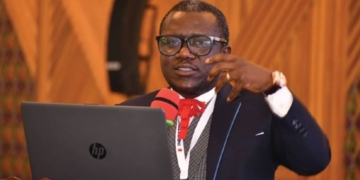
Managing Director, of the Company Mr Adeleye Falade, stated this at the Gastech 2026 Exhibition and Conference in Bangkok, Thailand, where he urged the global gas industry to make methane reduction a business priority, calling emissions lost gas and revenue.
Falade spoke during a panel discussion titled “Capturing the Lost Opportunity: Driving Global Alignment on Methane Abatement Across Natural Gas Supply Chains”.
He urged the industry to shift its focus from the cost of methane reduction to the commercial value created by preventing gas losses. ”Every tonne emitted is lost product. Lost revenue and lost energy; gas we could have sold,” he said.
He explained that the NLNG approach involved measuring methane losses and using the findings to guide investment in leak prevention and gas recovery.
According to him, independent verification is also critical to ensuring credible emissions reporting and assessing the effectiveness of interventions.
The managing director cited NLNG new boil-off gas compressor and start-ups gas recovery project as examples of investments supporting methane reduction.
”Each project targets methane reductions of about 10 to 15 per cent and has positive projected net present values.
”The project that cut our methane also pays for themselves. The same discipline that reduces methane also improves asset reliability and plant efficiency,” he said.
Falade added that credible measurement enabled NLNG to identify methane losses, direct resources towards appropriate interventions and assess results.
He said gas producers in developing economies could establish globally trusted emissions-reporting systems by investing in monitoring infrastructure and independent verification.
He highlighted the company’s Gold Standard recognition under the Oil and Gas Methane Partnership (OGMP) 2.0.
”The company is also deploying real-time dashboards across its plant and vessels to strengthen monitoring and response.”
The NLNG executive said credible measurement depended on commitment rather than geography, adding that the company had demonstrated that globally trusted systems could be implemented in Africa.
Falade added that the NLNG was incorporating methane reduction into the design of its ”Train 7” project design, noting that the project would raise production capacity from 22 million to 30 million tonnes annually.
At the national level, Falade said NLNG’s efforts to monetise gas that would otherwise have been flared had contributed to reducing Nigeria’s gas-flaring rate.
”The rate had fallen from more than 65 per cent to below 20 per cent. The conversion of wasted gas into marketable products is a commercial case for emissions abatement,” he said.
On climate action and energy access, he said NLNG’s operations supported Nigeria’s net-zero emissions target for 2060 and zero routine flaring by 2030.
He stressed that emissions reduction must progress alongside efforts to meet the energy needs of households and businesses.
”Developing economies cannot be asked to choose between economic development and emissions reduction. Both must progress together,” he said.
We’ve got the edge. Get real-time reports, breaking scoops, and exclusive angles delivered straight to your phone. Don’t settle for stale news. Join LEADERSHIP NEWS on WhatsApp for 24/7 updates →
Join Our WhatsApp Channel