Africa’s infrastructure financing gap, estimated at up to $108 billion annually, could be narrowed through the deployment of Artificial Intelligence (AI), digital twins, Internet of Things (IoT) and other digital technologies to improve project efficiency, asset management and investment decisions, an engineering expert, Engr. Dr. Bola Mudasiru, has said.
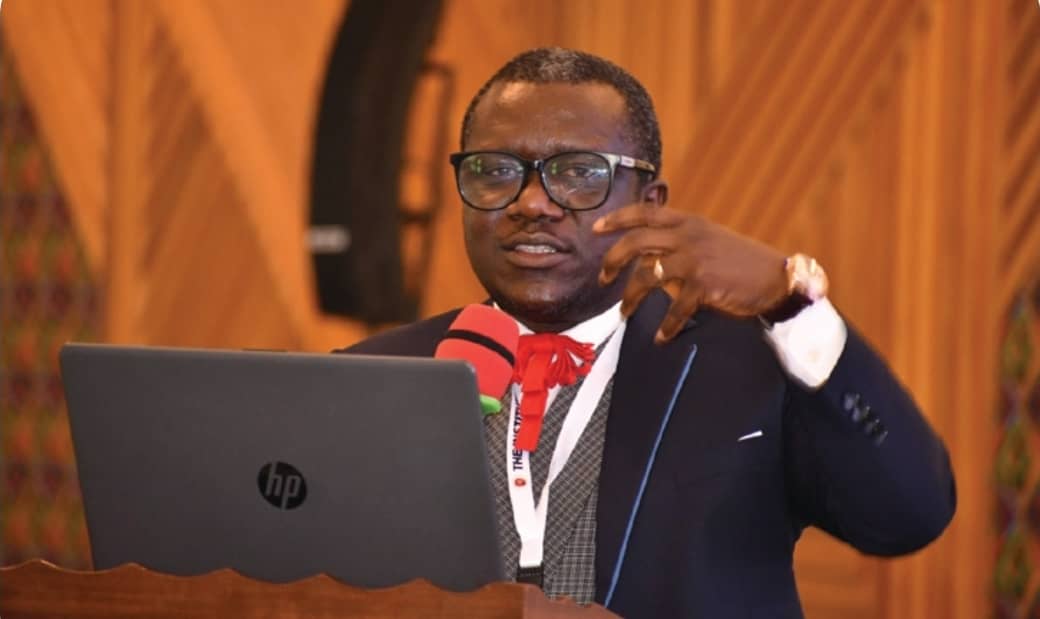
Mudasiru, acting national chairman of the Nigerian Institution of Highway and Transportation Engineers (NIHTE) and vice president-elect (Anglophone) of the West African Federation of Engineering Organisations (WAFEO), said technology could help governments and private investors extract greater value from limited infrastructure capital while improving the bankability and lifecycle performance of projects.
He made the submission while presenting a paper titled, “Engineering the Digital Nervous System: AI and Digital Ecosystems for Future-Ready African Infrastructure,” at the 12th UNESCO Africa Engineering Week and 10th African Engineering Conference in Dar es Salaam, Tanzania.
In a statement sent to journalist, Mudasiru said Africa’s infrastructure challenge presented both a financing problem and a major investment opportunity, given the continent’s rapidly expanding population and rising demand for roads, bridges, power, water, transport and other essential infrastructure.
According to him, Africa’s population, currently estimated at about 1.55 billion, is projected to rise to 2.5 billion by 2050 and almost four billion by 2100, while annual infrastructure requirements could increase from between $130 billion and $170 billion currently to more than $250 billion by 2050 and $400 billion by 2100.
He noted that this was against an existing annual infrastructure financing gap estimated at between $68 billion and $108 billion.
Mudasiru argued that closing the gap would require more than increased public spending, stressing that technology could help improve the efficiency, predictability and returns associated with infrastructure investments.
He said AI was increasingly capable of supporting different stages of the infrastructure lifecycle, from planning and design to construction, operations, maintenance and asset replacement.
“AI is the engine of infrastructure evolution,” he said, adding that agentic AI could increasingly perform tasks autonomously across infrastructure systems to improve efficiency, performance and value delivery.
He identified intelligent traffic management, emergency response, automated infrastructure inspection, utility optimisation and digital public services as areas where AI could generate significant economic benefits.
Mudasiru further said digital twins could provide investors, infrastructure operators and government agencies with real-time information about the condition and performance of physical assets.
He explained that a digital twin was a live virtual replica of a physical asset, continuously updated with data from sensors installed on the real-world asset.
For infrastructure investors, he said, the technology could improve risk assessment and long-term planning by enabling operators to simulate different scenarios before committing resources.
Highway authorities, for instance, could use digital twins to assess the impact of overloaded trucks, flooding and extreme weather, forecast deterioration under alternative maintenance strategies and conduct “what-if” analysis for investment and emergency decisions.
He said such capabilities could reduce uncertainty around infrastructure assets and help owners determine when and where capital expenditure was required.
We’ve got the edge. Get real-time reports, breaking scoops, and exclusive angles delivered straight to your phone. Don’t settle for stale news. Join LEADERSHIP NEWS on WhatsApp for 24/7 updates →
Join Our WhatsApp Channel