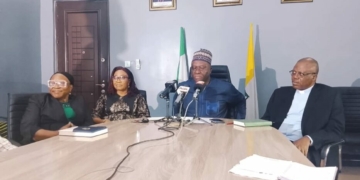
The executive director of the Pan-Africa Podcast, Martin Minns (Panel 54), has expressed the hope that Africa has the edge in effectively harnessing its economic potential amid France’s renewed economic interest in the continent.
He said the most populated black continent stood a greater chance of exerting control over the extraction, processing and commercialisation of its natural resources.
Minns said African countries were no longer content to play a passive role in foreign investment deals, but were increasingly seeking to determine the terms under which their resources are developed and traded.
Minns, who made the assertion in his analysis on France’s evolving strategy in Africa in a report made available to journalists in Uyo, the Akwa Ibom State capital, noted that “over the last few years, increasing impetus has been placed on the sovereignty of African nations over the extraction and processing systems of their resources.”
According to him, the changing approach of African governments has resulted in a stronger role for the continent in negotiating investment agreements and structuring deals intended to secure greater economic returns from its natural wealth.
Minns said the development had become particularly relevant to France as it seeks to reshape its economic engagement with Africa, including expanding its attention beyond its traditional Francophone sphere to English-speaking countries in East Africa.
He cited the Africa Forward Summit in Nairobi, Kenya, as an indication of what he described as France’s emerging geographical “pivot” towards East Africa.
The development comes against the backdrop of strained relations between France and a number of West African countries in recent years, including Mali, following the withdrawal of French forces from Operation Barkhane.
Rather than interpreting the shift as France abandoning Africa, Minns said it should be viewed as an attempt by Paris to reposition its economic and strategic interests within a changing continental landscape.
He argued that the Africa France is engaging with today is substantially different from the environment in which its previous relationships were established, particularly regarding resource sovereignty and the bargaining position of African governments.
For France to establish durable economic partnerships under the emerging conditions, Minns said it would have to adapt to the new investment environment and negotiate on terms that recognise the changing expectations of African countries.
“If France can use its fresh start to adapt to this new reality and enter the market on the most up-to-date trading terms, it will find itself a popular trading partner,” he said.
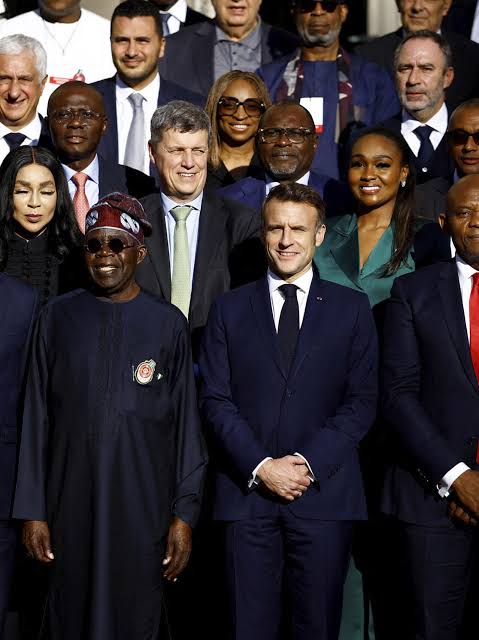
The Nairobi summit, according to Minns, indicated the scale of France’s renewed economic interest in the region, with Paris seeking about 250 deals and agreements with East African trade partners, alongside major investment commitments announced by French President Emmanuel Macron.
He said Kenya’s hosting of the summit was also significant given the country’s position within the East African economy, citing reported 4.6 per cent GDP growth in 2025.
Minns, however, acknowledged that France’s renewed engagement could face resistance from sections of the African public wary of another phase of Western economic influence on the continent.
“Not everyone will welcome the move,” he wrote, stressing that France’s new approach remained unproven.
He nevertheless said the scale of the investment commitments suggested that France’s engagement was intended as more than a diplomatic gesture, describing it as “a strategic push to become a core partner to East Africa.”
For African countries, Minns said, the critical issue would be whether the emerging partnerships translate into greater local participation and economic benefits through resource processing, investment, trade and employment.
His assessment suggests that France’s renewed African strategy is unfolding in a markedly different environment—one in which African governments are increasingly asserting their interests in determining how the continent’s natural wealth is developed and how the resulting economic value is distributed.
We’ve got the edge. Get real-time reports, breaking scoops, and exclusive angles delivered straight to your phone. Don’t settle for stale news. Join LEADERSHIP NEWS on WhatsApp for 24/7 updates →
Join Our WhatsApp Channel