For the trader who counts every naira spent getting goods to Wurukum Market, the commercial driver whose earnings disappear into fuel costs, the mechanic waiting for the next customer, and the farmer whose harvest loses value before reaching the market, the question of energy is not an abstract policy issue. It is a daily economic reality.
In Makurdi, Benue State, that reality took centre stage this week as the State Government convened a three-day workshop on Compressed Natural Gas (CNG), opening a new conversation about cheaper transportation, alternative energy, technical skills and the possibilities of a new economic value chain.
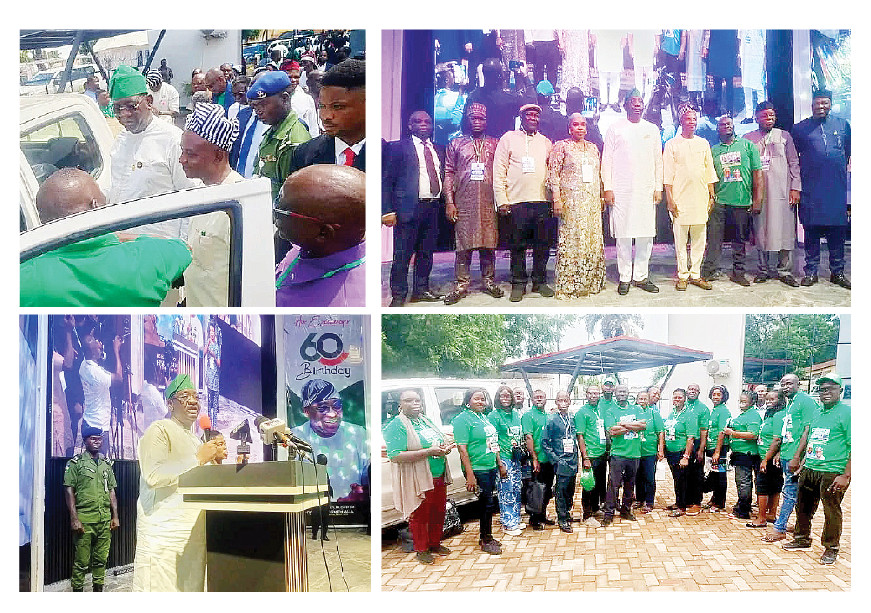
Held from Monday, September 21 to Wednesday, September 23, 2026, at the Rev. Fr. Alia Conference Hall of the Benue State Emergency Management Agency (SEMA), the workshop, themed “Presidential CNG Initiative – The Game Changer,” was designed to move CNG beyond public discussion and into practical application.
The message from the organisers was clear: Benue does not intend to remain a spectator as Nigeria’s energy and transportation landscape changes.
From fuel pressure to opportunity
Declaring the workshop open on behalf of Governor Hyacinth Iormem Alia, Deputy Governor Barr. Dr. Sam Ode, Mni, presented CNG as an opportunity to address some of the economic pressures facing households and businesses while opening new areas for employment and investment.
The State Government, he explained, is looking beyond fuel substitution. Its ambition is to develop an ecosystem around CNG—one that includes vehicle conversion, refuelling infrastructure, technical training, maintenance, logistics and private-sector participation.
For ordinary residents, the immediate attraction is straightforward: lower energy and transportation costs.
Benue State Commissioner for Power, Renewable Energy and Transport, Hon. Jir Joseph Ter, described the Presidential CNG Initiative as a potential game changer, particularly at a time when households and businesses are under pressure from rising transportation and operating costs.
He identified public enlightenment, vocational and technical training, vehicle conversion, access to conversion kits, deployment of CNG-powered buses and tricycles, engagement with transport unions and private-sector investment as key components of the State’s programme.
His message to young people and investors was equally significant: CNG should not be regarded merely as another type of fuel, but as the foundation of an emerging industry.
That distinction could prove important.
A new industry for young people.
Every new technology creates demand for people who understand how to install, operate, maintain and regulate it.
That is where Benue’s young people, mechanics, technicians and entrepreneurs could find an important opening.
The Benue State CNG Project Coordinator and Technical Adviser to the Governor on CNG and Renewable Energy, Engr. Ashir Jonathan Terkosu, outlined opportunities stretching across the value chain.
These include vehicle conversion, station operations, cylinder inspection, gas logistics, equipment maintenance, fabrication, technical training and related services.
The State is also looking at technical and vocational training, conversion-centre development, competency certification, access to conversion kits, CNG buses and tricycles, mobile refuelling units and daughter stations.
For a mechanic, that could mean acquiring a new technical skill. For a young graduate or entrepreneur, it could mean entering an emerging market. For an investor, it could represent an opportunity to build infrastructure around a growing demand.
The workshop therefore sought to connect policy with people—to ensure that Benue citizens are not merely consumers of a new energy technology but participants in its development.
Beyond Makurdi
One of the more important elements of the programme is its proposed expansion beyond the State capital.
The organisers indicated that the CNG programme is intended to develop infrastructure and access across the Local Government Areas, rather than remain concentrated in Makurdi.
That wider ambition will require investment in conversion centres, refuelling infrastructure, qualified technicians, safety systems, transportation and logistics.
It will also require sustained cooperation between government and the private sector.
Chairman of the occasion and Chairman of the Benue State Steering Committee on Coalbed Methane and Allied Resources, Ambassador Nicholas Agbo Ella, repeatedly emphasised the importance of collaboration among government institutions, technical experts, investors and communities.
His argument was that awareness alone would not transform the State’s energy economy. What matters ultimately is what follows the awareness.
The workshop, therefore, represented a beginning rather than an end.
CNG and the agricultural economy.
For a State widely identified with agriculture, the significance of cheaper and more accessible energy extends far beyond transportation.
Farmers need energy to pump water, process crops, dry produce, operate mills, power storage facilities and move agricultural products from farms to markets.
Engr. Terkosu highlighted the potential application of CNG in tractors, irrigation pumps, dryers, mills and generators.
The implications are substantial.
If energy costs associated with processing, storage and transportation can be reduced, farmers and agro-processors may be able to retain more value from their produce. Businesses involved in cold-chain operations, bakeries, welding and fabrication, water systems and other energy-intensive activities could similarly benefit from alternative energy options.
For Benue, the conversation about CNG is therefore also a conversation about agriculture, food security, rural enterprise and industrialisation.
A cheaper journey to market is useful. But cheaper energy for processing and preserving what reaches that market could be equally important.
The safety question
No energy transition can succeed without public confidence, and confidence depends heavily on safety.
The workshop therefore placed considerable emphasis on responsible CNG adoption, technical competence, approved equipment and proper maintenance.
Engr. Terkosu explained that properly calibrated CNG systems can reduce particulate emissions, carbon monoxide and other pollutants compared with conventional petrol and diesel use. At the same time, he stressed the importance of preventing methane leakage through proper installation, inspection and maintenance.
The message to motorists was practical: conversions should be carried out by accredited technicians using approved equipment and conversion kits. For the State Government, public enlightenment is consequently not simply about persuading people to adopt CNG. It is also about teaching users how to adopt it safely.
Connecting Benue to the national transition
The workshop also brought the State’s initiative into the broader national effort to expand cleaner and more affordable mobility.
The Distinguished Guest of Honour, Barr. Ismaeel Ahmed, OON, Executive Chairman of the Presidential Initiative on Compressed Natural Gas and Electric Vehicles (Pi-CNG & EV), highlighted the Federal Government’s efforts to expand CNG conversion, refuelling infrastructure, technical training, vehicle deployment and private-sector investment.
His participation underscored the importance of cooperation between the Federal Government and states in building the infrastructure required for Nigeria’s emerging alternative-transport sector.
For Benue, that relationship could provide an avenue to align state-level programmes with national initiatives while creating opportunities for local businesses and technical professionals.
From awareness to practicals
Perhaps the most telling theme of the three-day programme was the desire to move from speeches to skills.
Ambassador Nicholas Agbo Ella called for a transition from awareness creation to practical action.
That practical orientation was reflected in the programme itself.
Participants were exposed to technical sessions covering CNG conversion, maintenance of converted vehicles, conversion-centre registration and licensing, competency development, business opportunities and investment possibilities.
The second day brought together a broad range of public institutions, financial organisations and private-sector stakeholders, including the Bank of Industry, National Automotive Design and Development Council (NADDC), Pi-CNG & EV, Auto Gas, Ashiro Motors, Idea Lab Agency, MDGIF, The OGIM Ltd, Access Bank, Fidelity Bank, Novus Microfinance Bank, Phoenix Renewable Energy and Zenith Bank, among others.
Their presence suggested that the CNG transition is not solely a government responsibility. It will require financing, technical expertise, regulation, entrepreneurship and infrastructure.
Investors invited
The invitation to the private sector was explicit.
Benue has presented itself as open to investment across the CNG value chain—from conversion and refuelling to logistics, maintenance, training and related manufacturing and services.
That invitation comes at a time when many young Nigerians are looking for new technical and entrepreneurial opportunities.
If properly developed, the CNG ecosystem could create demand not only for engineers and specialised technicians, but also for drivers, fabricators, mechanics, logistics operators, trainers, safety inspectors, financial service providers and businesses supporting the wider industry.
The economic effect could therefore extend well beyond the price of fuel.
A demonstration of commitment
The State’s leadership has also sought to demonstrate that the initiative is not simply a policy announcement.
Commissioner Jir Joseph Ter has converted his official vehicle to CNG, providing a practical demonstration of the technology and reinforcing the government’s message that public officials should also engage directly with the transition they are promoting.
Such demonstrations, alongside technical training and safety education, could help address some of the uncertainty surrounding CNG adoption.
But the long-term credibility of the programme will ultimately depend on implementation.
What happens after the workshop?
The three-day event has ended, but the larger test begins now.
The success of Benue’s CNG programme will not be measured by the number of speeches delivered or participants who attended the workshop. It will be measured by what residents can actually experience afterwards.
Can a commercial driver reduce operating costs?
Can a mechanic acquire a recognised CNG skill and earn a livelihood from it?
Can a young entrepreneur establish a viable business in the value chain?
Can farmers access cheaper energy for irrigation, processing and storage?
Can businesses operate more efficiently?
Can refuelling infrastructure expand safely beyond Makurdi?
And can the State maintain the technical and regulatory standards required to ensure that adoption is safe and sustainable?
Those are the questions that will determine the programme’s practical impact.
The road ahead
In his closing remarks, Ambassador Nicholas Agbo Ella stressed that the initiative would continue beyond the three-day workshop, with the objective of translating awareness and technical knowledge into infrastructure, employment opportunities, lower energy costs and broader economic benefits.
That is perhaps the central challenge—and opportunity—before Benue.
CNG is not, by itself, a solution to every economic problem facing the State. But it can become part of a broader strategy for reducing energy costs, developing technical skills, supporting transportation, strengthening agricultural value chains and encouraging investment.
For the trader travelling to market, the driver paying for fuel, the mechanic seeking a new skill and the farmer trying to move produce from field to consumer, the real value of the initiative will ultimately be found in everyday economics.
The promise is simple: cheaper movement, new skills, new businesses and more efficient use of energy.
Whether that promise becomes reality will depend on sustained implementation, safety, investment and accountability.
For now, however, Benue has taken a significant step—from talking about CNG to beginning the work of building an ecosystem around it.
And if the plans unveiled in Makurdi this week are followed through, the State’s CNG moment may become more than a workshop. It could become the beginning of a new chapter in how Benue moves, works, produces and grows.
We’ve got the edge. Get real-time reports, breaking scoops, and exclusive angles delivered straight to your phone. Don’t settle for stale news. Join LEADERSHIP NEWS on WhatsApp for 24/7 updates →
Join Our WhatsApp Channel