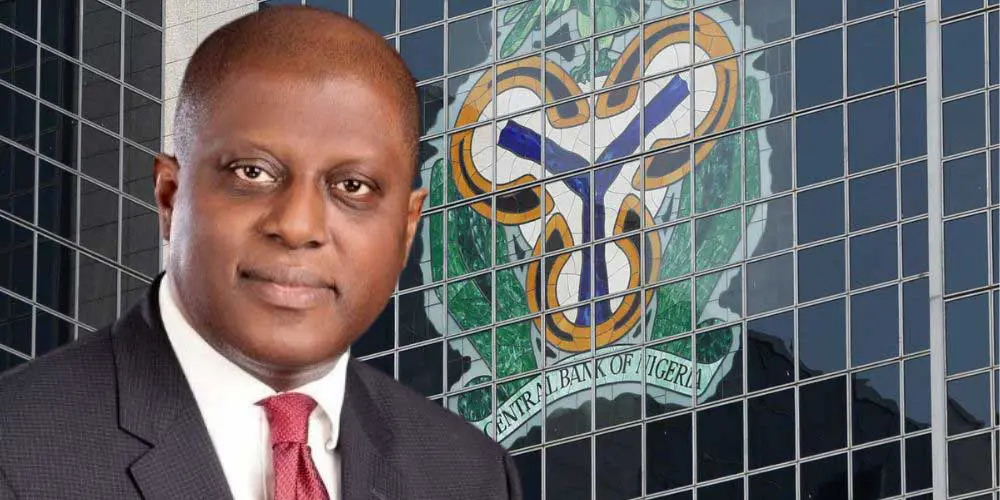
When Olayemi Cardoso assumed office as governor of the Central Bank of Nigeria (CBN) on September 22, 2023, the foreign exchange market was among the biggest problems confronting the financial system.
There was a backlog of dollar obligations, multiple exchange rates, severe scarcity of foreign exchange and growing frustration among manufacturers and businesses that struggled to access dollars through official channels.
Three years on, the architecture of the market has changed significantly. The CBN has moved towards a more market-driven foreign exchange system while simultaneously pushing through a banking recapitalisation, modernising payments infrastructure, strengthening financial crime controls and rebuilding Nigeria’s external buffers.
For Cardoso, restoring confidence in the financial system has been a recurring theme of the reform agenda. Foreign exchange, however, has provided perhaps the clearest test of that ambition. Cardoso had recalled that Nigeria inherited more than $7 billion in outstanding foreign exchange obligations, alongside a system in which access to dollars was uneven.
The CBN subsequently cleared the verified forex backlog, introduced greater transparency into the market and tightened the rules governing access to foreign exchange. One of the clearest indications of the change came from BUA Chairman, Abdul Samad Rabiu, who contrasted the current market with the system that existed before the reforms.
According to Rabiu, companies previously had to lobby the CBN for foreign exchange, recalling how regularly he visited the apex bank to secure dollar allocations. “Before now, I used to visit the CBN every two weeks to lobby for forex. That was the only way to survive.”
The reforms have since extended beyond the central market to international oil companies, diaspora remittances and bureau de change operators, as the CBN seeks to bring more foreign exchange transactions into formal channels.
Official diaspora remittances, which Cardoso said had been about $200 million monthly, had risen to over $900 million, just a few million shy of the $1 billion monthly target which the CBN is targeting.
The Foreign Exchange Manual launched in May 2026 further consolidated the changes, setting out a framework aimed at improving transparency, efficiency and confidence in the market. Cardoso described it as part of the Bank’s effort to establish “a more transparent, credible, and market-driven foreign exchange framework.”
If the foreign exchange reforms have been the most visible part of Cardoso’s tenure, banking sector recapitalisation has arguably been the most consequential structural reform. In March 2024, the CBN raised the minimum capital requirements for banks to N500 billion for institutions with international authorisation, N200 billion for national banks and N50 billion for regional banks.
The exercise was completed on March 31, 2026, with 33 banks meeting the revised requirements and raising N4.65 trillion in fresh capital over the 24-month period. Domestic investors provided 72.55 per cent of the funds, while international investors accounted for 27.45 per cent.
For Cardoso, however, the significance of the exercise goes beyond larger bank balance sheets. “The recapitalisation programme has strengthened the capital base of Nigerian banks, reinforced the resilience of the financial system and ensured it is well-positioned to support economic growth and withstand domestic and external shocks,” he said.
The governor has also made it clear that raising the money was only one part of the exercise. Speaking at the BusinessDay CEO Forum, he said the CBN’s supervision would continue even after the capital raising had been completed. “Our oversight on banks does not stop at the fact that you have raised capital. No, it’s going to be continuous because we need a strong, resilient banking sector to be able to take us to where we want to go,” he said.
The bigger test now is what banks do with the additional capital as the nation targets a $1 trillion economy. Cardoso has challenged lenders to deploy it towards businesses, productive sectors and job creation, while helping the economy expand its capacity to generate foreign exchange.
That makes recapitalisation more than a regulatory exercise. Its lasting impact will depend on whether stronger capital positions translate into productive lending without creating another cycle of deteriorating asset quality.
The reform agenda has also moved beyond individual policies to the infrastructure through which money is priced, liquidity is managed and monetary policy is transmitted. One of the notable developments was the introduction of the Nigerian Overnight Financing Rate, or NOFR, in April 2026.
The transaction-based benchmark is intended to improve price discovery and provide a clearer reference point for short-term interest rates, strengthening monetary policy transmission. The CBN has also continued reforms in liquidity management and the fixed-income market, with greater emphasis on market infrastructure, transparency and settlement.
The significance of these changes is less immediately visible to ordinary Nigerians, but they are important to the functioning of the financial system. They seek to change not just what the regulator does, but how the market itself prices money and allocates liquidity.
For ordinary Nigerians, however, perhaps the most visible transformation has been in payments. The country has moved rapidly towards instant digital payments, with bank transfers, mobile channels and point-of-sale terminals becoming increasingly central to everyday transactions.
The CBN’s Payments System Vision 2028, launched in June 2026, is intended to take that transformation further, with interoperability, security, inclusion, innovation, trust and collaboration at its core.
Launching the initiative, Cardoso described it as more than a regulatory document, calling it “a vision for how Nigerians will transact, trade, save, invest, and participate in an increasingly digital economy.”
But the expansion of digital finance has also created a bigger regulatory challenge. The same infrastructure that makes payments faster and more convenient can also provide new channels for fraud.
Thus, the CBN is increasingly shifting towards preventing financial crime rather than simply responding after losses have occurred. In March 2026, it issued baseline standards for automated anti-money laundering, combating the financing of terrorism and countering proliferation financing systems. Regulated institutions are required to deploy systems capable of real-time monitoring, detection and reporting of suspicious transactions.
The Bank has also strengthened its instant payment framework and introduced a Cybersecurity Self Assessment Tool for regulated institutions, making cyber resilience part of routine supervision rather than something addressed only after a breach.
Beyond fraud prevention, consumer protection has also become more prominent in the CBN’s regulatory architecture. The revised cash policy removed restrictions and charges on cash deposits while introducing new limits on cash withdrawals. The CBN has also tightened rules governing financial advertising, requiring institutions to remove misleading or non-compliant advertisements.
The shift reflects a broader understanding of financial stability: it is not enough for banks to remain sound if confidence among the people using financial services is weak. As more Nigerians move towards digital banking and instant payments, that confidence becomes increasingly important.
Behind many of the reforms is another important measure of financial resilience, Nigeria’s external reserves. The CBN reported that gross reserves exceeded $50 billion in February 2026 and subsequently surpassed $54 billion.
The CBN has also diversified the composition of the reserve buffer by adding locally sourced gold, purchased in naira at prices linked to international LBMA benchmarks. Higher reserves matter beyond the headline dollar figure. They provide greater capacity to meet external obligations, cushion the economy against shocks and support confidence in the foreign exchange market.
Ultimately, one of the strongest features of the reforms under Cardoso has been their institutional rather than personal focus, embedding greater transparency, regulatory discipline and stronger market structures within the financial system.
If sustained, this institutional approach could leave a lasting legacy of a stronger financial system, deeper markets and greater confidence in the CBN’s ability to support Nigeria’s long term economic stability and growth.
We’ve got the edge. Get real-time reports, breaking scoops, and exclusive angles delivered straight to your phone. Don’t settle for stale news. Join LEADERSHIP NEWS on WhatsApp for 24/7 updates →
Join Our WhatsApp Channel