
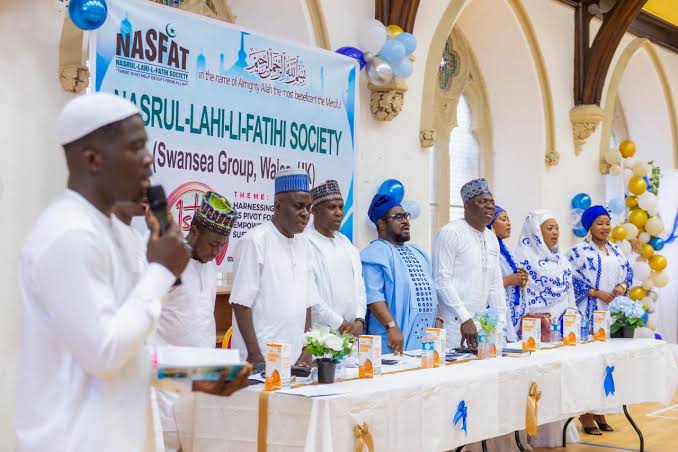
The NASFAT Agency for Zakat & Sadaqat (NAZAS) has collected N1 billion in Zakat over its 11 years of operation.
This was announced during the annual general meeting (AGM) held at Alausa, Ikeja, Lagos.
Presenting the annual report and accounts for the financial year ended December 31, 2025, NAZAS board chairman, Prof. Moruf Adelekan, stated that the agency generated N231.2 million in 2025, compared to N189.7 million in 2024. The agency disbursed N193 million to 349 beneficiaries during the period under review.
Adelekan cited persistent economic challenges in Nigeria, including macroeconomic reforms, fuel subsidy removal, and inflation.
“All these have contributed to the persistent cost-of-living challenge, placing additional financial strain on low- and middle-income households,” he noted.
He hailed the agency’s resilience and donors’ commitment despite economic pressures.
Adelekan announced that fund mobilisation had already surpassed N300 million by July 2026, marking the highest pace of collection in the agency’s history.
NAZAS general manager, Mr. Mufutau Adelotan, attributed the N1 billion milestone to increased public awareness and structural expansion.
He urged Nigerian Zakat institutions to form regional alliances to amplify their impact.
“Each agency should come together. If we are in the same region, let’s see if we can do a mega disbursement,” Adelotan said, explaining that rising costs of living have increased per-beneficiary expenditure while demand continues to outpace available funds.
Former NASFAT Women Affairs Secretary, Alhaja Nofisat Arogundade, urged the agency to establish operational footprints in the United Kingdom, Ireland and the United States, alongside appointing board representatives from additional Nigerian states.
NASFAT Chief Missioner, Sheikh Abdul Azeez Onike, hailed NASFAT Côte d’Ivoire for contributing half of the total Zakat funds collected across external zones, stressing the need for enhanced global publicity.
The NASFAT National Women Affairs Secretary, Alhaja Ganiyat Babalola, advocated including women in trade-oriented disbursement schemes, noting that previous programmes focused predominantly on youth.
Addressing the long-term vision, NAZAS Director Kubrat Olanrewaju Lawal emphasised that programmes like the “Train-To-Fund Scheme” (TTFS) aim to transition recipients from reliance on aid to financial independence. “We are empowering them to make sure they can stand on their own and eventually become Zakat payers themselves,” Lawal said.
We’ve got the edge. Get real-time reports, breaking scoops, and exclusive angles delivered straight to your phone. Don’t settle for stale news. Join LEADERSHIP NEWS on WhatsApp for 24/7 updates →
Join Our WhatsApp Channel