Youth inclusion is set to take centre stage in Benue State’s peace and security architecture as the government begins the validation of the State Action Plan on Youth, Peace and Security (YPS).
The move, championed by the Ministry of Youth, Sports and Creativity and the Benue State Local Steering Committee on Youth, Peace and Security, seeks to shift young people from being seen as mere beneficiaries of peace programmes to partners, leaders and architects of peace.
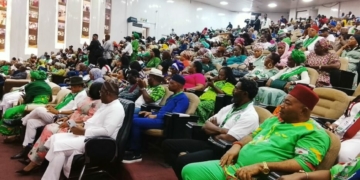
At the state validation meeting on the Draft Zero of the Action Plan held recently at the Reverend Father Alia Hall, SEMA Conference Hall, Makurdi, the commissioner for Youth, Sports and Creativity, Chief Solomon Iorpev, who opened the validation meeting, said the draft Action Plan was developed through collaboration between the ministry, the Benue State Commission for Peace and Reconciliation and Building Blocks for Peace Foundation.
Iorpev said the urgency of the YPS agenda is underscored by Nigeria’s demographic reality, citing UNFPA’s estimate of Nigeria’s population at 237.5 million in 2025, with UNICEF reporting that over 60 percent are below age 25.
He added that the National Youth Survey estimates Nigerians aged 15–35 at over 95 million, with about 79 percent living in rural areas — a dimension he said is critical for Benue where youths live in villages, farming communities and LGAs directly affected by conflict.
The commissioner disclosed that the Bureau of Statistics projects Benue’s population at 5.4 million in 2021 rising to about 5.7 million in 2024, but noted that the state also bears a heavy humanitarian burden, with IOM’s Displacement Tracking Matrix identifying 464,543 internally displaced persons in Benue as of October 2025, representing 34 percent of all IDPs across seven North-Central and North-West states.
He said behind the figure of 464,543 IDPs are families and young people whose education has been interrupted, livelihoods lost and trauma endured, adding that 25 percent of respondents in the 2025 Benue IDP Intention Survey across 18 sites in five LGAs reported being displaced in 2025 alone.
Citing ACLED data that June 2025 was the deadliest month in Benue since 2016 and that the state ranked fourth nationally for conflict fatalities in 2025, the Commissioner warned that conflict must be treated not just as a security issue, but as a development, education, employment and governance issue.
He said for too long conversations have focused on how to prevent young people from becoming involved in violence, whereas the more important questions should be how to enable them to prevent violence, mediate disputes and build social cohesion.
Anchoring Benue’s approach on UN Security Council Resolution 2250, he listed the five pillars of the YPS agenda; Participation, Protection, Prevention, Partnerships, and Disengagement and Reintegration stressing they must become practical state-level commitments.
On participation, he called for structured youth representation in peace and security mechanisms beyond symbolic mobilisation, while on protection he stressed the need to shield young people, especially women, persons with disabilities and displaced youth, from violence and exploitation.
For prevention, he advocated training young people as peace ambassadors, mediators and early-warning actors, leveraging technology to counter hate speech and misinformation, while partnerships, he said, must involve government, UN agencies, traditional institutions, civil society, private sector and youth-led organisations with actual investment.
He added that disengagement and reintegration must provide pathways for rehabilitation, skills, livelihoods and dignity for the youth affected by conflict, noting that youth development through skills, sports and creativity is itself peacebuilding.
The commissioner said that the final Action Plan must move from aspiration to implementation with clear indicators, baselines, financing and accountability, describing it as a potential social contract that affirms to Benue youth that their voice, safety, opportunity and leadership matter.
The chairman of the Benue State Local Steering Committee on YPS, Benjamin Terver Yager, said the workshop marks a milestone in strengthening the role of young people in peacebuilding, governance and sustainable development.
Yager said Benue has a very young and vibrant population with enormous energy, creativity and resilience, noting that young people are already contributing to peace, supporting vulnerable populations and providing leadership across communities.
He however acknowledged that many young people continue to face challenges including unemployment, insecurity, displacement and exclusion from decision-making, which limits their ability to contribute meaningfully to peace and development.
According to him, the validation exercise is not simply about reviewing a document, but about ensuring the strategy genuinely reflects the realities and aspirations of young people across the state.
Yager expressed appreciation to the Building Blocks for Peace Foundation for technical support and to the UN partners — IOM, UNFPA and UNHCR — for their partnership, and urged participants to scrutinise the draft with evidence and ensure the final strategy is youth-centred, inclusive, measurable and adequately financed.
Representing the executive director of Building Blocks for Peace Foundation, Rafiu Lawal, the Programme Manager, Mr Samson Shabu, said the development of the Action Plan was backed by concrete data collection and evidence gathering conducted across all three senatorial zones of Benue State.
Shabu explained that the data collection exercise was followed by zonal validation exercises across the three senatorial districts, providing opportunities for stakeholders and young people at the sub-state level to review and contribute to the emerging Action Plan. He noted that the process was part of broader efforts to ensure that the Action Plan reflects the diverse peace and security realities, experiences and priorities of young people across the state.
He further disclosed that Building Blocks for Peace Foundation had facilitated Youth, Peace and Security localisation workshops and supported the establishment of the Benue State Local Steering Committee on Youth, Peace and Security as part of efforts to localise, institutionalise, and popularise the YPS framework in the state.
According to him, these interventions are intended to strengthen local ownership of the YPS agenda and create mechanisms through which young people can contribute meaningfully to peacebuilding, conflict prevention and decision-making processes. Shabu reaffirmed the Building Blocks for Peace Foundation’s commitment to supporting the Benue State Government’s peacebuilding efforts and advancing a youth-centred approach to peace and security in the state.
The consultant responsible for developing the Action Plan, Mr Nathaniel Msen Awuapila, presented the data and evidence generated through the data collection exercise and situational analysis. He also presented the proposed Draft Zero of the Benue State Action Plan on Youth, Peace and Security to participants.
The presentations were followed by extensive breakout group and plenary discussions, during which participants critically examined the draft Action Plan. Participants provided observations, recommendations, and input aimed at strengthening the document and ensuring it adequately captures the realities, needs, and aspirations of young people across Benue State.
The validation exercise, therefore, provided an opportunity for stakeholders to collectively review the evidence underpinning the Action Plan, identify gaps and propose practical measures to strengthen the final document ahead of its adoption and implementation.
We’ve got the edge. Get real-time reports, breaking scoops, and exclusive angles delivered straight to your phone. Don’t settle for stale news. Join LEADERSHIP NEWS on WhatsApp for 24/7 updates →
Join Our WhatsApp Channel