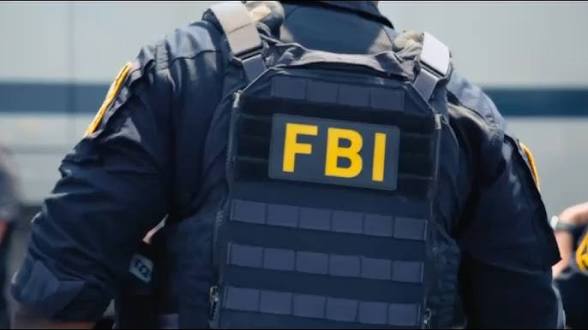
The United States Federal Bureau of Investigation (FBI), working with law enforcement agencies in Ghana, Nigeria and other countries, has arrested 28 suspected cybercriminals in a crackdown on international online scam networks, including 19 suspects in Ghana and nine in Nigeria.
The operation, codenamed “Operation Blackout,” also led to the recovery of more than 350 electronic devices, the identification of over 120 people allegedly trafficked and forced to participate in online fraud, and the discovery of more than $11 million in funds that could potentially be frozen.
The FBI further disclosed that, in partnership with Meta, more than 3.7 million accounts, pages and groups linked to scams had been removed from Facebook and Instagram.
FBI Director Kash Patel announced the figures, describing the operation as part of an expanding international effort to dismantle scam networks targeting Americans, particularly vulnerable and elderly people.
The FBI said the latest actions were carried out during a broader exercise known as “Joint Disruption Week,” involving law enforcement agencies across several countries.
The announcement follows a major operation in Ghana earlier in October, when authorities arrested or detained more than 130 people suspected of involvement in online scams and seized over 300 electronic devices.
Reports on the Ghana operation indicated that investigators identified 89 suspected fraud victims and traced losses of nearly $10 million. Some of those detained were reportedly victims of human trafficking who had allegedly been compelled to participate in online fraud schemes and were expected to be repatriated.
However, Ghana’s Cyber Security Authority later challenged accounts suggesting that the FBI had independently led the operation.
The authority explained that the exercise, also known as Operation Cyber Hunt, was planned, coordinated and carried out by Ghanaian authorities, with support from the country’s National Security Council, the Ghana Police Service’s Criminal Investigations Department, the United Kingdom’s National Crime Agency, the FBI, Nigeria’s Economic and Financial Crimes Commission (EFCC), the Joint Case Team on Cybercrime, the Ghana Immigration Service and the Office of the Attorney-General.
According to Ghanaian authorities, the operation followed intelligence received on August 26 concerning suspected organised cybercrime activities, including romance scams, allegedly operating from apartments in parts of the Greater Accra Region.
The exercise reportedly led to the arrest of eight suspects and the rescue of 120 people suspected of being trafficked and exploited in online fraud operations.
Items recovered included 136 mobile phones, 130 laptops, internet devices and four vehicles. Authorities also seized other materials, including 10 Nigerian passports.
The FBI’s latest announcement suggests that the operations in Ghana and Nigeria form part of a wider international campaign against organised online fraud.
The bureau said Operation Blackout had resulted in the seizure of approximately $17 billion globally, the arrest of hundreds of suspected scammers and the release of thousands of trafficked workers.
It also reported that the initiative had helped authorities alert more than 10,000 Americans before they lost money, averting an estimated $670 million in potential losses.
More than 120 trafficked workers were identified for repatriation, according to the FBI, while the nine suspects arrested in Nigeria are expected to face prosecution under Nigerian law.
The FBI described Operation Blackout as a worldwide effort to uncover and dismantle large-scale scam compounds and the criminal organisations operating them.
The campaign comes amid growing concerns that international criminal groups are shifting their activities across national borders and exploiting social media, cryptocurrency and other digital technologies to defraud victims.
The bureau also warned that scammers were increasingly using artificial intelligence to make fraudulent messages, online communications and impersonation attempts more convincing.
Through the operation, the FBI said it was seeking to disrupt not only individual suspects but also the compounds, digital systems, financial resources and human-trafficking networks sustaining large-scale online fraud.
“To the criminals stealing Americans’ hard-earned money: Your borders won’t protect you. Your compounds won’t hide you,” the FBI said in its latest warning.
The agency added that its international partnerships would continue to pursue scam networks wherever they operate.
We’ve got the edge. Get real-time reports, breaking scoops, and exclusive angles delivered straight to your phone. Don’t settle for stale news. Join LEADERSHIP NEWS on WhatsApp for 24/7 updates →
Join Our WhatsApp Channel