By Ibrahim Nasiru
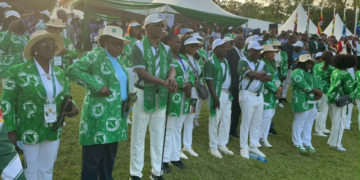
The announcement that Abuja will host a high-profile national convention and unveiling ceremony for the Arsenal Fans Club this weekend marks a stark, bittersweet moment in our national cultural lifecycle. Organizers are rolling out the red carpet for delegates from state and city chapters across the country to participate in an Annual General Meeting. While the event is polished and packaged under the noble guise of “community development and youth engagement through football,” the hard economic reality is far more sobering.
The club’s announcement that it will donate industrial refuse bins and sanitary tools to local markets under its philanthropic objective does not change this equation; it merely highlights the deep inequality of a system where Nigeria exports multi-million-Naira financial capital to North London and receives plastic waste bins in return.
This gathering represents the absolute peak of cultural dependency and a tragic case study in capital flight. It highlights how a country struggling with severe foreign exchange precarity and structural inflation continues to act as a hyper-profitable consumption colony for
European sports conglomerates.
The sheer scale of financial and emotional capital injected into foreign football by the Nigerian middle and elite classes is staggering. Hundreds of delegates are flying into the federal capital territory, booking hotel accommodations, renting premium event spaces, and printing custom merchandise. Every single kobo spent during this weekend-long corporate activation serves to strengthen the marketing reach of an elite English Premier League (EPL) brand located in North London. When millions of Nigerian citizens buy official foreign jerseys, pay high-priced premium cable subscriptions, and organize massive conventions for European clubs, wealth is systematically transferred from our local markets into the British economy. The English Premier League has successfully transformed football into a multi-billion-pound export product, and Nigeria has become one of its most loyal, uncompensated consumption hubs while its own domestic sports infrastructure starves.
This paradox forces us to ask a critical macroeconomic question: why are we failing to engage and encourage our own local football economy? The answers do not lie in a lack of passion among citizens, but in deep structural and governance deficits within the domestic sports market. For decades, the Nigeria Premier Football League (NPFL) has been crippled by administrative unpredictability, a severe lack of long-term corporate governance, and poor television broadcast rights management. Private capital naturally follows structure, transparency, and contractual sanctity. When local leagues are plagued by unpredictable match schedules, officiating controversies, and severe security precarity at match venues, corporate sponsors and the educated elite drift away. They choose to align their marketing budgets with European club brands where operations are highly organized, predictable, and corporate-friendly.
Furthermore, a pervasive social bias has transformed the support of European football into a status symbol, while local football is falsely marginalized as low-class. This elite bias creates a dangerous economic vacuum. While our national capital prepares to celebrate a North London football club, domestic clubs within the NPFL are traveling by road across precarious interstate terrains, struggling to meet basic player wage obligations, and playing in dilapidated stadiums devoid of modern broadcast infrastructure. We are actively outsourcing our entertainment infrastructure, leaving our local talent and domestic clubs to operate as underfunded, fragmented institutions. This is a severe policy failure in a nation where youth unemployment requires immediate, creative industrial solutions.
True sports development cannot be achieved through the lenses of sports imperialism. The global sports market is a massive production engine that should be utilized to generate local manufacturing jobs, build hospitality wealth around domestic match venues, and retain capital within the national federation. If the Ministry of Sports, sub-national governments, and private corporate entities genuinely desire to use football for national growth, that immense emotional energy must be forcefully redirected inward. We must build absolute structural security around our local stadiums, enforce uncompromising financial transparency within the NPFL, and mandate corporate entities operating in Nigeria to invest a clear percentage of their marketing budgets into grassroots domestic academies.
The battle line ahead of our future development cycles must be about moving Nigeria from a rentier economy of consumption to a disciplined hub of local production. We cannot continue to borrow capital to fund the consumption of foreign entertainment while our own local value chains decay from a lack of investment. The ultimate salvation of our sports economy lies in building our own domestic engines, supporting our local athletes, and ensuring that Nigerian passion creates Nigerian wealth. The era of acting as an uncompensated fan base for global multi-nationals must end. It is time to fix, finance, and fiercely defend the commercial sovereignty of Nigerian football.
Ibrahim Nasiru
Public Affairs Analyst
We’ve got the edge. Get real-time reports, breaking scoops, and exclusive angles delivered straight to your phone. Don’t settle for stale news. Join LEADERSHIP NEWS on WhatsApp for 24/7 updates →
Join Our WhatsApp Channel