On October 20, 2014, the World Health Organisation declared Nigeria free of Ebola, turning a near-catastrophe in Lagos into a case study for the world. Twelve years later, on the same date, the federal government confirmed that the virus had returned, this time through the Federal Capital Territory, in a woman who arrived on a flight from Uganda.
Contact tracing has begun, and 44 close contacts had been identified at the last count. The coincidence of dates should sober every official involved in the response, because the lessons of 2014 were bought at a terrible price and are easily forgotten once the danger passes.
The government has moved quickly, and that deserves acknowledgement. After an emergency meeting at the State House on Wednesday, the Chief of Staff to the President and chairman of the Presidential Task Force on Ebola, Femi Gbajabiamila, told journalists that about 44,000 flights had operated into and out of the country since the task force was inaugurated in June and credited surveillance for the early detection. The Coordinating Minister of Health and Social Welfare, Prof. Muhammad Ali Pate, said the incident management system had been activated with the WHO, the Africa Centres for Disease Control and Prevention and the Nigeria Centre for Disease Control and Prevention.
Ebola: FG Strengthens Entry Screening Over Reported Protocol Breaches
One detail in the official account, however, deserves closer scrutiny. By Gbajabiamila’s own admission, the patient showed no symptoms on arrival, and they appeared four days after she landed in Abuja. No thermometer at the airport could have caught her. Whatever credit is due for her detection belongs less to the counting of flights than to the health workers who recognised a dangerous illness when she presented with it. That is where Ebola is fought, and where, in 2014, it was nearly lost. Airport screening is a necessary filter, yet it is a filter with holes, and the government should say so plainly.
Nigerians remember how the 2014 index case, a traveller from Liberia, collapsed at the airport in Lagos and was taken to First Consultant Hospital, where Dr Ameyo Adadevoh and her colleagues resisted pressure to discharge him. Their insistence held the outbreak to 20 cases and eight deaths, and Adadevoh paid for it with her life. What saved the country then was a vigilant clinician in a private hospital, backed by a polio emergency operations centre that was swiftly repurposed for Ebola. Prof. Pate is right to recall that experience. Recalling it, though, will count for little unless the conditions that made it possible are restored.
Those conditions have weakened. Our hospitals are losing doctors and nurses to Britain, Canada, Saudi Arabia and elsewhere at a rate that ought to alarm any government, and a professor at the University of Lagos warned this week that the shortage of health workers could hobble the national response. Primary health centres in many states lack running water and basic protective gear. Federal spending on health has never come near the 15 per cent of total budget that African leaders pledged in the Abuja Declaration of 2001, a promise made in the same city where this case was confirmed. An outbreak exposes such neglect within days.
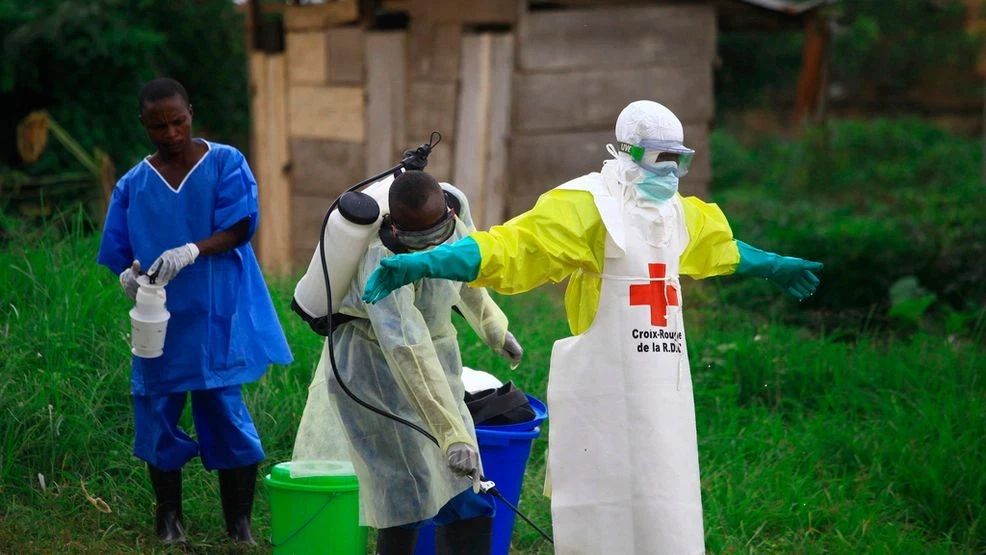
The threat itself is graver than it was a decade ago. The outbreak in the Democratic Republic of Congo had passed 8,700 confirmed cases and 4,200 deaths by early October, according to the WHO. Reports indicate that the strain driving the regional outbreak is Bundibugyo, for which there is no licensed vaccine. Abuja is a transit city through which officials and traders from across the continent pass every day. A single missed case in a crowded general hospital, where triage often means a long bench in a hot corridor, could seed a chain of infection that contact tracers will struggle to follow.
We therefore urge the task force to shift its attention from the arrival hall to the consulting room. Every public and private hospital in the FCT, and in states with international airports, should receive clear case definitions, adequate protective equipment and a reporting line that answers at night. Health workers who flag suspected cases must be protected and paid their hazard allowances promptly. Isolation centres built during COVID-19 and since abandoned should be inspected and restored. Laboratory capacity outside Abuja and Lagos must be confirmed, so that a sample from Kano or Port Harcourt does not wait days for a courier.
Communication matters as much as logistics. Gbajabiamila was right to stress community trust, and Pate was right to warn against misinformation. In 2014, Nigerians reportedly died after drinking excessive amounts of salt water on the strength of a rumour that it prevented infection. Social media moves far faster today, and a fake cure can travel further than the virus itself. The authorities should publish daily, factual updates on the number of contacts traced and tested. Panic thrives in silence. It also thrives when official statements sound more confident than the facts allow.
There is also the matter of the patient and the people around her. Contacts placed in isolation need food and income support while they wait, or some will slip away from monitoring. Stigma drove sick people underground in West Africa a decade ago, and it can do the same here if the response treats them as threats rather than citizens. The WHO has said that a single imported case does not mean Nigeria is experiencing an outbreak, and Nigerians may take some comfort from that. Comfort, however, is no substitute for preparation.
Sadly, this country tends to fund emergencies rather than systems, withdrawing money the moment public attention moves elsewhere. The task force should break that pattern. Whatever it spends in the coming weeks ought to leave behind something permanent: trained staff, stocked isolation wards, working laboratories and a surveillance network that reaches down to local government level.
The National Assembly, as it considers the next budget, should treat this case as evidence in that debate, because the bill for neglect always arrives, and it usually arrives in the form of a funeral.
Nigeria defeated Ebola once because a few people did their jobs under impossible conditions; it cannot afford to bet on heroism a second time.
We’ve got the edge. Get real-time reports, breaking scoops, and exclusive angles delivered straight to your phone. Don’t settle for stale news. Join LEADERSHIP NEWS on WhatsApp for 24/7 updates →
Join Our WhatsApp Channel