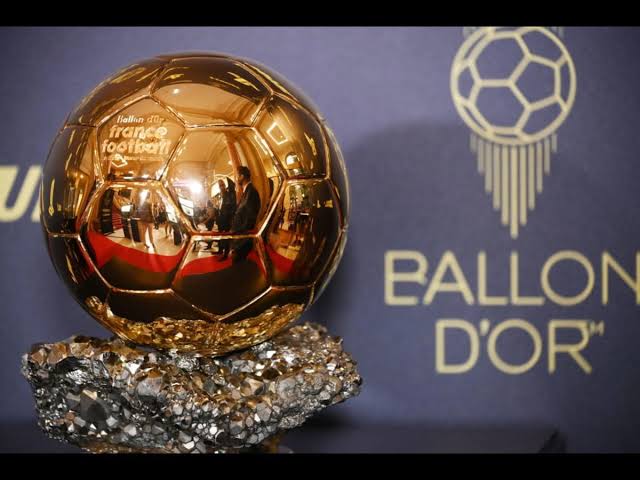
The race for the 2026 Ballon d’Or will be decided by an international jury of sports journalists, with individual performances, team achievements and fair play forming the three key criteria for selecting the winners.
The 70th edition of the prestigious awards takes place at the London Palladium on Monday, October 26, with 13 trophies to be presented across the men’s and women’s categories and other individual and team honours.
The Ballon d’Or, organised by France Football in partnership with UEFA, recognises outstanding performances during the 2025–26 football season.
How the voting works
The winners of the men’s and women’s Ballon d’Or awards are determined by international juries comprising specialist journalists from countries selected according to the FIFA world rankings.
For the men’s award, 100 journalists representing the top 100 countries in the relevant FIFA rankings participate in the voting. The women’s award is decided by 50 journalists representing the top 50 countries in the women’s rankings.
Each juror receives a shortlist of 30 nominees and selects their top 10 players, ranking them in order of merit.
Points are allocated according to each journalist’s ranking, with 15 points awarded to the first-placed player, 12 to the second, 10 to the third, eight to the fourth and seven to the fifth.
The remaining players receive five, four, three, two and one point respectively, from sixth to 10th place.
All points awarded by the jurors are added together, and the player with the highest overall score wins the award.
If two players finish level on points, the winner is determined by the number of first-place votes. If the tie persists, second-place votes and subsequent rankings are considered until the deadlock is broken.
Three criteria determine the winners
The voting process follows three main criteria, applied in order of importance.
Individual performance: Jurors first assess players’ performances, including their ability to produce decisive contributions and outstanding displays during the season.
Team achievements: Collective performances and trophies won with clubs and national teams form the second criterion.
Class and fair play: Players’ conduct and sportsmanship are also considered when determining the final rankings.
The system means that the award is not determined solely by goals scored or the number of trophies won, but by an assessment of individual excellence, team success and sporting conduct.
13 trophies up for grabs
The ceremony will feature 13 awards recognising achievements across men’s and women’s football.
The honours include the men’s and women’s Ballon d’Or, Kopa Trophy for young players, Yashin Trophy for goalkeepers, Gerd Müller Trophy for goalscorers, Johan Cruyff Trophy for coaches and Club of the Year awards.
The ceremony will also present the Sócrates Award, which recognises humanitarian and charitable initiatives supported by football personalities.
With the voting process designed to assess performances across an entire season, the final verdict rests with the journalists rather than supporters, players or national team coaches.
The results will determine which players and teams receive recognition for their achievements during the 2025–26 campaign.
We’ve got the edge. Get real-time reports, breaking scoops, and exclusive angles delivered straight to your phone. Don’t settle for stale news. Join LEADERSHIP NEWS on WhatsApp for 24/7 updates →
Join Our WhatsApp Channel