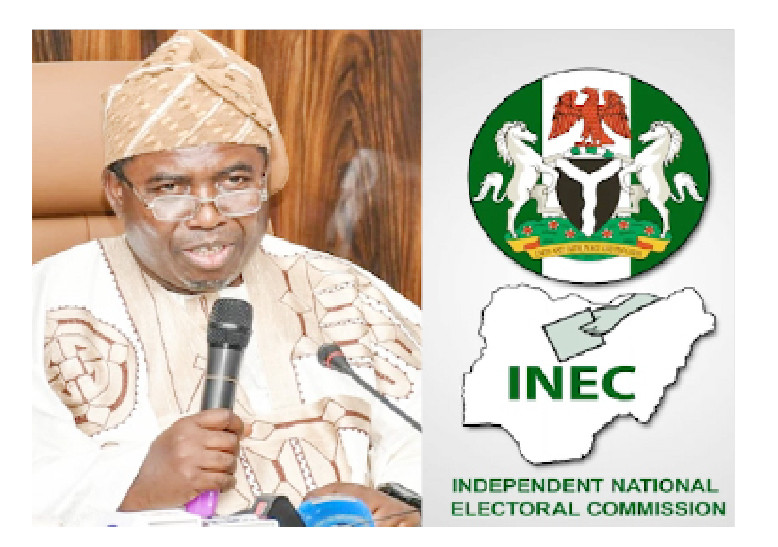
With the next general elections only a few weeks away, the body charged with counting Nigerians’ votes has been asked to count its own money. The Socio-Economic Rights and Accountability Project (SERAP) has gone to the Federal High Court in Abuja seeking an order of mandamus to compel the Independent National Electoral Commission (INEC) to explain how N126.46 billion appropriated for electoral operations was spent. The suit, marked FHC/ABJ/CS/2507/2026, rests on findings in the 2023 audited report of the Auditor-General of the Federation, released in August. Those findings deserve the close attention of every Nigerian who intends to vote.
The details are troubling. According to the report as cited by SERAP, about N112.16 billion was paid for ballot boxes, electoral devices and other materials without competitive bidding or a certificate of no objection from the Bureau of Public Procurement, and with no evidence that the items were in fact procured. Another N3.14 billion went to four contractors for ballot guides, sensitive materials and result sheets before the contracts had even been awarded. Some N9.25 billion was spread across 22 contracts for similar goods and services, all awarded on the same day, in a pattern auditors associate with splitting contracts to evade procurement thresholds.
The smaller items tell the same story. About N1.06 billion was spent on Toyota Prado vehicles without advertisement or bid evaluation. N129.38 million was paid to 19 accounting firms for audit services with no evidence that any work was carried out. Accreditation devices costing N504.49 million came with a security licence key delivered after it had expired and software valid for only four months. In several of these cases, the Auditor-General concluded that the money may have been diverted or lost. It bears stressing that these judgments come from the Federation’s own auditor, an officer of the state with no political interest in the outcome.
This is not the first time. In January, SERAP sued the commission over N55.9 billion meant for smart card readers, ballot papers and result sheets for the 2019 general elections, which an earlier audit report flagged as missing or possibly diverted. On that occasion, INEC told the auditors that procurement rules did not apply because smart card readers were a matter of national security, and that some payments were needed to conclude the 2019 elections and avert a constitutional crisis. The Auditor-General found those explanations unsatisfactory. Two audit cycles, two sets of queries and the same unconvincing answers should worry every Nigerian.
We recognise that the spending in question largely predates the current leadership of the commission. Prof. Joash Amupitan assumed office as INEC chairman in October 2025, and the transactions under review relate mainly to 2022 and 2023, in the run-up to the last general elections. That history does not excuse the institution. A commission is a continuing body, and its records, contractors and officials remain within reach. The new chairman has spoken of making the 2027 polls a watershed in the country’s electoral history. There is no better place to begin that watershed than with the commission’s own ledgers.
The stakes go beyond ordinary financial accountability. An election is an act of public trust, and the electoral umpire is its custodian. When Nigerians are told that tens of billions of naira paid for ballot boxes and result sheets cannot be traced to physical items, they are entitled to ask what was used in 2023, where those materials are now, and whether the same contractors are back in business for 2027. Disputed results and the endless petitions before election tribunals feed on a single suspicion: that the process was compromised long before the first vote was cast.
That suspicion can only deepen with the sums now involved. INEC has proposed a budget of N873 billion for the 2027 elections, a figure that dwarfs the amounts under query. Nigerians cannot be asked to fund such an outlay without assurance that procurement will follow the law. The commission should publish, well ahead of the polls, the full list of contractors engaged for 2027, with their beneficial owners and the value of each contract. The Bureau of Public Procurement must also be seen to have cleared every major award, and its certificates should be open to public inspection.
Sadly, audit reports in this country too often end their life on a shelf. The Auditor-General issues his findings, the Public Accounts Committees of the National Assembly hold a hearing or two, and the matter fades. That cycle must break here. The committees should summon INEC’s accounting officers without delay and publish what they find. Where the evidence points to diversion, the Economic and Financial Crimes Commission and the Independent Corrupt Practices and Other Related Offences Commission should step in, and money recovered must be returned to the treasury, as the Auditor-General has recommended.
INEC need not wait for a court order. The commission can answer SERAP’s request in full by placing the relevant documents in the public domain and explaining each transaction the auditors flagged. If it has good answers, publishing them will strengthen its hand on the eve of a difficult election. If it does not, the public deserves to know before, rather than after, it hands the same institution responsibility for the next transfer of power. Silence is the worst option available to the commission, because silence will be read, fairly or not, as an admission.
At the commission’s stakeholders’ meeting this month, the INEC chairman said that in national elections it is far more important to be right than to be first. The same standard should apply to the commission’s books. Nigerians will soon be asked to queue for hours under the sun, sometimes in dangerous places, to cast ballots that INEC will collate and declare. They are entitled to expect that the umpire has kept faith with them in the use of their money long before it asks them to accept its results.
An umpire that cannot account for its whistle should not be surprised when the players dispute the result.
We’ve got the edge. Get real-time reports, breaking scoops, and exclusive angles delivered straight to your phone. Don’t settle for stale news. Join LEADERSHIP NEWS on WhatsApp for 24/7 updates →
Join Our WhatsApp Channel