
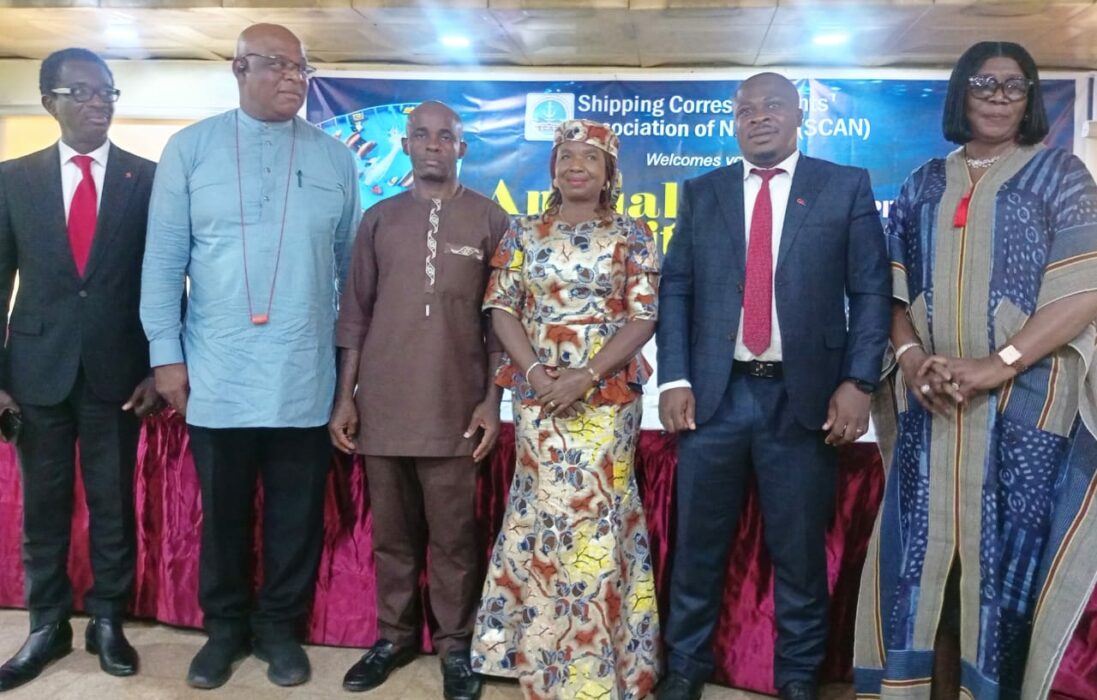
Shipping experts have faulted the Nigerian Maritime Administration and Safety Agency (NIMASA) over regulatory uncertainties and commercial banks over stringent lending conditions, which they said are undermining indigenous shipping growth and delaying access to vessel financing.
The experts, who spoke at the 2026 annual summit of the Shipping Correspondents Association of Nigeria (SCAN), titled, “Low-Risk Capital for Indigenous Shipowners: Overcoming Regulatory, Financial Bottlenecks,” stressed that Nigeria’s indigenous shipowners continue to face significant financial and regulatory barriers that limit their ability to acquire vessels, expand operations and compete effectively with foreign operators.
CVFF Not Held In Dollars As Naira Conversion Eroded $350m Fund’s Value – Omatseye
NIMASA Tightens Cabotage Enforcement To Protect Local Shipowners, Detains Four Vessels
NIMASA Automates Ship Registry To Boost Nigerian Flag Competitiveness
They called for a transparent and predictable regulatory framework, improved coordination among maritime institutions and innovative financing arrangements to unlock investment in the country’s shipping industry.
A maritime lawyer and founding partner of AOL and former president of the Nigerian Bar Association (NBA), Dr Olisa Agbakoba, said regulatory uncertainty increases investment costs and discourages the long-term financial commitments required to develop a competitive domestic fleet.
He urged the government and relevant maritime agencies to ensure consistent enforcement of regulations, transparent administrative procedures, clearly defined institutional responsibilities and a predictable system for administering applicable waivers.
Agbakoba who was represented by Akunne John Paul, warned that without proactive intervention by NIMASA, indigenous operators would continue to lose lucrative opportunities in coastal shipping to foreign competitors.
He also called for stronger coordination between NIMASA, the Federal Ministry of Marine and Blue Economy, the Nigerian Ports Authority (NPA) and the Nigerian Ports Economic Regulatory Agency (NPERA), noting that regulatory alignment was essential to building investor confidence and facilitating timely financing.
Beyond regulatory reforms, Agbakoba urged commercial banks and institutional investors to develop the expertise and financing structures required to support the acquisition and operation of vessels.
“Banks and institutional investors must become active partners in developing Nigeria’s National Fleet. This requires specialised maritime credit expertise, reliable vessel valuations, technical assessments, and sound legal advice on ship mortgages, charter contracts, insurance, and cross-border enforcement,” he said.
He explained that vessel financing should reflect the commercial circumstances of individual projects, noting that ships backed by credible long-term charter contracts present different risk profiles from those dependent on uncertain spot-market earnings.
According to him, commercial banks, development finance institutions, insurers, private investors and export credit agencies should explore a combination of debt, equity, leasing, guarantees and other financing arrangements to expand access to capital.
On the Cabotage Vessel Financing Fund (CVFF), Agbakoba described the fund as an important instrument for supporting indigenous vessel ownership but maintained that public financing alone could not deliver a sustainable national fleet.
He said the fund should complement commercial bank lending, development finance, private investment and cargo-backed financing rather than substitute for a functioning commercial shipping market.
“The Fund should complement commercial bank lending, development finance, private investment, and cargo-backed financing. Its administration requires transparent eligibility criteria, rigorous credit assessment, appropriate collateral, clear risk allocation, effective monitoring, and recovery arrangements.
“The focus must shift from simply seeking money to acquire vessels towards developing viable transactions that connect cargo demand, suitable vessels, credible operators, and willing financiers,” he stated.
Agbakoba stressed that the availability of funds would not automatically translate into fleet expansion without reliable cargo commitments, credible shipowners and effective risk-management arrangements.
“Without dependable cargo, shipowners will struggle to attract capital. Without credible operators and effective security, lenders will hesitate. Without regulatory certainty, investors may decline otherwise viable opportunities.
“We must therefore move beyond asking, ‘Where will the money to acquire Nigerian vessels come from?’ and ask a more fundamental question: ‘Where is the cargo and commercial opportunity that will make Nigerian vessels financeable?’” he said.
Similarly, former NIMASA Director-General, Temisan Omatseye, criticised the capacity of Nigerian commercial banks to finance shipping projects, arguing that their preference for short-term lending was incompatible with the substantial capital requirements and lengthy repayment periods associated with vessel acquisition.
Omatseye said the cost of acquiring large commercial vessels and the time required to recover such investments made conventional short-term bank loans unsuitable for developing a globally competitive indigenous shipping industry.
“There is money available for this, and I keep telling people that we can never be competitive in our shipping industry because of what? Sorry, bankers may not like this. The banks in Nigeria do not have the capacity to finance shipping.
“One LNG tanker alone is about $250 million. Repayment cannot be less than 15 years. I’m sorry to say this again, our banks are just traders looking for short-term loans,” he said.
His comments highlighted the financing mismatch confronting indigenous shipowners, who require substantial long-term capital to acquire vessels but often face lending conditions that make such investments difficult to undertake.
Meanwhile, the United Bank for Africa (UBA), Regional Manager, Apapa, Nelson Edoye, called for structured partnerships between financial institutions, regulators and maritime industry stakeholders to address the funding gap.
Edoye said indigenous shipowners faced the twin challenges of inadequate access to patient capital and regulatory complexities, stressing that coordinated action was necessary to improve their competitiveness.
“The maritime sector remains a cornerstone for economic diversification, job creation and national prosperity. Yet, indigenous shipowners continue to face the twin challenges of access to patient capital and regulatory complexities. Bridging this gap requires deliberate partnership between the financial sector, regulators, and industry stakeholders,” he said.
He added that UBA’s presence across 20 African countries and its global operations had given the bank an understanding of the capital-intensive nature of shipping and the need for innovative financing structures that reduce lending risks.
“At UBA, with our presence in 20 African countries and global operations, we understand the capital-intensive nature of shipping and the need for innovative, de-risked financing structures. We remain committed to supporting indigenous participation in the maritime value chain through tailored financing solutions, trade facilitation, and advisory services that unlock growth and enhance competitiveness,” Edoye stated.
The experts maintained that addressing regulatory bottlenecks, improving access to long-term financing and linking vessel acquisition to dependable cargo opportunities would be critical to strengthening indigenous participation in Nigeria’s shipping industry.
We’ve got the edge. Get real-time reports, breaking scoops, and exclusive angles delivered straight to your phone. Don’t settle for stale news. Join LEADERSHIP NEWS on WhatsApp for 24/7 updates →
Join Our WhatsApp Channel