Though Nigeria has recorded progress in restoring macroeconomic stability, the Nigerian Economic Summit Group (NESG), has warned that the country cannot afford to mistake stabilisation for prosperity.
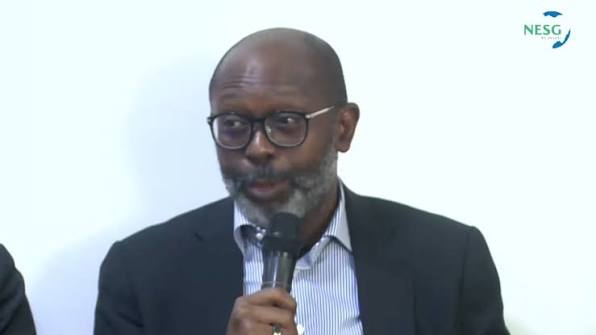
The incoming chairman of NESG, Omoboyede Olusanya, who issued the warning, said the next phase of national economic management must ensure that growth produces jobs, higher productivity, better incomes and improved living standards for ordinary Nigerians.
Olusanya, while speaking at the closing of the 32nd Nigerian Economic Summit (NES#32) in Abuja, noted that “Growth that delivers is growth whose impact is strongly felt,” setting the tone for his forthcoming leadership of the private-sector-led policy group.
The summit was held under the theme, “Growth that Works: Delivering Jobs, Productivity and Shared Prosperity,” and brought together government officials, business leaders, development partners, academics, civil society organisations and young Nigerians.
The NESG incoming chairman acknowledged that recent reforms have helped restore macroeconomic stability. But he insisted that stability, while necessary, is not sufficient to change the material conditions of households, businesses and communities across the country.
“Bridging the distance between macroeconomic stability and accelerated growth, and between accelerated growth and improved lives and livelihoods, is the task before us all,” he said.
Olusanya argued that Nigeria’s economic success should no longer be assessed mainly through headline growth figures.
Instead, he said, progress must be measured by whether farmers earn more from improved productivity, manufacturers reduce production costs, graduates secure decent jobs, businesses access affordable financing, and children receive adequate nutrition and healthcare.
His message places the burden of reform beyond fiscal and monetary policy. It asks whether growth is reaching the farm, the factory floor, the market, the classroom and the home.
A New Benchmark For Progress
As he prepares to assume the NESG chairmanship, Olusanya introduced “Growth that Delivers” as the guiding principle of his tenure. The phrase signals a shift in emphasis from policy announcements and macroeconomic indicators to measurable outcomes in employment, incomes, enterprise development and social wellbeing.
He said Nigeria must accelerate productivity, expand productive investment and ensure that economic growth reduces poverty. For him, the question facing policymakers and business leaders is not only whether the economy is growing, but who benefits from that growth and how quickly the benefits are felt.
The warning comes at a time when the country’s reform agenda has generated debate over the balance between difficult adjustment measures and their impact on citizens.
At NES#32, participants repeatedly returned to the need to translate reform gains into tangible socioeconomic results, including decent jobs, improved public services and stronger productive capacity.
Five commitments for delivery:
To move from rhetoric to results, Olusanya outlined five commitments that will guide the NESG’s work in the coming years.
First, on accountability, he pledged that every priority commitment emerging from the summit would have a designated owner, timeline and measurable success indicators. The NESG plans to build on its Accountability Framework and publish progress ahead of the 33rd Nigerian Economic Summit.
Second, on evidence, the group will strengthen research and policy intelligence to produce rigorous, practical and costed recommendations linked to the National Development Plan 2026–2030.
Third, on investment, Olusanya said the NESG would work with government, financial institutions and partners to convert policy ideas into bankable projects. The focus will be on mobilising capital into agriculture, manufacturing, infrastructure, technology, entrepreneurship and skills development.
Fourth, on reach, the NESG will push for economic opportunities across all regions and states, with greater attention to micro, small and medium enterprises and the informal economy, in line with the Scale Nigeria agenda.
Fifth, on institutional sustainability, the organisation will broaden its membership, increase the participation of women and young people, protect its independence and strengthen its capacity to serve future generations.
Government must lower costs
Olusanya called on governments at all levels to sustain and improve ongoing reforms, reduce the costs of power, logistics and doing business, and maintain predictable policies backed by clear, measurable commitments.
The appeal speaks directly to one of the biggest constraints facing Nigerian enterprises. High energy costs, poor logistics, regulatory uncertainty and limited access to affordable credit continue to raise production costs and weaken competitiveness. For small businesses and manufacturers, these pressures often determine whether growth translates into expansion, employment and higher wages.
He urged private-sector leaders to invest, innovate, develop workforce skills, pay fairly and create productive jobs. According to him, businesses must not only pursue profit but also contribute to creating an economy that offers meaningful opportunities for Nigerians.
Olusanya also challenged young Nigerians to build enterprises, acquire relevant skills and hold institutions accountable. He encouraged civil society organisations to monitor commitments made at the summit and amplify the voices of underserved communities.
Development partners, he said, should align their support with Nigeria’s priorities and focus on financing outcomes. He further called for stronger trade and investment relations with the international community, as well as closer collaboration among academia, industry and policymakers to equip Nigerians with the skills required in a changing economy.
The incoming chairman acknowledged the leadership of the outgoing NESG chairman, Niyi Yusuf, describing his tenure as one that guided the organisation through a period of transition and reform. He said the handover represents a continuation of the NESG’s mission, which began in 1993.
Olusanya reaffirmed that the NESG would remain independent, non-partisan, private-sector-led and evidence-driven, while engaging constructively with government in pursuit of national prosperity.
“Our allegiance is to national prosperity and not to any administration,” he said.
He thanked the NESG Board, members, chief executive officer Dr Tayo Aduloju, management, staff, volunteers, sponsors, partners and delegates for their contributions to the summit. He then urged stakeholders to turn the discussions into measurable action.
“Growth that works must become growth that delivers. Let us deliver,” Olusanya said.
The central issue raised at NES#32 is whether Nigeria can move from a period of economic stabilisation to one of broad-based transformation. Olusanya’s intervention makes clear that the NESG intends to hold both public and private actors to practical outcomes: jobs created, enterprises supported, productivity improved, incomes raised and poverty reduced.
We’ve got the edge. Get real-time reports, breaking scoops, and exclusive angles delivered straight to your phone. Don’t settle for stale news. Join LEADERSHIP NEWS on WhatsApp for 24/7 updates →
Join Our WhatsApp Channel