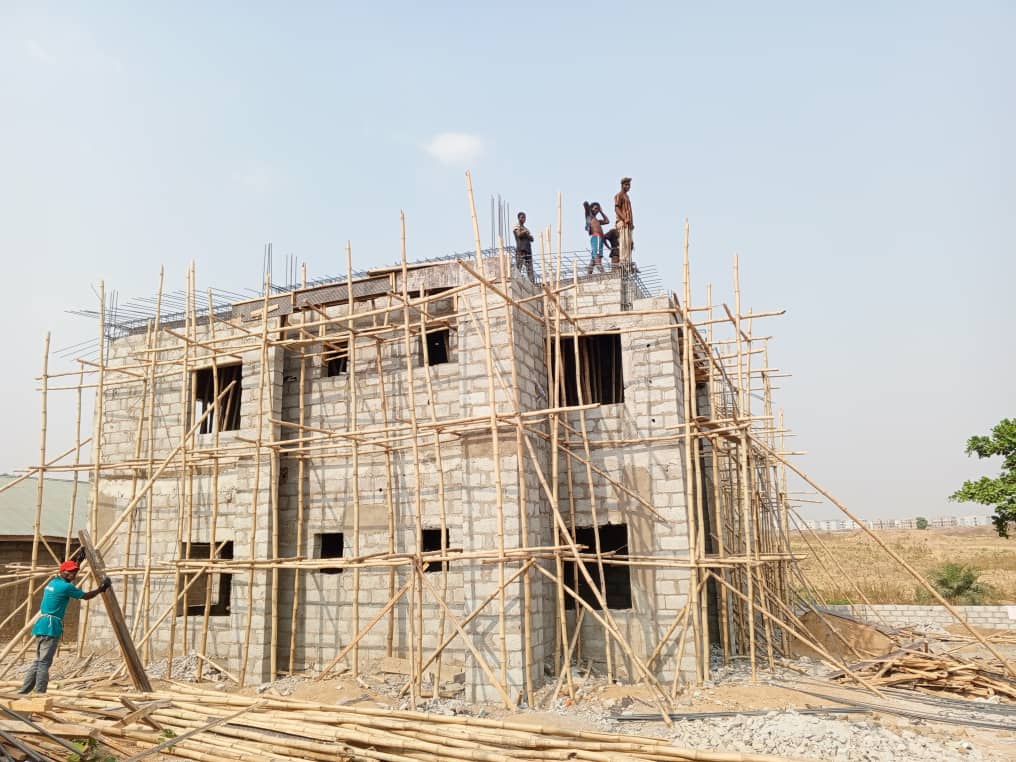
The Housing Development Advocacy Network (HDAN) has called on the National Assembly to intervene urgently in the rising cost of building materials, warning that continued price increases are pushing homeownership beyond the reach of millions of Nigerians.
In a policy research report titled Reducing the High Cost of Building Materials in Nigeria and Across Africa: Towards Affordable Housing, Stronger Local Manufacturing and Sustainable Construction, HDAN urged federal lawmakers to work with the executive branch to introduce a 100-day emergency action plan to address construction costs.
The organisation said the plan should include a nationwide review of the prices of cement, reinforcement steel, roofing sheets, tiles, glass, electrical fittings and plumbing materials. It also called for an examination of manufacturing and distribution costs, tax incentives, competition concerns and progress on the federal government’s proposed building-materials manufacturing hubs.
HDAN executive director, Festus Adebayo, said the high cost of construction inputs had become a national economic challenge requiring coordinated legislative and executive action.
“Housing affordability cannot be achieved through speeches, promises and ambitious housing targets alone. The cost of building materials must become a major national policy priority,” he said.
According to HDAN, expensive energy, transportation and logistics costs, foreign-exchange pressures, high financing costs, inadequate industrial infrastructure and import dependence are among the factors driving prices upward.
The group specifically asked the National Assembly’s committees on housing, industry, trade, finance and economic development to conduct a comprehensive investigation and public hearing into the cement and steel markets. It proposed that manufacturers, the Federal Competition and Consumer Protection Commission, the Standards Organisation of Nigeria, relevant ministries, developers, financial institutions and housing consumers participate in the process.
HDAN cited figures attributed to the FCCPC, indicating that Nigeria has an estimated installed cement-production capacity of 60 million to 65 million metric tonnes annually, compared with estimated domestic consumption of 25 million to 30 million tonnes. While acknowledging that installed capacity does not necessarily translate into actual output or affordable supply, the organisation said an independent assessment was needed to examine production efficiency, operating costs, distribution arrangements, competition and pricing practices.
Among its recommendations, HDAN proposed a review of taxes and tariffs on essential construction materials; targeted, time-bound relief for critical manufacturing inputs; improved electricity and gas supply; and measures to reduce transportation and logistics costs.
It also recommended accelerated development of manufacturing hubs across the six geopolitical zones, affordable long-term financing for local producers, greater investment in indigenous building materials and the creation of a national building-materials price-monitoring system.
The proposed monitoring system would track factory, wholesale and delivered prices across the country to improve transparency and help policymakers identify unusual price movements.
HDAN further urged investment in alternative materials, including stabilised earth blocks, laterite-based products and prefabricated components, subject to appropriate safety standards. It also called for dedicated development-finance support for local production of roofing materials, steel components, ceramics, glass and sanitary fittings.
Adebayo said government incentives to manufacturers must deliver measurable benefits to consumers.
“Any government incentive granted to manufacturers must produce measurable public benefits. We cannot continue to provide concessions without establishing whether they translate into reduced construction costs, increased production, more jobs and more affordable housing,” he said.
The organisation also proposed a National Building Materials Affordability and Local Manufacturing Compact involving federal and state governments, manufacturers, financial institutions, construction professionals, developers and consumer representatives. It said the framework should set measurable commitments for manufacturing efficiency, energy supply, logistics, price transparency, and affordable housing delivery.
HDAN added that regional cooperation under the African Continental Free Trade Area could improve access to certified construction materials, production equipment, technology and markets.
Adebayo warned that high building-material costs delay projects, discourage investment, raise development expenses and increase pressure on rents. He said reducing construction costs should be treated as an economic-development strategy capable of stimulating production, creating jobs and improving living conditions.
“Nigeria must move from merely reacting to rising cement and steel prices to implementing a deliberate national strategy for reducing construction costs,” he said.
HDAN reaffirmed its readiness to submit its report and recommendations to the National Assembly, the Federal Ministry of Housing and Urban Development and other relevant institutions.
“The ultimate objective must not simply be cheaper cement or cheaper iron rods. It must be cheaper, safer and more accessible housing for Nigerians. That is the real measure of success,” Adebayo added.
We’ve got the edge. Get real-time reports, breaking scoops, and exclusive angles delivered straight to your phone. Don’t settle for stale news. Join LEADERSHIP NEWS on WhatsApp for 24/7 updates →
Join Our WhatsApp Channel