By Danlami Nagari Sani
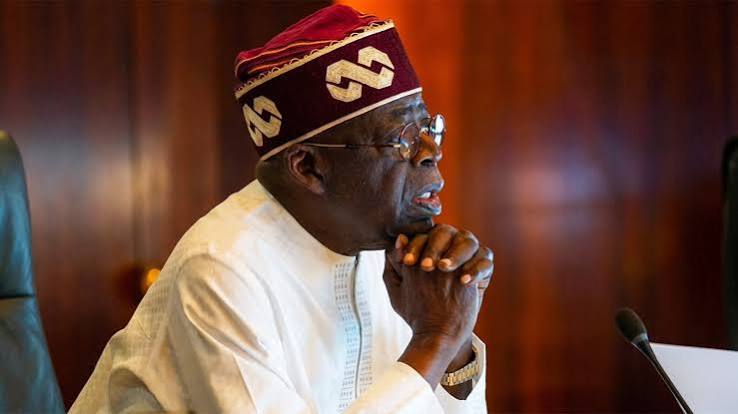
Two descriptions by separate media outlets of President Bola Ahmed Tinubu’s reported meeting with some leaders from Northern Nigeria on Thursday, November 5, 2026, have left behind a troubling picture of exclusion, political misrepresentation and an unnecessary attempt to deepen religious divisions in a region already grappling with enormous challenges.
One version of the story stated that Tinubu received a delegation of Middle Belt leaders at the Presidential Villa in Abuja. Another described the President as having met with leaders from the North-East and North-Central geopolitical zones.
Those listed as members of the delegation included the Minister of Defence, General Christopher Musa (Kaduna); Plateau State Governor, Caleb Mutfwang; Taraba State Governor, Agbu Kefas; former Chief of Army Staff, General T.Y. Danjuma (Taraba); former Speaker of the House of Representatives, Yakubu Dogara (Bauchi); and former Chief of Army Staff, General Ishaya Bamaiyi (Kebbi).
Also present were businessman Thomas Etuh (Kogi) and Dr Pogu Bitrus (Borno).
There could have been other less prominent personalities whose identities were either eclipsed by media coverage or deliberately omitted by those behind the meeting, for reasons best known to them. Nevertheless, those whose names were publicised could hardly be the only people considered eminently qualified to represent either the so-called Middle Belt or the North-Central geopolitical zone.
For instance, the Minister of Defence, Christopher Musa, is from Kaduna State in the North-West, not the Middle Belt or North-Central. The same applies to General Bamaiyi, who hails from Kebbi State, also in the North-West.
Consequently, describing the delegation as representing the Middle Belt or North-Central raises serious questions about the accuracy of the description and the criteria used in assembling its membership. It is a mischaracterisation that cannot be dismissed as a mere semantic disagreement, particularly when the composition of the delegation carries significant political and religious implications.
The more troubling dimension is that the reported composition appears to have been heavily influenced by religious considerations. If the intention was to bring together Christian leaders to express solidarity with the President, there would have been nothing inherently objectionable about such an engagement. Christians, like Muslims and members of other religious communities, have every democratic right to organise, express their political preferences and engage the government.
However, it becomes problematic when a gathering of people sharing a religious identity is presented as representing an entire geographical or socio-cultural constituency, especially when other equally qualified citizens from the same region are conspicuously excluded.
Using the six-geopolitical-zone arrangement, the North-Central comprises Benue, Kogi, Kwara, Nasarawa, Niger and Plateau states.
On the other hand, the Middle Belt is an informal geographical and cultural transition zone stretching across the central longitudinal corridor of Nigeria. Its framers manoeuvred their way to find a space for it between the predominantly Muslim/Hausa-Fulani North.
Over time, those who champion political, economic and social conveniences have snaked their way through the Christian-dominated areas in Plateau, Benue, Nasarawa, Niger, Kwara and Kogi states, as well as the Federal Capital Territory (Abuja) and parts of the North-East and North-West, to include similar areas in Taraba, Adamawa, Southern Kaduna, Southern Bauchi, Southern Gombe, Southern Borno, Southern Yobe and Southern Kebbi.
In all of these places, Muslim ethnic and religious leaders, no matter their pedigree and contribution to nation-building, are deliberately being excluded from the Middle Belt simply because of their religious identity.
Its proponents have, over the years, sought to establish a distinct identity for communities in the country’s central belt.
However, the difficulty arises when the identity is defined and deployed in ways that exclude people on the basis of religion, regardless of their geographical location, ancestry, contribution to society or political standing.
The question, therefore, is whether the emerging definition is genuinely intended to promote the interests of these communities or whether it is increasingly becoming a convenient political instrument for creating religious boundaries within Northern Nigeria.
During the recent visit to Tinubu, consider the exclusion of prominent political figures who have occupied some of the most important legislative positions in the country.
How does one explain the absence of Ahmed Idris Wase, from Plateau State in the North-Central, who served as Deputy Speaker of the House of Representatives between 2019 and 2023?
Similarly, Usman Bayero Nafada, from Gombe State in the North-East, served as Deputy Speaker between 2007 and 2011. Babangida Nguroje, from Taraba State, also occupied the position between 2003 and 2007. Were these distinguished former presiding officers suddenly rendered unqualified to participate in an engagement concerning the political future of their region?
Yet, former Speaker Yakubu Dogara, a Christian from Bauchi State, was part of the delegation.
Sani sent this piece from Wukari, Taraba State.
We’ve got the edge. Get real-time reports, breaking scoops, and exclusive angles delivered straight to your phone. Don’t settle for stale news. Join LEADERSHIP NEWS on WhatsApp for 24/7 updates →
Join Our WhatsApp Channel