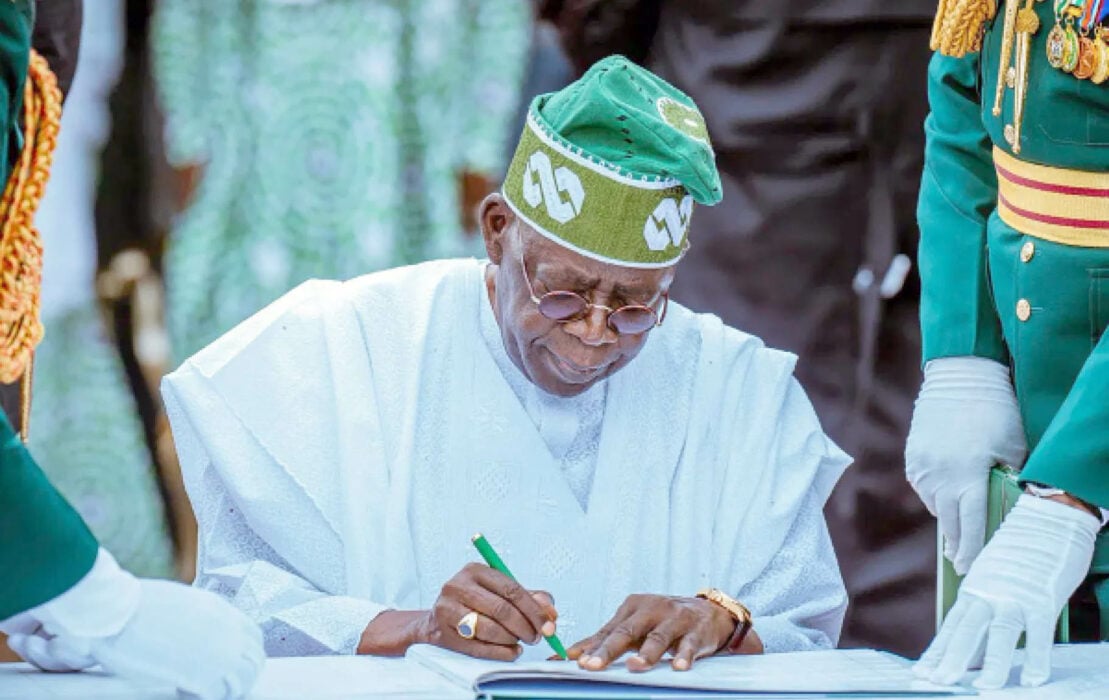
If there’s one thing President Bola Tinubu has proven since assuming office, it’s that he governs with the urgency of a man convinced time is a hostile opponent. This week’s Federal Executive Council (FEC) meeting was another display of that restlessness — an avalanche of policy directives, fiscal reviews, billion-naira approvals, and long-term targets.
At the top of the pile was a move that could shake the foundations of Nigeria’s public finance: a comprehensive review of all deductions and revenue retention practices by our major revenue-generating agencies — FIRS, Customs, NUPRC, NIMASA, and, most significantly, the NNPC.
This is not a minor housekeeping exercise. When a president orders his Economic Management Team to revisit the NNPC’s 30% management fee and 30% frontier exploration deductions in the Petroleum Industry Act, it’s a signal that the old “cost of collection” comfort zone is over.
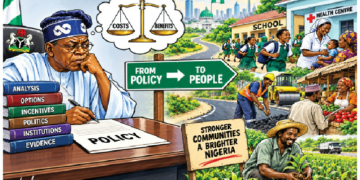
President Tinubu’s argument is simple: with public investment accounting for barely 5% of GDP, Nigeria cannot afford to let potential growth capital stay locked up in agency accounts or melt away in administrative expenses.
The bigger picture is even clearer: a $1 trillion economy by 2030, anchored on an average annual growth of 7% from 2027. For Tinubu,— it is, in his words, “a moral imperative” to tackle poverty.
But growth targets mean little if the engine room — in this case, the education sector — is running on fumes. In a rare display of political steel, the Federal Government slammed the brakes on the establishment of new federal universities, polytechnics, and colleges of education for the next seven years.
Minister of State for Education, Dr. Tunji Alausa was blunt: Nigeria’s problem is no longer access to tertiary education, but a glut of underfunded, underpopulated institutions producing graduates ill-equipped for the job market.
The statistics are alarming — 199 universities had fewer than 100 JAMB applicants this academic year, and 34 had none. There’s even a federal university with fewer than 800 students but over 1,200 staff.
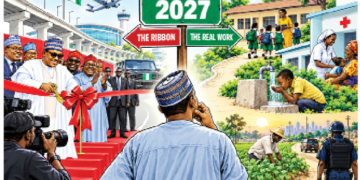
Tinubu’s government now says it will channel resources into rehabilitating infrastructure, hiring and training quality lecturers, and boosting carrying capacity. Nine private universities were still approved — but only because their applications had been gathering dust for over six years. The message is clear: no more ribbon-cutting ceremonies for ghost campuses.
If Tinubu’s economic dream is to stand on solid ground, it will need literal foundations. This week, the FEC approved ₦13 billion in compensation for properties along the Lagos Industrial Transmission Project’s right-of-way, alongside $34 million for new high-capacity transformers. Minister of Power Adebayo Adelabu was frank about the state of the grid: ageing, overloaded, and prone to collapse.
Two 150MVA transformers, three 100MVAs, five 60MVAs, and two 30MVAs will soon be dispatched to strategic locations to boost reliability. Lagos’ industrial clusters, the beating heart of Nigeria’s manufacturing, are first in line. The vision is a power system that supports industry, not suffocates it.
On the works front, Minister David Umahi secured FEC’s blessing for ₦493 billion worth of road and bridge projects — the Kano–Katsina highway and the long-overdue replacement of the Carter Bridge in Lagos. The Carter’s substructure has been eaten away by sand mining, erosion, and corrosion, and engineering studies now recommend a complete rebuild. Umahi also dangled eye-watering figures for rehabilitating or replacing the 3rd Mainland Bridge, with cost estimates brushing ₦3.8 trillion.
Infrastructure, for this administration, is both a political statement and a fiscal gamble.
It wasn’t all steel, roads, and megawatts. Politics, after all, runs on people. Tinubu reappointed Abubakar Sadiq Yelwa as CEO of N-HYPPADEC, nominated Louis Odion and Rabiu as FCCPC executive commissioners, and prepared for a diplomatic double-header — Japan for TICAD9 and Brazil for a state visit.
Tinubu’s flurry of directives and approvals is the mark of a government in a hurry. But as with all political sprints, the danger is running out of breath before the finish line. Reviewing NNPC deductions, halting tertiary expansion, and pouring billions into infrastructure are decisive moves — but they are also politically risky.
Nigerians will judge not by the size of the contracts signed, but by the quality of life changes delivered. Will 7% growth feel real in the marketplace? Will a stable grid mean fewer blackouts? Will a moratorium on new universities lead to better graduates, or simply a better-fed bureaucracy?
Tinubu’s Renewed Hope Agenda rests on a delicate balance: move fast enough to break economic inertia, but steady enough to keep the system from breaking apart.
We’ve got the edge. Get real-time reports, breaking scoops, and exclusive angles delivered straight to your phone. Don’t settle for stale news. Join LEADERSHIP NEWS on WhatsApp for 24/7 updates →
Join Our WhatsApp Channel