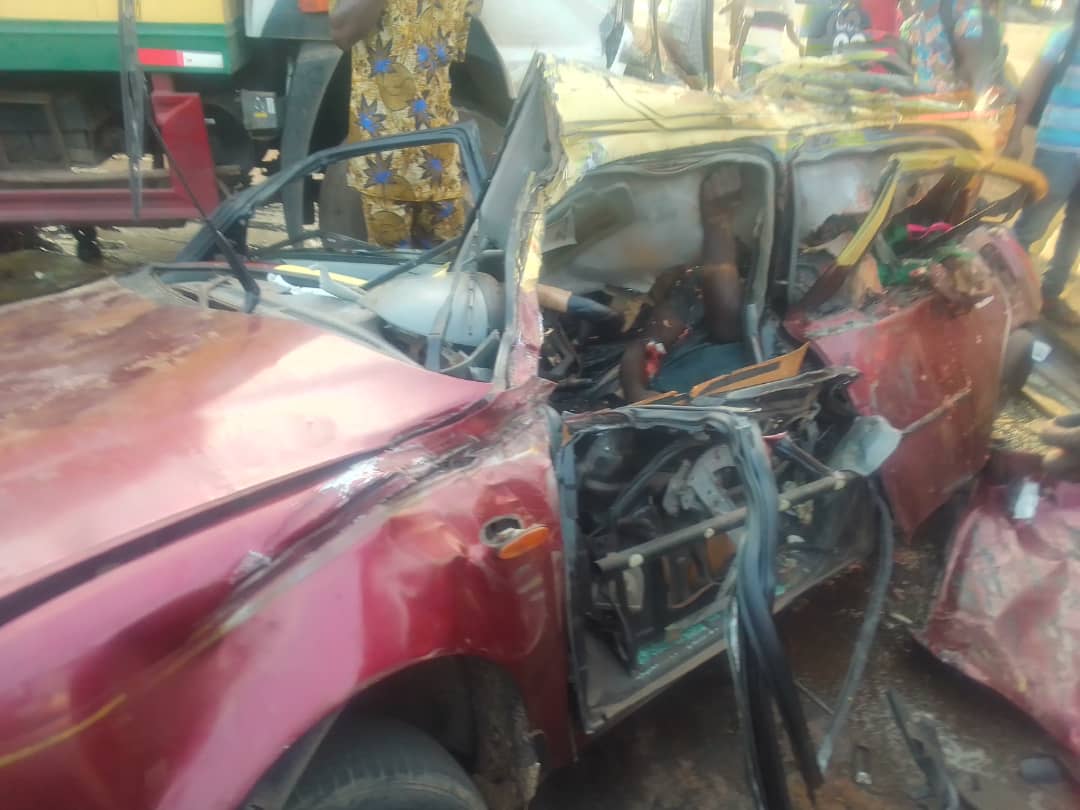
The numbers from the Federal Road Safety Corps (FRSC) tell a story Nigerian families already know too well – our roads are killing fields, and we’re losing the battle to make them safer.
Corps Marshal, Shehu Mohammed, stood before journalists in Abuja recently with statistics that should alarm every Nigerian: 10,446 road crashes in 2025, up 9.2 per cent from the previous year. Serious crashes jumped 10.5 per cent. Minor crashes spiked 17.5 per cent. Injuries climbed from 31,154 to 33,400—a 7.2 per cent increase that translates to thousands more Nigerians whose lives changed forever because someone couldn’t obey basic traffic rules.
He pointed to one bright spot: deaths dropped slightly from 5,421 to 5,289, a 2.4 per cent reduction he attributed this to improved post-crash response. But here’s the problem with celebrating that number; the FRSC’s own target was a 10 per cent reduction in fatalities. They missed it by a mile. And while saving 132 additional lives matters, 5,289 Nigerians still died on our roads last year. That’s roughly 14 people every single day. Fourteen families getting the worst news imaginable because we can’t seem to enforce the most elementary driving standards.
The enforcement numbers reveal a troubling pattern. Traffic offences jumped 30.6 per cent, from 496,799 booked offences in 2024 to 648,918 in 2025. Arrests climbed 28.3 per cent. The FRSC wants us to see this as evidence of “intensified patrol operations.” But anyone who encounters their roadblocks knows the reality, officers focus on extracting fines for minor infractions while dangerous drivers speed past unchecked.
Regrettably,the FRSC has increasingly prioritised revenue generation above its core mandate of preventing crashes and saving lives. Their operations these days seem designed to catch motorists for money rather than stop the reckless behaviours actually killing Nigerians.
Consider the December festive period. The Benin-Asaba-Awka corridor claimed 12 lives. Zuba-Kaduna-Zaria took 39. The Jos-Bauchi-Gombe-Darazo-Potiskum route killed 49 people. Abuja-Lokoja accounted for 28 deaths.
The Corps Marshal laid out the causes plainly: speeding, dangerous overtaking, loss of control, tyre burst, brake failure- “Largely avoidable crashes,” he called them.
Speeding alone accounted for 41 per cent of December crashes. Four out of every 10 crashes happened because someone decided getting somewhere faster mattered more than getting there alive. Commercial vehicle operators routinely ignore requirements for speed limit devices.
Fleet operators face no serious consequences for running non-compliant vehicles. Traffic offenders pay modest fines and go right back to driving like maniacs.
The FRSC has announced new policy directions for 2026: intelligence-led enforcement, zero tolerance for the “Big Five” offences, stricter speed management for commercial vehicles. But Nigeria has a talent for announcing policies without following through. Every year brings fresh promises of stricter enforcement. Every year the numbers tell a different story- more crashes, more injuries, more families burying loved ones.
What’s missing from the FRSC’s new directives is any mention of real criminal consequences for drivers who kill. As we have argued previously on this page, motorists who cause fatal accidents should be charged with manslaughter. A driver who speeds through a checkpoint, runs a red light, or operates a vehicle with faulty brakes and kills someone has taken a life through criminal negligence. That person belongs in court facing manslaughter charges, not just paying a fine and walking away.
Once Nigerian drivers understand that causing a fatal crash means facing years in prison rather than a few thousand naira in penalties, behavior will change. Once commercial vehicle operators grasp that their drivers’ recklessness could land them behind bars as accessories to manslaughter, they’ll ensure proper vehicle maintenance and enforce speed limits.
Once judges start handing down serious prison sentences for traffic-related deaths, the message will spread: Nigerian roads are no longer consequence-free zones where you can drive however you want.
The 5,289 Nigerians who died on our roads in 2025 didn’t have to die. The 33,400 who were injured didn’t have to suffer life-altering trauma. These weren’t unavoidable tragedies but predictable outcomes of a system that talks about road safety while tolerating wholesale disregard for the rules that make roads safe.
The FRSC has the data showing exactly what’s killing Nigerians. They’ve identified the problem corridors, the deadliest behaviors, the enforcement gaps. Whether they have the political will to actually solve these problems rather than simply shake down motorists for revenue remains to be seen. Nigerian families deserve roads where dangerous drivers face real consequences including prison and where road safety agencies focus on preventing deaths rather than collecting fines. Until that happens, the carnage will continue.
We’ve got the edge. Get real-time reports, breaking scoops, and exclusive angles delivered straight to your phone. Don’t settle for stale news. Join LEADERSHIP NEWS on WhatsApp for 24/7 updates →
Join Our WhatsApp Channel