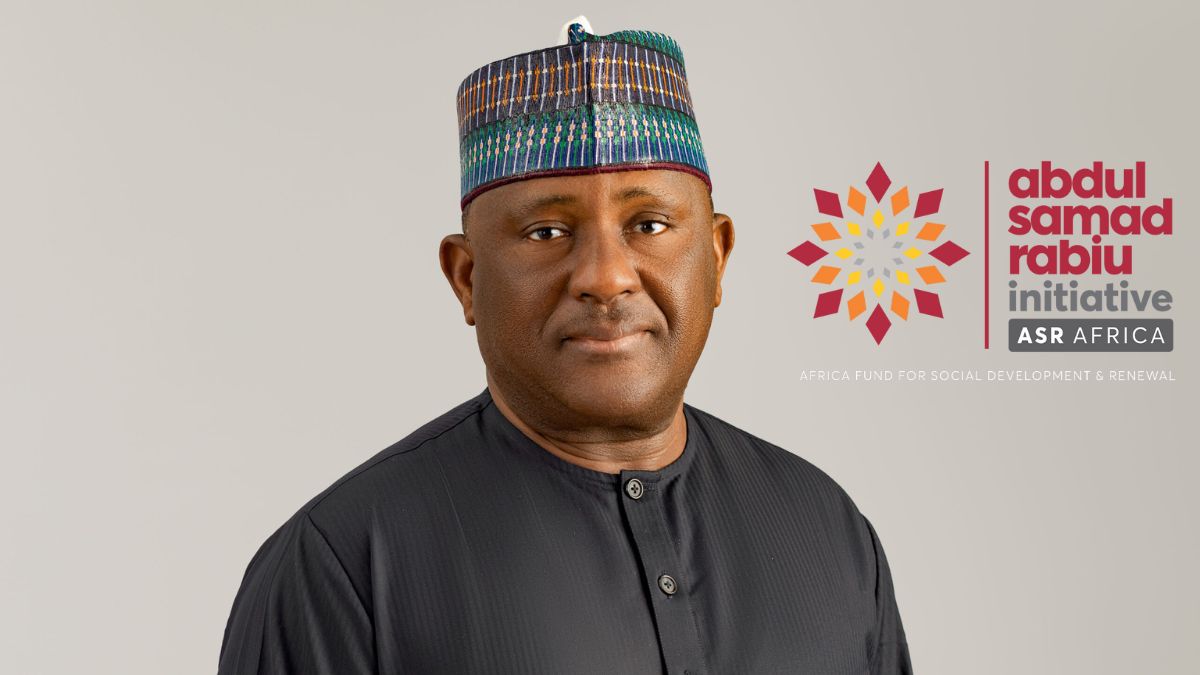
In the unfolding narrative of Africa’s economic renaissance, few figures embody resilience, strategic foresight, and disciplined execution as compellingly as Abdul Samad Rabiu. A titan of industry, a distinguished philanthropist, and a steadfast nation-builder, Rabiu has meticulously forged a legacy that transcends mere wealth accumulation. His life’s work is anchored in the enduring principles of value creation, industrial self-sufficiency, and transformative social impact—an enduring testament to purposeful leadership in a continent on the rise.
Born on August 4, 1960, in Kano, Rabiu inherited more than a family name; he inherited a philosophy. His father, Khalifah Isyaku Rabiu, was a towering figure in Nigeria’s industrial landscape during the 1970s and 1980s. Yet, the younger Rabiu’s journey was not without turbulence. At a critical moment, he returned from the United States—where he had studied at Capital University—to manage the family business amid political uncertainty. That early test would shape his pragmatic leadership style: calm under pressure, focused on long-term outcomes.
From modest beginnings in commodity trading, Rabiu founded BUA Group in 1988. What started as a trading outfit importing rice, flour, and steel would evolve into one of Africa’s most formidable industrial conglomerates, with core interests spanning cement manufacturing, food processing, infrastructure, and energy. Today, BUA Group generates billions in annual revenue and serves as a symbol of indigenous industrial capacity.
Rabiu’s genius lies in anticipating demand before it peaks. In 2008, he made a decisive move into cement production—long before Nigeria’s construction boom reached its current scale. By positioning BUA Cement ahead of market demand, he turned infrastructure growth into a cornerstone of his empire. Under his leadership, the company has embarked on aggressive expansion plans, with projections of significantly increasing production capacity in the coming years.
Parallel to this is the success of BUA Foods, which has become a dominant force in Nigeria’s food value chain. From flour milling to sugar refining and rice processing, Rabiu’s investments are driven by a simple but powerful idea: a growing population must be fed efficiently and affordably. His businesses do not merely chase profits—they respond to fundamental human needs.
This philosophy extends to his views on Africa’s economic future. Rabiu belongs to a new generation of industrialists who believe the continent’s prosperity lies not in exporting raw materials, but in producing finished goods. In a global economy marked by supply chain disruptions and shifting alliances, his strategy reflects both realism and ambition: build locally, scale regionally, and compete globally.
His latest venture—a large-scale refinery and petrochemical project in southern Nigeria—further underscores this vision. Designed to reduce dependence on imported refined petroleum products, the project aims to strengthen Nigeria’s energy security while creating jobs and stimulating local industries. It is yet another example of Rabiu’s commitment to closing structural gaps in Africa’s economy.
Financially, Rabiu’s rise has been nothing short of remarkable. Once valued at just over $3 billion in 2020, his net worth has surged into double digits within a few years, placing him among Africa’s richest individuals. This growth has been fueled not by speculation, but by strong corporate performance—particularly in BUA Cement and BUA Foods, where efficiency gains and strategic investments have delivered exponential returns.
Yet, for Rabiu, success is not measured solely in financial terms. Through the BUA Foundation and ASR Africa, he has made significant contributions to healthcare, education, and social development. From building a state-of-the-art paediatric ward at Aminu Kano Teaching Hospital to supporting academic institutions like Bayero University Kano, his philanthropy reflects a deep commitment to human capital development.
He approaches giving with the same intentionality as business—targeting areas where impact can be scaled and sustained. His belief is simple: true wealth is defined not by what one accumulates, but by what one contributes to society.
Despite his immense success, Rabiu remains a deeply private individual, guided by discipline, humility, and purpose. A family man with four children, he maintains strong ties to his roots while operating on a global stage. His numerous national honours, including the rank of Commander of the Order of the Federal Republic (CFR), attest to his contributions to Nigeria’s economic growth.
In an era where Africa is redefining its place in the global economy, Abdul Samad Rabiu stands as a compelling symbol of what is possible when vision meets execution. He is not merely building companies; he is building systems—industrial, social, and economic—that will outlast generations.
His story is still unfolding. But already, it offers a powerful lesson: Africa’s future will not be imported. It will be built by those bold enough to imagine it and disciplined enough to deliver it.
We’ve got the edge. Get real-time reports, breaking scoops, and exclusive angles delivered straight to your phone. Don’t settle for stale news. Join LEADERSHIP NEWS on WhatsApp for 24/7 updates →
Join Our WhatsApp Channel