In the last 15 years since Nigeria started fighting insurgency, there has been no time when the call for open accountability in the way security operations have been conducted, as at this moment.
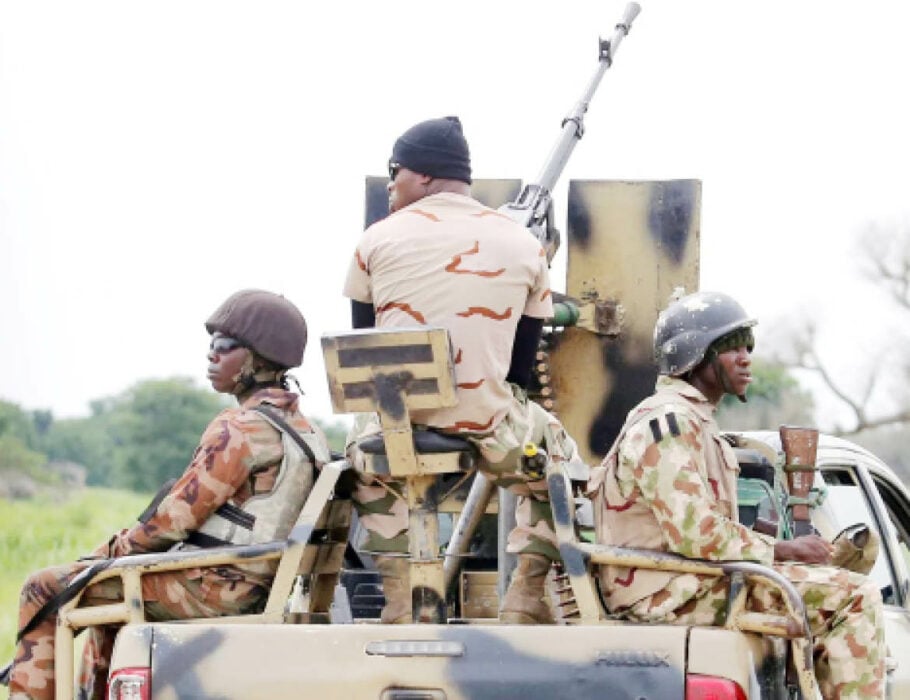
And this time, the trigger is the suspicious circumstances surrounding the recent mass abduction of students of Government Girls’ Comprehensive Secondary School, Maga, in Danko-Wasagu Local Government Area, Kebbi State. The decision of the security agencies guarding the school to withdraw from its premises shortly before bandits raided the school, shot dead two officials and kidnapped 24 schoolgirls – despite credible intelligence that the school was in danger of an imminent terrorist attack has left many Nigerian confused about what to think.
The Kebbi State governor, Dr Mohammed Nasir Idris, has been the most vocal in demanding a probe into who gave the order for troops withdrawal and has escalated this call to the National Assembly and the Nigeria Labour Congress both of whom visited to commiserate with his government over the incident.
While receiving a delegation from the National Assembly, led by Speaker of the House of Representatives, Rt. Hon. Tajjudeen Abbas, at Government House, Birnin Kebbi, the state capital, the governor said the troops deployed to the school left at 3 a.m., and at exactly 3:45 a.m., the schoolgirls were abducted.
The governor asked: “The reason for the personnel’s departure was based on orders. We raise questions as a government: who gave the order for troops to withdraw at that critical time? What is the reason? Since the incident, we have been asking questions but have received no answers.”
This matter has already been a subject of heated debate in the Nigerian Senate with lawmakers expressing concern about the incident.
The concerns were voiced during a debate on the urgent need to address insecurity, with senators asking the same questions the Kebbi governor is asking. The same questions are agitating the minds of most Nigerians who are troubled by the rising reported cases of the security forces failing to protect communities even when they were alerted to the threat before the attack occurred.
Senators from Kebbi State further declared that the locations of the bandits were known, yet no decisive action had been taken. A similar claim was made earlier by the Zamfara State governor Dauda Lawal, who declared that the authorities know who the bandits are and where they live.
As a newspaper, we urge that the latest incident in Kebbi State should not be treated as an operational mistake; the integrity of the entire security system could hinge on how this matter is handled.
There are also rising suspicions that some highly placed government officials are benefiting from the security crises plaguing Nigeria. Though not yet proven, the perception that terrorism has become, in part, a lucrative criminal enterprise is damaging enough to public morale.
Therefore, any suspicious delay, every unexplained troop movement, every lack of transparency feeds the perception that insecurity serves private interests.
We believe that in this case, swift and transparent action is the way forward. Military and government authorities must immediately investigate the Maga abduction, identify those responsible for the troops’ withdrawal, and hold them accountable.
Public confidence is central to national security. The agencies have always encouraged local communities to provide intelligence that would aid their operations. However, communities that trust the state are more likely to cooperate with authorities and resist radicalisation. Without trust, even the best-trained military cannot do much.
The Defence Headquarters is said to be interrogating the troops involved in the episode. We call on the military high command to expedite its investigation and disclose its findings, so that the perpetrators can be identified, their motives exposed, and those indicted held accountable for their actions as required by law.
Military accountability is crucial in preventing sabotage, internal compromise and negligence. When individuals misuse authority or fail to follow proper protocols, the effectiveness of security operations is jeopardised and public trust is eroded. Nigerians deserve a military that acts in their best interest, and transparency in decision-making is critical to achieving this. Knowing who authorises critical actions, such as troop deployments or withdrawals, ensures that harmful decisions are addressed and reduces the likelihood of similar failures in the future.
Nigeria can win the war against terrorism, but only if it is fought with transparency, decisiveness, and integrity. Troops must be held accountable for their actions, commanders must answer for their orders, and the system must be cleansed of indecision, corruption and sabotage.
The circumstances surrounding the Maga schoolgirls’ abduction should galvanise the country into action. The released schoolgirls’ widely published testimonies that they were fed well and treated nicely by the terrorists demand that the probe of the incident is thorough and transparent if the government and the military hope to retain the trust of the masses.
Nigerians deserve a security apparatus that acts swiftly, fairly, and fearlessly. If the government does not rise to this challenge, it risks not only more tragic abductions but the erosion of public trust that undergirds the entire fight against terrorism.
We’ve got the edge. Get real-time reports, breaking scoops, and exclusive angles delivered straight to your phone. Don’t settle for stale news. Join LEADERSHIP NEWS on WhatsApp for 24/7 updates →
Join Our WhatsApp Channel