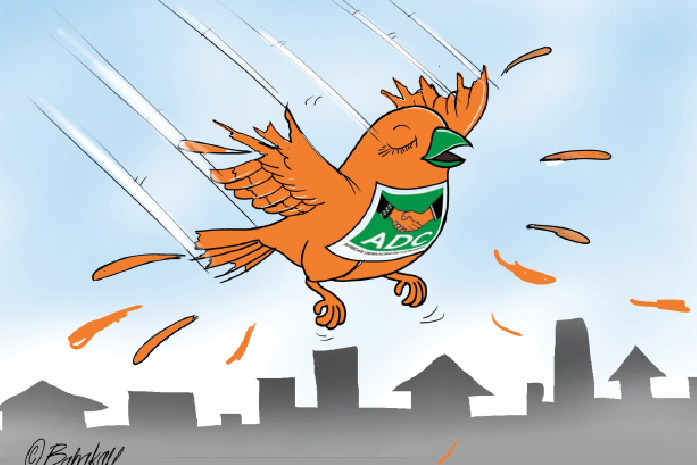
The past month has been an indication of what to expect from the opposition ahead of the 2027 polls, as illustrated by the African Development Congress (ADC) ‘s current travails. At the crux of the party’s dilemma, according to analysts, is engineered by forces plotting the victory of President Bola Ahmed Tinubu’s comeback bid in next year’s polls. Others describe the existing crisis engulfing the ADC as self-inflicted. Since the delisting of the David Mark-led National Working Committee (NWC) by the Independent National Electoral Commission (INEC), the perceived threat against the ADC has assumed a national debate, with leaders of the opposition coalition, led by former Vice President Atiku Abubakar, staging a protest at the INEC headquarters over their derecognition.
Quick Retreat
This week, in response to the verdict of the Appeal Court’s verdict that stripped the Mark-led NWC of recognition, the ADC returned to the Federal High Court to argue its case instituted against the party by Nafiu Bala Gombe, who many describe as engaging in a proxy war, rather than battling to overturn the leadership of the ADC. With their backs to the wall, and coupled with the urgency to beat the timelines for both conventions and primaries, attempts by the derecognised Mark leadership in resolving its many problems remain almost unrealisable.
While those determined to turn the tables against Tinubu have continued to widen their net to attract ambitious and disgruntled politicians who have been denied accommodation in the incumbent administration, the visit of the Saminu Turaki faction of the Peoples Democratic Party (PDP) to the opposition rainbow coalition this week carries the possibility of forging a new collaboration. Long before now, insiders had predicted that the Mark and Turaki groups were set to merge to wrest power from the APC.
Unquenchable Ambitions
The prospects of building a rainbow coalition against the APC are still weak. This weakness stems from the ambitions of politicians who have always seen political contests as a fierce battle to grab power. Opposition politicians, who are now up in arms against INEC, had the opportunity to undertake electoral reforms when they served as leaders of the National Assembly. Particularly, Mark, who was Senate President for eight years, is not known to have carried out many desired political reforms that would have insulated the electoral commission from the grip of the presidency. Now that the wheels of fortune have caught them on the left side of political contestations, INEC, in the view of these ADC leaders, is now the Achilles heel of electoral transparency.
Even if the ADC eventually scales through the high walls of its self-inflicted woes, the ambitions of its members will remain a potential danger for uniting the opposition. With Atiku, Peter Obi, Rotimi Amaechi, and Dr. Rabiu Musa Kwankwaso locking horns over the presidential ticket of the opposition, the fallout of the primaries may open yet another window of opportunity to woo disgruntled members of the coalition back to the ruling party. The emergence of Atiku as a presidential candidate could pitch him against those insisting that a southern candidate should be allowed to serve out the remaining four years for the South, in accordance with the unwritten power-sharing agreement between the two regions.
Still Swinging
Many issues are germane in defining where the pendulum will swing to in 2027. Presently, following the war in the Middle East, the impact of the current US-Israeli war against Iran is leaving untold hardship on Nigerians. With the rising prices of fuel products, the initial successes attained by the Tinubu-led government are being wiped out as reduced economic activities caused by the high cost of transportation have left many economically despondent. While the International Monetary Fund (IMF) has described the Nigerian economy as resilient and poised to grow in 2026, another report by the World Bank released this week states that 63 percent of Nigerians were suffering from poverty in 2025.
The present spike in insecurity remains the big elephant in the room. Thursday’s killing of an army general and commander of the 29 Task Force Brigade, Operation HADIN KAI, Oseni Omoh Braimah, including now fewer than 17 soldiers, by terrorists, reveals the state of our military in confronting these terror groups. If those mandated with the responsibility of protecting citizens are mauled down in their fortresses, what hope is there for citizens still trapped in the deadly curve of bloodshed that is stretching without limits? The absence of categorical political will has continued to be the albatross in the nation’s dream of reining in the activities of these criminals. The US advisory travel guide released by the American Embassy speaks much of our security dilemma.
For now, the coast to 2027 is not clear, as both local and international factors are poised to determine the direction of the pendulum. Just as it’s a bad omen for the ruling party to head for the polls amidst rising poverty and spiking attacks, the incapacity of the opposition to unite its members could ruin its chances for electoral triumph. Instead of the ADC leaders expending their energies on accusing the ruling party of subterfuge aimed at weakening them, they should spend more time walking ahead of the APC. Indisputably, current travails plaguing Nigerians have furthered the profile of the opposition, but the absence of sacrificial leaders who are willing to give up their ambitions and rally the opposition coalition into a united smouldering storm of outrage against the incumbent is the problem. For now, it’s a storm, not the wind, that will determine who emerges victorious next year, with the faultlines of ethnicity, religion, and regional sentiments deployed as major drivers.
We’ve got the edge. Get real-time reports, breaking scoops, and exclusive angles delivered straight to your phone. Don’t settle for stale news. Join LEADERSHIP NEWS on WhatsApp for 24/7 updates →
Join Our WhatsApp Channel