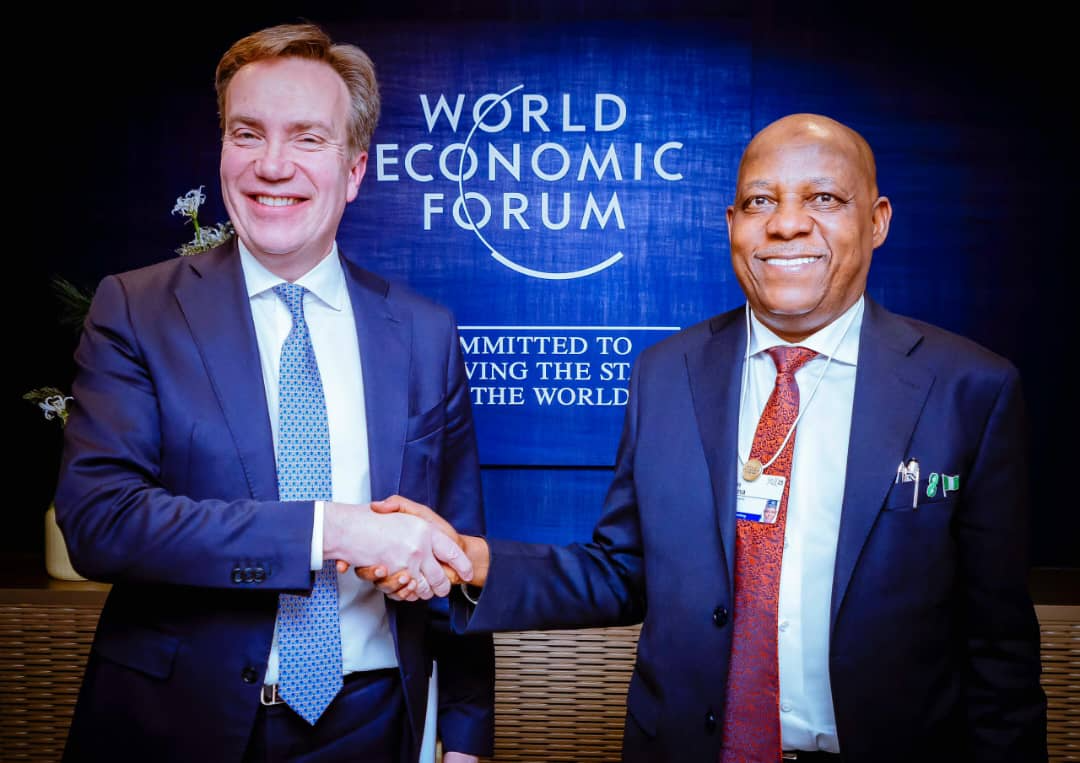
When Vice President Kashim Shettima stood at the World Economic Forum in Davos this week, he wasn’t just delivering another diplomatic speech. He was essentially serving notice: Africa is no longer a continent to be pitied, but a market to be taken seriously.
Let’s be frank. For decades, the global narrative about Africa has been one of perpetual crisis – wars, poverty, instability. But Shettima’s message was crystal clear: Those days are over. Africa is not just waking up; we’re preparing to rattle the world, just as Napoleon once predicted about China.
The numbers are compelling. By 2050, Nigeria alone will have 440 million people – surpassing the United States. We’re talking about the world’s largest youth population, 220 million telecom subscribers, and 163 million internet users. These aren’t just statistics; they’re a revolution in waiting.
Consider the transformation happening right before our eyes. While global powers are wrestling with aging populations and workforce shortages, Africa stands as a demographic powerhouse. A Korn Ferry study projects a global human talent shortage of more than 85 million people by 2030. For most nations, this would be a crisis. For Africa, it’s an opportunity.
Take the African Continental Free Trade Area (AfCFTA). This isn’t just another bureaucratic agreement. It’s a bold statement of our shared destiny. The potential? A $29 trillion economy by 2050. That’s not a projection; that’s a promise. If fully implemented, this trade agreement could boost intra-African trade by a staggering 50%. We’re talking about a fundamental redesign of our economic landscape.
Shettima understands something fundamental that many global leaders miss. Africa’s strength isn’t in aid or sympathy. It’s in partnerships, in dignity, in our ability to solve our own problems. “I don’t believe in aid,” he declared. “I believe in partnership.” Those aren’t just words; they’re a manifesto.
The gas pipeline project connecting Nigeria to Morocco isn’t just infrastructure. It’s geopolitical strategy. With European energy markets disrupted and artificial intelligence driving unprecedented energy demand, we’re positioning ourselves as a critical global energy player.
Consider this: while our highest oil export earnings were $35 billion in 2011, India earned about $120 billion from outsourcing alone last year. We’re not just exporting resources; we’re exporting potential.
Projects like the African Atlantic Gas Pipeline represent more than economic opportunity. They’re a reimagining of continental collaboration. Littoral states in West Africa are eager to plug into this system, creating a network of shared prosperity. This isn’t just about moving gas; it’s about moving forward together.
The Lake Chad recharging project epitomises this holistic approach. What was once a 25,000 sq. km water body has shrunk to just 2,000 sq. km. But instead of seeing this as a crisis, we see an opportunity for transformation. By connecting the Congo River Basin to Lake Chad, we’re not just addressing an ecological challenge. We’re creating a 2,400-kilometre canal that will revolutionise agriculture, generate clean energy, and potentially combat the existential threats that have long plagued the region.
But let’s be real. Opportunities don’t automatically translate to progress. We need smart investments in education, innovation, and sustainable development. The global knowledge economy doesn’t care about historical disadvantages. It rewards adaptability, innovation, and human capital.
President Bola Tinubu’s reforms signal something profound. From subsidy removal to exchange rate alignments, from tax reforms to economic restructuring – we’re done with old paradigms. We’re serious about economic transformation.
Tinubu, with his background in finance and proven track record of transformative leadership, understands that systemic change requires bold, sometimes uncomfortable decisions.
This isn’t about replacing one system with another. It’s about creating a new system entirely. Africa has missed the agricultural and industrial revolutions. But we’re primed to lead the knowledge revolution. From technology to agriculture, from energy to digital services, we’re not just catching up. We’re preparing to leap ahead.
To the global sceptics, to those who’ve long viewed Africa through a lens of condescension: Pay attention. We’re not asking for a seat at the table. We’re building our own.
The world is changing. Geopolitical power is shifting. And Africa is not just a passive observer. We are active architects of this new global order. Our youth are not a burden; they are our most potent economic asset. Our challenges are not limitations; they are opportunities for innovation.
Africa has indeed woken up. And trust me, the world hasn’t seen anything yet.
We’ve got the edge. Get real-time reports, breaking scoops, and exclusive angles delivered straight to your phone. Don’t settle for stale news. Join LEADERSHIP NEWS on WhatsApp for 24/7 updates →
Join Our WhatsApp Channel