BY NICHOLAS DEKERA, Sokoto; GODWIN ENNA, Katsina; ABU NMODU, Minna; KALU EZIYI, Umuahia; BABAJI USMAN BABAJI, Gombe; KABIR WURMA, Birnin Kebbi; NNAMDI MBAWIKE, Enugu; AZA MSUE, Makurdi; AND FRANCIS OKOYE, Maiduguri
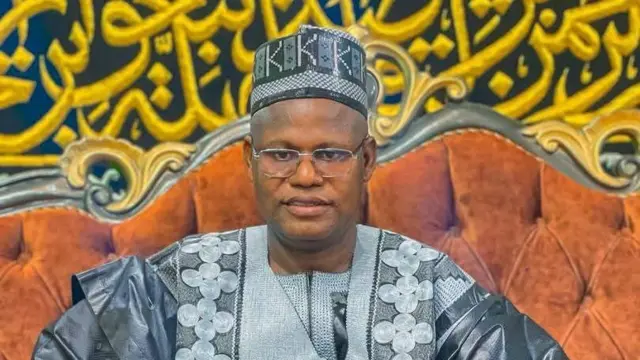
The assassination of Islamic scholar Sheikh Yahaya Ibrahim Masussuka in Dutsin-Ma, Katsina State, has renewed concerns about the safety of religious leaders in Northern Nigeria, particularly scholars whose teachings, public engagements and criticism of extremism expose them to threats.
Masussuka and his associate, Adamu Abubakar, were shot dead by gunmen outside his residence on October 26, 2026, in an attack that has revived memories of previous assassinations of prominent Islamic scholars in the region.
Among the victims were Sheikh Ja’afar Mahmud Adam, who was assassinated in Kano in 2007, and Sheikh Muhammad Auwal Albani Zaria, who was killed alongside his wife and son in Kaduna State in 2014.
The latest killing has raised questions about whether religious scholars should receive special security protection and what government, religious institutions and security agencies must do to prevent further attacks.
However, the head of the Department of History and War Studies at the Nigerian Defence Academy (NDA), Kaduna, Prof. Jibrin Husseini, argued that providing bodyguards to religious leaders might not necessarily address the underlying problems. He stressed the need to examine the political, social and religious circumstances surrounding attacks on prominent individuals.
Husseini said attacks on prominent individuals, including religious leaders, human rights activists and critics of government, were not peculiar to Nigeria.
He explained that, throughout history, individuals who serve as pressure groups or challenge powerful interests have sometimes become targets of assassination.
According to him, some attacks are motivated by the interests of powerful political or social groups, while others are allegedly carried out to provoke crises between opposing groups.
Why Religious Scholars Become Targets
Focusing on Northern Nigeria, Husseini said the killing of Islamic scholars could sometimes be connected to the interests of powerful groups, particularly where religious figures become involved in sensitive social and political issues.
He, however, cautioned that religious leaders must recognise the influence of their public statements and the possibility that audiences with limited religious understanding could misinterpret their teachings.
He advised clerics to exercise caution in their choice of words, explaining that religious preaching requires an understanding of the audience and the possible consequences of public pronouncements.
According to him, religious leaders have a responsibility to communicate their messages in ways that promote understanding rather than create divisions.
He also expressed concern about the involvement of some religious scholars in partisan politics, arguing that clerics should maintain political neutrality to avoid becoming instruments in conflicts between rival political interests.
Beyond political neutrality, the NDA scholar called on the government to consider regulating the activities of religious preachers, both Muslims and Christians, to address the growing problem of inflammatory religious pronouncements.
He argued that not everyone who claims to be a religious scholar possesses the necessary knowledge and qualifications to preach or interpret religious texts.
Using Islamic scholarship as an example, he said the interpretation of the Qur’an and prophetic traditions requires considerable knowledge, historical understanding and familiarity with established religious teachings.
He expressed concern that individuals with limited religious knowledge could assume the position of Islamic scholars and make pronouncements they believe promote Islam but which could instead create confusion and conflict.
“Nowadays, you realise everyone can claim that he is a Sheikh or an Imam. With little knowledge, he comes and defends certain things that are entirely un-Islamic, thinking that he is doing dawah for Islam, not knowing that he is bringing destruction to society,” he said.
He therefore urged the government to explore appropriate policies and institutional mechanisms for regulating religious preaching without undermining constitutional freedoms of religion and expression.
Acknowledging the sensitivity surrounding government intervention in religious affairs, particularly in Northern Nigeria, he said any such initiative would require leaders with adequate understanding of religious jurisprudence and the support of relevant stakeholders.
Previous Assassinations And Unresolved Cases
In Kano State, Sheikh Ja’afar Mahmud Adam was assassinated on April 13, 2007, while leading the early morning Subhi prayer at Dorayi Central Mosque.
The attackers stormed the mosque during prayers and opened fire, killing the prominent Islamic scholar and another worshipper, while several others sustained injuries.
Adam was widely known for his religious teachings and criticism of extremist interpretations of Islam. His assassination generated widespread condemnation and investigations by security agencies.
Although suspects were arrested, questions surrounding the masterminds of the killing and the extent to which those responsible were brought to justice have continued to attract attention.
Seven years later, Sheikh Muhammad Auwal Albani Zaria was killed alongside his wife and son on February 1, 2014.
Albani was attacked by gunmen while returning home with his family after attending evening prayers in Zaria, Kaduna State. He was known for his religious teachings and criticism of Boko Haram’s ideology.
Following the assassination, the State Security Service arrested and paraded suspects over the killing.
In February 2015, four suspects were arraigned before a Federal High Court in Abuja over their alleged involvement in the murders.
However, the final judicial outcome of the prosecution requires further confirmation from court records.
These killings, alongside Masussuka’s assassination, have continued to raise concerns about the vulnerability of prominent religious figures in Northern Nigeria.
Preventing The Next Assassination
The different perspectives emerging from Masussuka’s killing suggest that protecting religious scholars requires more than providing them with personal security details.
While Husseini advocates political neutrality, responsible preaching and appropriate regulation of religious activities, other religious leaders have emphasised the need for justice, tolerance and peaceful coexistence.
Both perspectives highlight the importance of preventing disagreements from degenerating into violence.
Religious organisations must also address the spread of inflammatory rhetoric, while the government must ensure that credible threats against religious figures receive appropriate attention.
For Katsina, the immediate test is whether those behind Masussuka’s assassination will be identified and prosecuted.
For Northern Nigeria, the wider challenge is ensuring that Islamic scholars, Christian clerics and other public figures can express their beliefs, challenge extremism and promote peaceful coexistence without fear of violent attacks.
For many in Sokoto State, however, the concern goes beyond who killed Masussuka. It is why, 19 years after another high-profile killing in the state, scholars continue to die without convictions in some of the cases.
On July 18, 2007, Sheikh Umaru Hamza Dan-Maishiyya, an outspoken Sunni scholar known for his fierce anti-Shia sermons, was killed while returning home after leading the Isha prayer at his mosque in Sokoto.
The killing triggered three days of Sunni-Shia rioting in Sokoto metropolis, during which five people were killed and several Shia homes were destroyed.
The police and State Security Services arrested Shia leader Kasimu Rimin Tawaye and more than 100 members of Sokoto’s minority Shia community. Only one individual was initially charged with the murder.
The accused spent seven years in detention without trial. In 2014, the Sokoto High Court acquitted and discharged 112 of the detainees, ruling that there was no evidence linking them to the crime. Two detainees reportedly died in custody before the verdict.
No other person has been convicted for Dan-Maishiyya’s murder to date.
The case has become a recurring reference point in concerns over unresolved killings in Sokoto, where arrests and prolonged detentions have not always resulted in convictions.
In 2026, the threat in Sokoto appeared to have taken another dimension, with scholars also becoming victims of bandit attacks on rural communities.
On June 28, 2026, gunmen stormed Illela Dawagware village in Goronyo Local Government Area (LGA) at about 12:20am, went straight to the residence of the village imam, Mallam Liman Lawwali Na Ande, and killed him, his neighbour and two other people before abducting 12 residents.
Residents described the attack as the 24th on the village, but no arrest had been announced at the time of this report. Efforts to reach the Sokoto Police spokesperson, DSP Ahmad Rufai, were unsuccessful.
Similarly, bandits attacked Talluje and neighbouring Chofi village in Bodinga LGA on July 1, 2026, killing the Chief Imam of Talluje alongside two other residents, while hundreds of people fled their homes.
The attacks added to concerns over the killing of religious leaders in the state within a short period.
At least 28 people, including the Chief Imam of Ungushi Izala Jumu’at Mosque, Imam Aliyu Musa, were also killed in Kebbe LGA between August 16 and 17, 2026, when bandits attacked Ungushi community.
The Sokoto Police Command spokesperson, DSP Ahmed Rufai, confirmed the incident but said it was difficult to ascertain the actual number of victims, adding that no fewer than 28 corpses had been recovered.
No suspect had been publicly paraded or charged over the Ungushi killings at the time of this report.
On September 11, 2026, there was an attempt on the life of Sheikh Musa Lukuwa, who was stabbed twice in the neck shortly after leading Juma’at prayer at his mosque in Mabera, Sokoto metropolis. The attacker, who was among the worshippers, was beaten to death by other worshippers.
The attack was linked to a previous sermon in which Lukuwa cited a Hadith that some scholars associated with the Tariqa order considered offensive. A young man identified as Mai Barewa had allegedly threatened to kill Lukuwa and his senior student, Malam Murtala Assada.
The threat had reportedly been reported to the police, and the suspect was arraigned. Four days before the stabbing, the clerics had also submitted a written complaint to the Sokoto State Government House.
Police spokesperson, DSP Ahmad Rufa’i, confirmed that Lukuwa was receiving treatment at Specialist Hospital, Sokoto, but said no arrest had been made in connection with the ensuing violence.
Lukuwa survived the attack, but the incident remains a warning that reporting threats in advance does not always guarantee protection.
Imam Ibrahim Makari of the National Mosque, Abuja, has warned that declaring someone a kafir could become a “gate to assassination”, calling for an end to such accusations and greater protection against religious incitement.
A security expert, Bulama Bukarti, suggested that Masussuka’s killing might be connected to a peace conference the cleric was preparing to organise.
Religious Leaders Call For Justice And Protection
In Niger State, the Secretary of the State Imams’ Forum, who also serves as the National Secretary of the forum, Dr Umar Farouk Abdullahi, spoke with LEADERSHIP Sunday.
He expressed concern over the attacks, particularly the killing of innocent people and Islamic scholars who play vital roles in promoting religious teachings, moral values and peaceful coexistence.
Abdullahi noted that Islamic scholars, whom Prophet Muhammad (peace be upon him) described as inheritors of the Prophets, occupy a significant position in society. He warned that their continued targeting and killing, if left unchecked, could have grave consequences for the country.
The cleric urged the Federal Government to take urgent and decisive measures to address the resurgence of attacks on religious leaders, ensure the protection of Islamic scholars and bring those responsible for the killings to justice.
Speaking with LEADERSHIP Sunday in Abia State, the state’s Chief Imam, Sheikh Ali Ukiwe, said that although there had been no similar killings in the state, Masussuka’s commitment to the teachings of the Prophet had allegedly offended some of his colleagues.
“His messages offended those who want to mix the teachings with falsehood, tribalism, and ethnicity. They were not happy with him,” he said.
He argued that, given what he described as a new dimension of insecurity in the country, extra precautions should be taken to protect religious preachers, irrespective of their faith.
In Gombe State, Masussuka’s killing in Katsina revived memories of the murder of Sheikh Ibrahim Musa Albani Kuri, who was killed by suspected armed robbers in Gombe in August 2023.
Following the murder, Governor Muhammadu Inuwa Yahaya condemned the killing and promised that those responsible would be brought to justice. The state police commissioner also ordered an investigation.
However, three years later, no suspect had been arrested, prosecuted or convicted over the cleric’s murder.
Ustaz Adam Abdullah, a Gombe-based Islamic scholar, said the killing of Albani and the recent murder of Masussuka had renewed concerns about the personal security of Islamic scholars, particularly those whose public teachings attract large followings or expose them to threats.
In Kebbi State, incidents involving the killing of religious clerics were said to be rare.
Speaking with our correspondent, the Special Adviser on Religious Matters, Engr. Imran Usman, said such incidents were uncommon in the state, which he described as one of the most peaceful in Northern Nigeria.
According to him, cases of murder were mostly associated with ritual activities, vendettas or disputes between individuals or groups.
Similarly, the Director of Security, Cabinet Office, Birnin Kebbi, Abdulrahman Usman Zagga, said the state had experienced incidents of banditry and other criminal activities but no reported gruesome killings specifically targeting Muslim or Christian clerics.
In Enugu State, although Christians constitute the majority of the population, there has been no reported attack on an Islamic scholar.
However, a viral video showing uniformed youths chanting and demanding firearms to launch attacks against churchgoers and other religious targets generated widespread concern.
The Christian Association of Nigeria (CAN) warned that such public incitement posed a direct threat to safety.
A security expert, Mr Donald Ogbonna, said that although the person behind the video had been arrested, such rhetoric could not be dismissed as mere youthful exuberance.
He warned that unchecked digital incitement could act as a force multiplier, potentially translating into physical violence against religious scholars and institutions.
He also cautioned religious leaders and churchgoers against sharing overly detailed personal testimonies during public services, advising them to avoid fanaticism while preaching.
An Islamic scholar from Igbo-Eze South Local Government Area, who identified himself as Suleiman Ugwueze, said that although Muslims were a minority in the area, they had been living peacefully with their Christian neighbours.
He urged security operatives to prosecute those responsible for Masussuka’s killing in Katsina and other attacks on clerics across the country.
In Borno State, the historian of the Shehu of Borno’s Palace, Dr Babagana Kachalla, said Islamic clerics in the state were among those targeted and killed by Boko Haram terrorists during the peak of the insurgency between 2011 and 2014.
Kachalla said several Islamic scholars were targeted by the insurgents for associating with the government or preaching against the activities of the terrorist group.
According to him, one of the notable victims was Imam Mallam Ibrahim, proprietor of an Islamic school in the Gwomari area of Maiduguri, who was killed by Boko Haram terrorists after leading a prayer session.
He said the terrorists intensified attacks on Islamic clerics while they were still operating within Maiduguri, before the military and other security agencies, including the Civilian Joint Task Force (CJTF), forced them out of the city into the forests.
Kachalla explained that the insurgents subsequently began targeting clerics whom they suspected of having links with the government, forcing many Islamic scholars to abandon public preaching and conduct their religious activities from their homes.
Similarly, the Permanent Secretary, Borno State Ministry of Religious Affairs, Hassan Abdullahi Hassan, confirmed that Islamic clerics were attacked and killed during the height of the Boko Haram insurgency in Maiduguri.
He, however, said there had been no recent incident of an Islamic cleric being killed by terrorists in Borno State.
He attributed the improvement to security measures and the efforts of the military and other security agencies in restoring peace across the state.
Speaking with LEADERSHIP Sunday on the recent assassination of Sheikh Masussuka in Katsina, the Benue State Police Command spokesperson, DSP Peter Orchia Aondongu, said such cases were not peculiar to Benue, as there was no record of similar incidents in the state.
“We don’t have such case or cases in Benue state. However, what we have been doing in Benue State is we always deploy security to protect places of worship” he explained.
We’ve got the edge. Get real-time reports, breaking scoops, and exclusive angles delivered straight to your phone. Don’t settle for stale news. Join LEADERSHIP NEWS on WhatsApp for 24/7 updates →
Join Our WhatsApp Channel