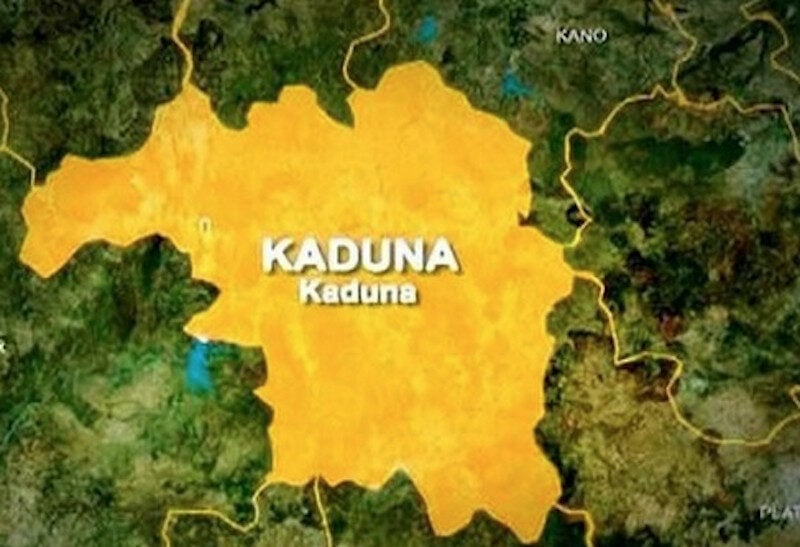
We have been here before. This newspaper has written this editorial before — not once, not twice, but in a dispiriting sequence that stretches back across years and administrations. We have named the villages, counted the dead, quoted the condemnations, outlined the policy failures, and demanded accountability. We have done so after Kajuru, after Zangon Kataf, after Chikun, after the Christmas killings, after the harvest killings, after every season’s fresh atrocity in the communities of north-central and north-western Nigeria. And now we are here again. Naridon village in Kamaru Ward, Chawai Chiefdom, Kauru Local Government Area of Kaduna State. Sunday night, 27 July 2026. Thirty dead — nine men, ten women, eleven children. A mass burial conducted by the Catholic Diocese of Kafanchan on 1 August for twenty-seven of them. Three had already been interred before the ceremony could be arranged. It was the third attack on the same village in eleven months.
We write again because the dead require it, not because we believe that writing alone will compel what years of writing have failed to compel. That distinction matters. It is the difference between journalism that flatters itself and journalism that is honest about the limits of its instrument. This editorial does not arrive with the energy of a first discovery. It arrives with the gravity of accumulated evidence and the weariness of a nation that has been told, repeatedly, that something is being done.
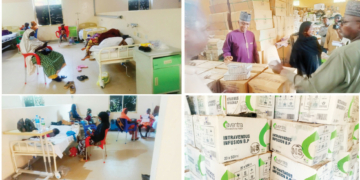
The facts of this latest attack are by now familiar in their structure, if not in their specific horror. Armed men came at night, in large numbers — approximately fifty, according to eyewitness Mark Vincent. They moved from house to house. They shot indiscriminately. Entire families were slaughtered inside their bedrooms. Those who fled into the bush were pursued and killed there. One family lost five children in a single night; the one surviving child was fighting for his life at a hospital. The Kaduna State Commissioner for Home Affairs, contacted by the Associated Press the following day, said he had not yet been briefed. The attackers had been and gone. The dead were being counted. The official was still waiting for a report.
What is new is not the pattern. What is new is that this was not even Naridon’s first visitation. The Christian Association of Nigeria confirmed that the same community had been attacked in August 2025, losing seven people who were given a mass burial, and again in June 2026, when nine were killed and eleven injured. Three mass funerals in eleven months in the same village. After the first, nothing structural changed. After the second, nothing structural changed. After the third, the governor directed security agencies to intensify operations, the president described the killing as an unprovoked act of terror, and the familiar sequence resumed. Nor was Naridon alone in that dreadful fortnight. In Sokoto, bandits killed twelve people in Lajinge village on the night of 19 July, burning six alive after pouring petrol on a room full of locked-in residents. In Benue, sixteen were killed in Otukpo that same week, and furious youths bore the corpses of victims to the palace of the Och’Idoma in protest. In less than two weeks, rural Nigeria buried at least fifty-eight people across three states. There were no publicised arrests.
Nineteen northern governors launched the Northern Nigeria Security Trust Fund in Kaduna barely two weeks before the Naridon attack, pledging one billion naira monthly from member states. Amnesty International, whose investigators have tracked this crisis closely, reported in May 2025 that at least 10,217 people had been killed across seven northern states in the two years of the current administration alone, with Benue accounting for nearly 6,900 of those dead. These are not the statistics of a government that does not know what is happening. They are the statistics of a government that has not yet summoned the institutional will to stop it.
We have previously called for the deployment of permanent security posts in repeatedly attacked communities. We have called for functional early-warning systems. We have called for intelligence-led operations to dismantle the camps from which these attacks are launched. We have called for prosecutions proportionate to the gravity of the crimes. We repeat every one of those calls today, not because repetition endows them with new force, but because silence would be the worse failure. Rural communities across the North West, North Central, and Middle Belt have a right to expect that what a government promises after one massacre it delivers before the next.
What we now say with a directness that earlier editorials softened: the recurring failure to protect these communities is not merely a capacity problem. A government that can mobilise resources for other national priorities can, if it chooses, deploy and sustain a meaningful security presence in villages that have been attacked two and three times within a single year. The question is no longer whether this is achievable. It is whether it is willed. That is the question the presidency, the Kaduna State Government, and the nineteen governors of the North must answer — not with another statement, but with boots on the ground before the next dry season brings the next wave.
The dead of Naridon deserve more than another editorial. But until the government acts with the permanence the body count demands, this newspaper will keep writing. And the nation will keep counting.
We’ve got the edge. Get real-time reports, breaking scoops, and exclusive angles delivered straight to your phone. Don’t settle for stale news. Join LEADERSHIP NEWS on WhatsApp for 24/7 updates →
Join Our WhatsApp Channel