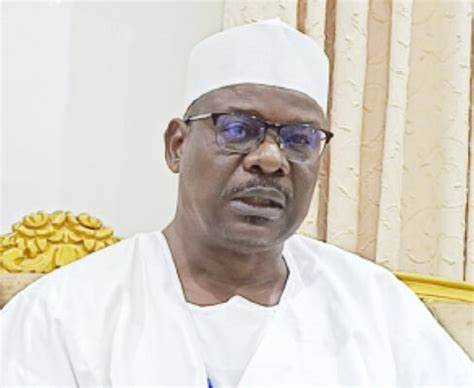
A former Senate leader, Senator Ali Ndume, has explained why he joined his colleagues in the Senate Committee on Foreign Affairs to screen nominees for ambassadorial postings forwarded to the Upper House penultimate week.
Ndume had on the eve of the screening, urged President Bola Tinubu to withdraw the list, citing concerns over the lopsided composition of the nominees.
In a statement issued to journalists in Abuja yesterday, Ndume, citing the provisions of Section 14(3) of the Nigerian Constitution, which mandate that the composition and conduct of the federal government must reflect the “federal character of Nigeria” to ensure national unity and loyalty, declared that the list of nominees cleared by the Senate was in breach of the constitution.
However, addressing journalists on Sunday, Senator Ndume said he was persuaded by his colleagues on the Senate Committee on Foreign Affairs not to boycott the screening and confirmation process.
He further revealed that he secured assurances from the committee leadership that their observations on the lopsidedness of the nominations would be reflected in the committee’s report to President Tinubu.
He said, “I still maintain that the list is lopsided. At the committee level, I raised a point of order on constitutional grounds during our meeting. We agreed that while we would proceed with the screening, our report would advise the President to ensure that the composition of the remaining list is balanced to address our concerns about the breach of federal character principles as enshrined in the Constitution.”
The senator noted that states sidelined in the current nominations should be accommodated in the final list to be sent to the Senate by the President for screening and confirmation.
He said: “We have 109 missions. For non-career ambassadors, each state should have at least one to ensure a balanced representation. States like Gombe and Yobe were not captured, while some states have only career ambassadors, who are largely non-political appointees.
“Each state should have two or three ambassadors, and at least one should be a career ambassador. We have 109 diplomatic missions, comprising 76 embassies, 22 high commissions, and 11 consulates.
“This arrangement can accommodate up to three ambassadors per state—both career and non-career—and will address the issue of lopsidedness and the breach of Section 14(3) of the Constitution. We should also remember that there are 194 countries in the world.”
We’ve got the edge. Get real-time reports, breaking scoops, and exclusive angles delivered straight to your phone. Don’t settle for stale news. Join LEADERSHIP NEWS on WhatsApp for 24/7 updates →
Join Our WhatsApp Channel