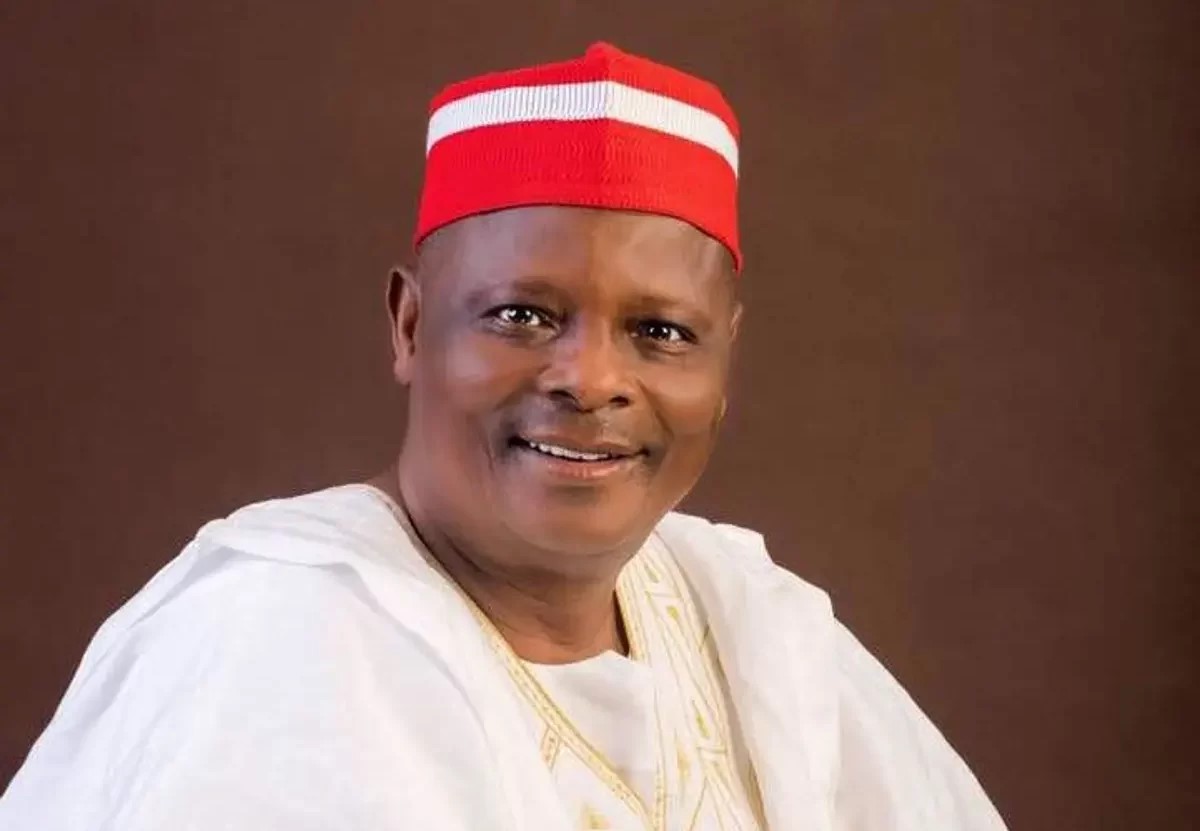
On 11 February 2026, Republican lawmakers in the United States of America (USA) introduced a bill proposing targeted sanctions against former Kano Governor Rabiu Kwankwaso and certain Fulani militia leaders, citing alleged complicity in religious persecution and human rights abuses in Northern Nigeria. The legislation, an extension of the Nigeria Religious Freedom Accountability Act framework, seeks asset freezes, visa bans, and potential designation of Nigeria as a Country of Particular Concern. While framed as a defence of minority rights, the move has ignited fierce diplomatic tensions and raised profound questions about external interference in Nigeria’s internal affairs.
This editorial examines the bill’s implications, critiques its selective focus, and argues that true national unity demands internal reforms rather than foreign prescriptions.
The bill’s timing and targeting are not coincidental. Kwankwaso, a towering figure in Kano politics and a vocal critic of certain federal policies, has long been associated with the Kwankwasiyya movement, which champions Northern interests. Critics in the U.S. Congress link him to the broader narrative of Sharia implementation in Kano, where blasphemy cases and mob violence have drawn international scrutiny.
The inclusion of Fulani militia leaders reflects accusations that pastoralist groups are involved in herder-farmer clashes, often framed as religiously motivated. Yet this framing risks oversimplifying complex conflicts rooted in resource scarcity, climate change, and governance failures. Data from the Armed Conflict Location and Event Data Project (ACLED) shows that while Fulani herders are involved in many clashes, the violence is mutual and driven more by competition over grazing lands than by religious ideology alone.
Diplomatically, the bill poses significant risks. Nigeria has consistently rejected external interference in its domestic affairs, a position rooted in the principle of sovereignty enshrined in the 1999 Constitution and the African Charter on Human and Peoples’ Rights. Sanctions on a prominent Northern politician like Kwankwaso could be perceived as an attempt to influence internal politics ahead of future elections, straining bilateral relations at a time when the U.S. is seeking Nigerian cooperation on counterterrorism and regional stability in the Sahel. Economically, the threat of asset freezes and visa restrictions, in our view, could deter investment in Northern states, where Kwankwaso’s influence remains strong. Kano, Nigeria’s commercial hub in the North, relies on trade and diaspora remittances; any perception of targeted sanctions could disrupt these flows and exacerbate economic hardship already worsened by insecurity.
Critically, the bill’s selective focus on Sharia and Fulani groups raises questions of fairness. Nigeria operates a dual legal system, with Sharia applicable in personal and criminal matters in 12 Northern states since 2000. This system, a legacy of the 1914 amalgamation, has historically served as a template for coexistence, allowing Muslims to practise their faith while integrating into a federal framework. Colonial authorities under Lord Lugard preserved Sharia in Native Courts to maintain stability, and post-independence constitutions formalised it to accommodate cultural diversity. While abuses occur — such as delayed justice in blasphemy cases or mob violence — these are governance failures, not inherent to Sharia. Framing them as state-sponsored persecution ignores similar challenges in non-Sharia states, including farmer-herder clashes in the Middle Belt and cult-related violence in the South. The bill risks reinforcing ethnic stereotypes, alienating millions of peace-loving Fulani who are themselves victims of banditry and climate-induced displacement.
Yet the concerns raised are not entirely baseless. Insecurity in the North has claimed thousands of lives, with religious minorities in many Muslim-majority and Christian-majority states bearing a disproportionate burden in some conflicts. Various reports document attacks on places of worship and, in some instances, forced conversions. Nigeria must confront these realities honestly. The government’s rejection of the bill as “absurd” is understandable, but it must be accompanied by demonstrable action: transparent investigations into violence, strengthened interfaith councils, and accelerated reforms to ensure Sharia courts uphold due process and protect minorities.
The path forward lies in internal solutions that strengthen national unity. Governors in the North should prioritise community policing, as seen in Kaduna’s model, which reduced incidents by 25 per cent in recent years, and invest in conflict-resolution mechanisms, such as Benue’s peace commissions. Federal coordination through the National Security Adviser can standardise responses, while socioeconomic programmes addressing poverty and climate change — the true drivers of herder-farmer clashes — must be scaled up. Nigeria should also engage diplomatically with the U.S., perhaps through the African Union, to present a unified counter-narrative grounded in facts and domestic reforms.
In our opinion, the U.S. bill targeting Kwankwaso and Fulani militias is a stark reminder that external actors are watching Nigeria’s internal challenges. While the legislation raises legitimate concerns about persecution, its selective framing risks deepening divisions and undermining sovereignty. Nigeria’s response must be measured: reject interference, but seize the moment to address governance failures head-on. True national unity will not come from foreign sanctions or ethnic scapegoating, but from deliberate, inclusive reforms that protect all citizens. By investing in security, justice, and development, the North — and Nigeria as a whole — can turn this moment of tension into an opportunity for genuine cohesion and shared prosperity.
We’ve got the edge. Get real-time reports, breaking scoops, and exclusive angles delivered straight to your phone. Don’t settle for stale news. Join LEADERSHIP NEWS on WhatsApp for 24/7 updates →
Join Our WhatsApp Channel