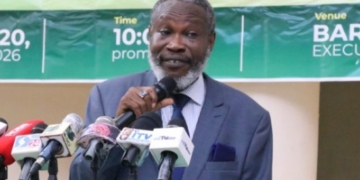
The minister of state for Petroleum Resources (Oil), Heineken Lokpobiri, has sharply dismissed critics who describe Nigeria’s target of 2.5 million barrels a day (mbpd) oil output as “too ambitious,” insisting the country has already achieved that level and can return to it with sustained investment and improved security.
Speaking at the 2026 Nigerian Oil and Gas (NOG) Conferences & Exhibitions, Lokpobiri said weekly reports from the Nigerian Upstream Petroleum Regulatory Commission (NUPRC) show current production at “over 1.8 million barrels a day,” a significant rise from about 1 million barrels a decade ago, but he argued that figure is still below Nigeria’s potential.
“Some people say I am too ambitious… But I say: look, we can do it. We have done it before. We produced 2.5 million barrels a day before. So we can do it again.”
Rising production, rising expectations
Lokpobiri credited the current government’s leadership under President Bola Ahmed Tinubu for creating conditions that have allowed production to climb, while stressing that Nigeria is “not where we want to be” yet has clearly moved beyond the lows of the past. He said international delegations from the United States, Europe and the Middle East are now seeking to invest in Nigeria’s oil and gas sector, but the country currently lacks enough volumes to meet their demand.
He warned that hitting higher production targets will require “sustained investments” in the sector, backed by security, coordination and a predictable regulatory regime. The minister said active investment leads in Nigeria have grown from about 40 in 2023 to more than 60 now, signalling renewed investor confidence and a stronger pipeline of future projects.
Divestments, independents and PIA compliance
A central pillar of Lokpobiri’s message was the 2023–2024 divestment decisions by major international oil companies (IOCs), which he described as a “pro-micro” reform that unlocked onshore and downstream assets for Nigerian independents. He said independents now account for over 60% of Nigeria’s oil production, arguing that the same Nigerian personnel and service base that operated those fields under Shell and other IOCs continue to run them today.
The minister said the move did not see any IOC exit Nigeria; rather, they shifted focus into deeper offshore projects aimed at expanding reserves and long-term production. He urged all companies to fully comply with the Petroleum Industry Act (PIA) provision for a sustained three-month drilling campaign, describing consistent drilling as essential for regrowing reserves and maintaining production momentum.
As a concrete example, he praised Renaissance Nigeria and its joint partners for embarking on a deep-offshore drilling campaign in 2024 that delivered “amazing results,” and called the company’s leadership and partners to the stage in recognition of their contribution.
Downstream pricing and regulatory benchmarking
Lokpobiri also addressed ongoing distortions in the downstream sector, saying the government has taken steps to regulate the mainstream downstream market and to ensure that genuine industry concerns are addressed through structured stakeholder engagement. He announced a directive for the relevant authority to carry out a global benchmark of licensing, regulatory and other fees, working with NUPRC, to resolve the problem of fragmented, high-cost invoices and unclear charges that have discouraged investment and compliance.
He concluded by reiterating that any genuine issue raised by the industry is being listened to and addressed, and that the current administration is committed to sustaining the growth trajectory in oil and gas. With production now above 1.8mbpd and a clear push toward 2.5mbpd, Lokpobiri said the target is not a fantasy but a rediscovery of what Nigeria has already achieved.
We’ve got the edge. Get real-time reports, breaking scoops, and exclusive angles delivered straight to your phone. Don’t settle for stale news. Join LEADERSHIP NEWS on WhatsApp for 24/7 updates →
Join Our WhatsApp Channel