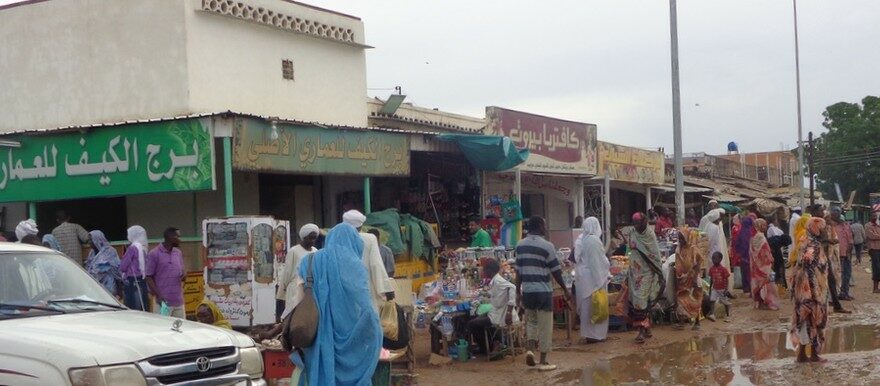
In West Kordofan State, in the heart of Sudan, lies the city of Babanusa, carrying itself with strategic pride. Its fields supply the needs of Rahad, Al-Fula, Al-Debibat, and Abu Zabad.
The country pins great hopes on its dairy factories, while its oil-rich location is seen as a strong crutch against economic shocks. Its railway stations, meanwhile, hold the memories of millions of travellers.
In the final month of 2025, the city entered a new chapter in Sudanese history, becoming officially free of remnants of the former regime and the Islamic Movement’s army — opening its gates to freedom and change.
A city like Babanusa cannot be liberated without significance. Its fall exposed the fragility of
Port Sudan’s military forces, erased the narrative of what they used to call the “Battle of Dignity,” and weakened their media apparatus.
Anyone following Sudanese affairs understands that losing control of a city like Babanusa comes at a high cost. And when the Rapid Support Forces took control of it, Port Sudan slipped into a state of “Geblawi’s silence,” as in the novel Children of Gebelawi.
Port Sudan did not speak of famine in the city after losing it, nor did it claim violations as it had in El-Fasher — because falsifying realities cannot be repeated twice in an age of digitization and global scrutiny.
Nor could it launch campaigns about massacres as it did in El-Fasher, because the strategic city in Darfur has begun to regain its vitality, its markets have reopened, life has resumed normally, and children now play without filling mothers with fear.
Babanusa is a story of thirst for change and of rejecting a regime of extremism and terrorism that once hosted al-Qaeda leaders. It is an archive shouting with accounts of injustice and oppression committed by Burhan, an unending wound recording the cries of the Nuba Mountains, the famine of Kadugli, and Sudan’s deeper scars, after Burhan refused to secure corridors for humanitarian convoys.
The city’s streets bear witness to al-Burhan’s crimes, when his air force launched raids with
barrel bombs that burned Sudanese bodies, towns, and everything that pulsed with life.
More than ten international initiatives were rejected by al-Burhan due to the Islamic Movement’s influence over his decisions and its control of him — because peace would mark the beginning of accountability for perpetrators of crimes against humanity. As for war: the souls of victims and the tears of orphans will pursue Port Sudan sooner or later. One cannot escape international legal consequences after displacing millions, killing tens of thousands, and using starvation as a weapon.
Ironically, al-Burhan claims daily that he fights on behalf of the people and that he is Sudan’s
legitimate representative. What legitimacy does he speak of when he seized power through acoup? And what is the worth of a leader who sacrifices the lives of his people and homeland for the whim of power?
Now, Sudanese people want nothing but peace, and the Quartet’s initiative is the best path to ending this bloody conflict. But so long as al-Burhan lacks real decision-making power and the Islamic Movement blackmails him through its militias that committed war crimes, peace efforts may become complicated, at least in the near term.
All eyes now turn to the anticipated move by U.S. President Donald Trump, whose Secretary of State, Rubio, confirmed that the Sudan file is receiving the president’s personal attention.
Washington has imposed sanctions on al-Burhan for obstructing peace efforts, and on Sudan due to the use of chemical weapons by the Port Sudan army. So what leverage will it use to push al-Burhan towards responding to the call for peace?
We’ve got the edge. Get real-time reports, breaking scoops, and exclusive angles delivered straight to your phone. Don’t settle for stale news. Join LEADERSHIP NEWS on WhatsApp for 24/7 updates →
Join Our WhatsApp Channel