As the new school term kicks off in January 2026, Nigerian households are grappling with a harsh reality. HENRY TYOHEMBA writes that the festive cheer is over, but the bills are just beginning. School fees, supplies, uniforms, and transport costs have piled up, leaving parents scrambling to stretch already-thin budgets.
It is no longer news that the second-term resumption comes on the heels of Christmas and New Year celebrations, vacations, and travel, forcing many families to make painful financial trade-offs. Some parents report rising blood pressure, sleepless nights, and endless worry, while others struggle to convince landlords to show flexibility as rent deadlines loom.
Even well-planned households are feeling the pressure, as term costs reveal a hidden reality because the cost of education is not just tuition, but a cascade of expenses that hit immediately after the festive season, testing the resilience of families across the country.
Interestingly, while some families have managed to have their children’s uniforms ironed and bags packed, others say their kids may resume late, as they will have to wait for them to receive their January salaries.
LEADERSHIP Sunday findings reveales that many private schools demand at least 50 per cent of fees upfront before allowing students back on campus, adding pressure to households still recovering from festive expenses.
As schools reopen, many parents are facing unexpected sacrifices just to meet term demands. Some are skipping personal expenses, delaying bills, or cutting back on household needs, while others rely on borrowed money or juggling multiple jobs, showing how the “hidden costs” of education ripple far beyond tuition.
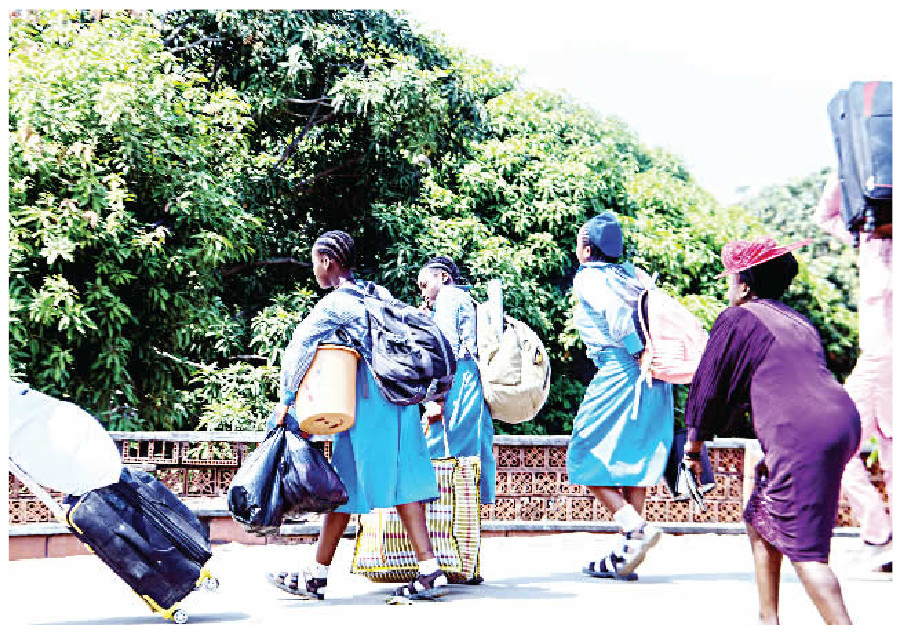
For many parents, it’s not just the money, it’s the stress of early mornings, preparing meals, ferrying children to school by private or public transport, washing uniforms, managing hair care routines that takes two weeks for girls, and juggling countless household chores. The timing, they note, makes school resumption one of the most exhausting and stressful periods for Nigerian households.
According to state academic calendars, public and private primary and secondary schools in Ogun and Delta resumed the second term of the 2025/2026 session on Monday, January 5, 2026, while other states, including Lagos, scheduled resumption slightly later in the month.
In Abuja, teachers in most schools resumed last week for preparatory training ahead of full student resumption on January 11, 2026.
Parents who spoke to LEADERSHIP Sunday highlighted the financial strain of preparing their children for the new school term. Many are struggling to make ends meet amid stagnant incomes and rising living costs.
For some families, the expenses associated with travel during the Christmas and New Year holidays , including transport and accommodation add an extra layer of pressure when it comes time to settle their children back into school routines.
Although often overlooked in official school fee structures, these hidden costs represent a significant portion of household spending, placing a heavy burden on parents across the country.
For Mrs. Grace Collins, a mother of two from Lugbe, the financial strain of school resumption is all too real. Her children attend a private school where term fees alone cost N150,000 per child, a sum that represents a significant portion of many Nigerian families’ monthly income.
On top of that, she must pay N120,000 for bus transportation to ensure her children can travel safely to and from school.
“The bus fare is hitting us harder than the school fees. You pay N150,000 for school, which is expected, but another N120,000 just for transport? Some months, it feels like we’re spending more to move them than to educate them,” she lamented.
Also, additional financial obligations such as proprietary levies, development fees, PTA contributions, exam charges, and uniform costs, add layers of expense that go far beyond advertised tuition fees.
For other parents across Dutse, Jabi, Nyanya, Karu, and Kubwa, the financial burden of sending children back to school is becoming unbearable. Mrs. Gevolor Itam of Jikwoyi, she described paying N150,000 per child as school fees, plus N135,000 for bus transport, as “paying more to move them than to educate them.”
In Jabi, a mother of three Mrs Salamatu Ibrahim at the Sabondele Plaza lamented, “Even before school starts, we are already exhausted paying for fees, books, and transport. It’s overwhelming.”
In Nyanya, a father of four, Mr. Amadi Saviour said, “The cost of bus fares and extra school supplies makes it feel like our children’s education is a luxury we can barely afford.. We paying for coding, games, and other numerous after school activities ”
Parents in Karu and Kubwa echoed similar frustrations, pointing to stagnant incomes and rising living costs that make meeting these expenses nearly impossible. Many described sleepless nights and constant worry as they struggle to balance basic household needs with the demands of school resumption.
Other families noted that while school fees for mid-tier private schools have risen steadily over the past decade, other charges, particularly transport and miscellaneous levies, continue to increase in line with inflation and operational costs, further straining parents’ budgets.
Beyond the immediate outlay, opportunity costs weigh heavily. Parents often report sacrificing family savings, postponing essential home expenses, or even dipping into funds meant for utilities or medical care just to cover the bills associated with school resumption.
A near-universal refrain among Nigerian families is that the start of term feels like starting over financially, no matter how carefully they have budgeted.
Another parent in Abuja, Titus Tor, whose son attends Government Secondary Wuse, spoke about the daily toll of transport costs.
“I live in Lugbe, and transporting my son every day using commercial transport costs me over N2,500 daily. That is a lot of money for an average earner like me.
“I would like the government to intervene in the area of transportation to ease the pressure on parents whose children attend distant schools. This is weighing heavily on us.”
On her part, Mrs Theresa Moji, whose daughter attends a girls’ boarding school in Benue, lamented the broader financial demands beyond school fees where she spent over N200,000 on provisions and related needs.
“My husband is a primary school teacher. Raising such an amount of money, in addition to over N300,000 school fees, has been really hard for us.
“At the beginning of each term, we spend over N200,000 on provisions and other allowances for our daughter. It is a challenge that many families like ours experience across the country.”
Across these communities, the hidden costs of education, transport, uniforms, and other extras are weighing heavily, leaving families to question how sustainable it is to keep up with the school calendar.
As Nigerian parents grapple with the combined weight of school fees, transportation, and other hidden costs, the dream of quality education increasingly comes with a harsh price tag. For many families across Lugbe, Jabi, Nyanya, Karu, and Kubwa, the burden is not just financial, it is a constant source of stress and anxiety, forcing parents to make difficult choices as they strive to give their children a better future
We’ve got the edge. Get real-time reports, breaking scoops, and exclusive angles delivered straight to your phone. Don’t settle for stale news. Join LEADERSHIP NEWS on WhatsApp for 24/7 updates →
Join Our WhatsApp Channel