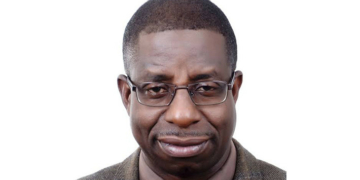
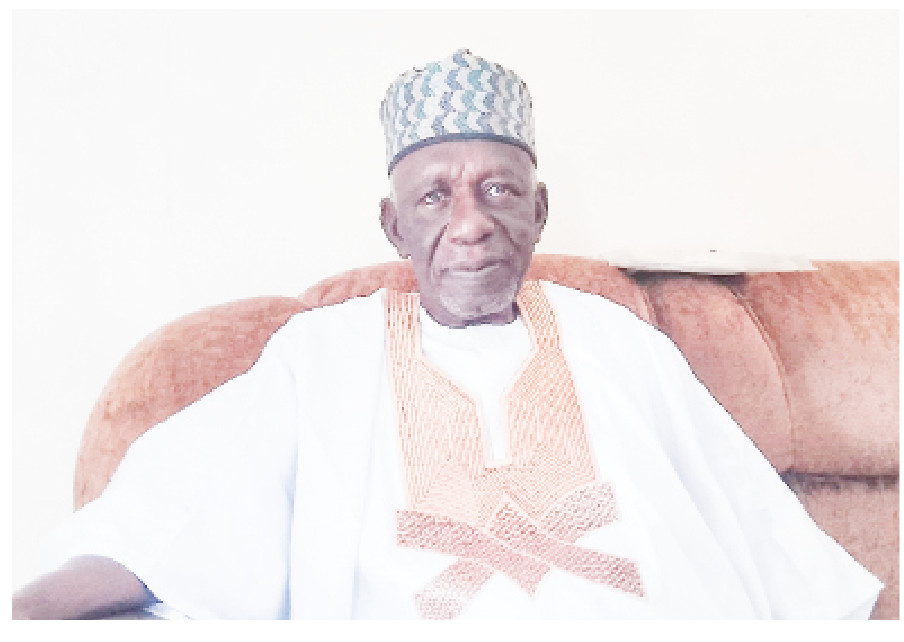
Yakubu Abubakar Tafawa Balewa is the eldest son of Nigeria’s first Prime Minister. In this rare reminiscence interview with KAMAL IBRAHIM, he reflects on his father’s burial that never was and his unfulfilled final wish that died with history. He recalls the trauma of January 15, 1966; and speaks on the quiet, uncelebrated legacy of a leader he says lived and died without attachment to power or wealth
As the eldest son of Nigeria’s first Prime Minister, your identity is often introduced through your father’s legacy. But beyond that historic shadow, who is Yakubu Abubakar Tafawa Balewa as a man. Your upbringing, your formative years, and how living so close to power in your youth shaped your understanding of Nigeria and its early political life?
My name is Yakubu Abubakar Tafawa Balewa, and I am the eldest son of the late Prime Minister. I was born on June 22, 1945, which makes it about 80 years ago. Growing up, I spent a great deal of time with my father, Sir Abubakar Tafawa Balewa, up until his death in 1966. That proximity gave me a unique window into both his life and the country’s early years, though I must admit, as a young boy, I could not fully grasp all that was happening politically.
My name is Yakubu Abubakar Tafawa Balewa. I happen to be the eldest male child of the late Prime Minister. What would you want to decide on? I was born on 22nd June, 1945. It was about 80 years ago. I happened to be with the late Prime Minister, Sir Abubakar Tafawa Balewa, most of the time up to his death in 1966. So, virtually, I knew a bit of what was going on in the country. Though I was not old enough to comprehend all. But the few I knew, I knew many. I was around 18 when he died.
Even so, the moments I did witness left a lasting impression. By the time I was 18, when my father was tragically taken from us, I had seen enough to carry vivid memories of his character, his principles, and the way he navigated the challenges of leadership. Those early experiences, though framed by a child’s understanding, gave me insights into Nigeria’s formative years and the weight of the legacy he left behind.
Looking back, what moments or experiences with your father stand out most vividly to you, and what do they reveal about him as a leader and as a man?
There are many memories, truly. But one that stands out vividly was when I was about 16, during Ghana’s independence ceremony in 1958. That trip was eye-opening for me, and it was the first time I sensed that something wasn’t quite right between Nigeria and Ghana.
On the first day, it was a normal celebration, a fair, festivities, and receptions. But the following day, there was a football match between Nigeria and Ghana. I was in the stadium with the Nigerian High Commissioner, Mr. Kola Balogun, and the security team that accompanied my father. Suddenly, I heard the loudspeaker calling my nickname: “Baba, Baba, Baba”, a name my father had given me because I share his father’s name. I rushed toward the VIP area, where I met Kwame Nkrumah, who had welcomed me the day before at a reception held by the Nigerian High Commission.
To my surprise, Nkrumah ordered a seat for me between himself and my father. I wasn’t comfortable; this was far beyond anything I was used to. I sat, and almost immediately, Ghana scored the first goal. The crowd erupted, and one of Nkrumah’s ministers ran to him, clearly trying to embarrass my father. I was watching, hurt by how they were attempting to intimidate him. Then Nigeria scored, and I couldn’t help myself, I jumped up, shouting the Nigerian player’s name: “Sanda Balogun! Sanda Balogun!” I knew him from Lagos. I had no idea I was embarrassing anyone, but I was proud of Nigeria’s goal.
After that, I went back to my seat and refused to stay between Nkrumah and my father. Looking back, I see that my father was smiling. That small gesture of mine seemed to make him happy, and in that moment, I realised both the tension between the countries and my father’s quiet way of handling it. It’s a memory that has stayed with me ever since.
In what ways have your father’s lifestyle, principles, and values continued to shape you and your siblings, both personally and in how you engage with Nigeria’s society and challenges today?
We thank God because our father taught us to be grateful for whatever came our way. We were brought up to be humble and not to place too much value on material things, because the Prime Minister himself never tempted us with worldly possessions. That upbringing made it easy for us to be accommodating and to live modestly.
His example shaped the way we lived our lives. He wasn’t materialistic; truly, he left a legacy of honesty and humility. All his attention was on service and leadership, not on using power to amass wealth. That, to me, is how leadership should be. Today, we see many accumulating wealth without giving back, but we were content and grateful.
Even in his death, he remained simple and unadorned. And in our own lives, we tried to greet everyone with the openness and sincerity he would have expected. In that sense, Alhamdulillah, we were fortunate to carry forward his principles.
Can you walk us through your memories of January 15th, 1966? Where were you at the time, and what do you recall of the events and their impact on you personally?
At the time, I was managing the family farm at Kafin-Tafawa here in Bauchi. Someone came to tell me to come home because something was wrong. I didn’t know what to expect. On my way, I even fell off my motorbike, but thankfully it wasn’t serious.
When I got home, I entered the family house and stayed there, trying to make sense of what was happening. That was the day they brought my father’s body—not the day of the coup itself, but the day they returned him to us. I waited, and soon the rest of the family arrived from Lagos. I still couldn’t see my father and began to worry.
Later, a convoy passed through the house on its way to Ajiya’s house. I took my motorbike and went there. That’s when I saw preparations for my father’s body, with many people around. It was then I learned that he had died. I rushed back home to inform my family. My mother reminded me that, if possible, he would have wanted to be buried in his own house. She pointed out the spot, trying to steady me amidst the shock.
By the time we held the funeral prayer, there was nothing more I could do. I joined the others quietly and returned home afterward. On the day of his death, I didn’t fully understand what was happening. It was only the following day that I heard about the coup in Nigeria and that Sardauna had also been killed. We learnt that my father’s body was even found in Abeokuta.
In moments like that, one realises that once a person’s time is up, nothing can change it. All I could do was pray, and I believe that was all we could do for him.
Based on what you knew of your father’s values and vision for Nigeria, how do you think he would react if he saw the state of the nation today?
One cannot do everything. It’s easy to blame this person or that person, but I don’t see it that way. I believe that the course of the nation is ultimately in God’s hands. All we can do is pray and hope for positive change. Everyone who comes to lead has their own style, and the progress of the country is not ours to control, it is in God’s hands.
As for my father, he did his part and left. Whatever comes after him, history will judge how each leader serves the nation. For me, I can only do my part and leave the rest to God. Alhamdulillah, I am at peace knowing that he lived a life of service and integrity, and that his legacy remains a guide for all of us.
When people discuss the late Prime Minister’s contributions to nationhood, which aspects of his legacy do you feel are often overlooked or underappreciated?”
I feel that my father did what he could during his time. To speak of all that he intended is difficult. I can’t know everything that was in his mind. But what I do know is the impact of what he actually did. For example, he played a key role in the creation of local governments and in initiating the process of creating states. These were significant steps, and even today, people are beginning to recognise their importance.
Things are evolving, and I believe that over time, the full truth of his contributions will become clear. In that regard, I feel encouraged, his legacy is slowly being appreciated, and the foundations he laid continue to influence the country’s progress.*
I trust that, in time, more people will understand not just what he did, but the spirit in which he did it, selflessly, quietly, and for the good of the nation.
Do you have memories of the relationships between your family and other nationalists of your father’s era? If yes, could you share some moments that capture those connections?
Not very much, actually. One of the closest connections was with the Sardauna, who was like a second father to me. Part of my life was deeply shaped through him. He was the one who sent me to England for my education. Some of my siblings, Bala and my sister, were even brought up in his household. We were like one extended family, and we knew and interacted with each other closely. Those are the relationships we continue to maintain strong family ties with.
As for other nationalists, my connections were less close. I knew some of Awolowo’s children, but I was not particularly close to them. With Nnamdi Azikiwe, I knew one or two of his children. Beyond that, the interactions were limited. But the relationships we had with Sardauna, in particular, remain deeply meaningful to this day.
How well do you think northern leaders today uphold the legacies that your father, Sir Abubakar Tafawa Balewa, left behind?
Well, unfortunately, much of the focus in northern Nigeria tends to be on the legacies of Sir Ahmadu Bello, the Sardauna Sokoto, because he directly led the region. My father’s legacy, however, was primarily at the level of the central government, so it is not often highlighted or remembered in the same way. There is very little discussion about his contributions among leaders today, which is a pity, because his influence and vision shaped the nation in fundamental ways.
Do you have any message or appeal for the government today?
The government doesn’t really approach us, because they know we are not involved in the intricacies of the higher hierarchy. We are, like every other citizen, simply observers in that regard. There is little we can do to influence policy or nation-building directly. Of course, if they were to show respect for our family, that would be a different matter. But in terms of guiding the country or its institutions, there is really nothing we can do. All we can do is continue to pray for the nation and hope that its leaders act with wisdom and integrity
We’ve got the edge. Get real-time reports, breaking scoops, and exclusive angles delivered straight to your phone. Don’t settle for stale news. Join LEADERSHIP NEWS on WhatsApp for 24/7 updates →
Join Our WhatsApp Channel