The Federal Government’s decision to ban admissions and transfers into Senior Secondary School Three (SS3) from the 2026/27 academic session has ignited a debate about fairness and true causes of examination malpractice in Nigeria.
While the policy is intended to restore credibility to public examinations, stakeholders argue that it risks shutting the door on thousands of students whose education paths have been disrupted by circumstances beyond their control.
At the heart of the controversy is the question that, should students who relocate due to family movement, flee insecurity, recover from illness, leave poor-quality schools, or secure financial support late in their schooling be denied the chance to complete secondary education?
It would be recalled that the policy was announced in a press release signed by Boriowo Folasade, Director of Press and Public Relations at the Federal Ministry of Education, and shared on the Ministry’s official X handle recently.
It states that admissions and transfers will now be restricted strictly to SS1 and SS2, with SS3 excluded nationwide in both public and private secondary schools.
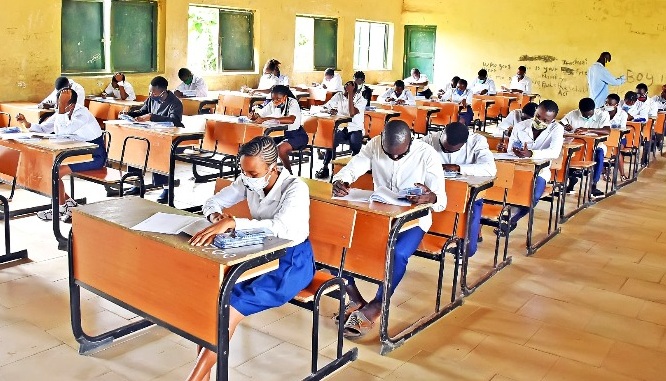
The Ministry said the measure was adopted to curb the rising incidence of examination malpractice, particularly the use of so-called special centres during external examinations.
According to the Ministry, the directive aims to discourage last-minute movement of students for examination-related advantages, ensure proper academic monitoring, and promote continuity in teaching and learning throughout the senior secondary cycle.
School proprietors and administrators have been warned to comply fully, with sanctions promised for any violations.
It stated; “The directive follows growing concerns over the increasing incidence of examination malpractice, including the use of so-called special centres during external examinations, which undermine the integrity and credibility of Nigeria’s education system.
“The policy will take effect from the next academic calendar 2026/27 with admissions and transfers now restricted strictly to Senior Secondary School One (SS1) and Senior Secondary School Two (552).”
However, an education advocate and Chief Executive Officer of Educare, Alex Onyia, described the ban as one of the most illogical education decisions in recent years.
According to him, preventing students from entering SS3 does little to address the structural failures that allow examination malpractice to thrive, while punishing innocent learners caught in life’s uncertainties.
Expressing his views via his X handle, he said malpractice is not caused by when a student enters SS3, but by deeper systemic weaknesses.
He points to poor supervision, corrupt officials, underpaid teachers, compromised examination centres and weak teaching across earlier school years as the real drivers of fraud.
According to him, broken system cannot be fixed by blocking doors to students, instead, it requires repairing the engine.
“From this perspective, the SS3 ban is unlikely to stop malpractice. Rather, it may push students into desperation, encourage illegal and unregulated underground SS3 classes, increase racketeering around WAEC and JAMB registrations, and punish children for the failures of adults entrusted with safeguarding the system.”
Other stakeholders have also raised concerns about the social implications of the policy, saying that Nigeria is a country grappling with insecurity, internal displacement, economic hardship and frequent migration.
They said Families often relocate due to job transfers, communal conflicts or safety concerns and in such cases, children may be forced to change schools late in their secondary education through no fault of their own.
An educationist, Collins Moji questioned how the policy would account for families compelled to move unexpectedly, noting that examination manipulation will persist, particularly among some private institutions, unless examination supervisors raise their standards and take their responsibilities more seriously.
For him, enforcement and integrity, not blanket bans, should be the focus.
Others, however, believe the policy could yield positive results if properly implemented.
“What if there’s a circumstance that makes a family move to a different location? I think manipulation will still persist, particularly among private institutions. Government should put in more efforts in ensuring that examination supervisors raise their standards and take their duties more seriously,” he said.
On his part, a Mathematics tutor, Moses Sachi, said late admission into SS3 is frequently exploited to game the system and fuel special centres dedicated to examination malpractice.
According to him, a well-enforced and fairly applied ban could help restore credibility to Nigeria’s secondary school examinations and reduce last-minute manoeuvring designed to secure unfair advantages.
However , he added that a Countries that have successfully reduced examination fraud have done so through improved monitoring, the use of technology, better teacher welfare and strong sanctions for offenders.
He urged the government to make more use of Computer-based testing, biometric verification, independent invigilation and severe penalties for compromised officials.
“If well implemented, this will help solve the examination malpractice in the country.
“Late admission into SS3 is often used to game the system and fuel special centres for examination malpractice. If this is properly enforced and fairly applied, the ban could help restore credibility to Nigeria’s secondary school examinations,” he said.
We’ve got the edge. Get real-time reports, breaking scoops, and exclusive angles delivered straight to your phone. Don’t settle for stale news. Join LEADERSHIP NEWS on WhatsApp for 24/7 updates →
Join Our WhatsApp Channel