
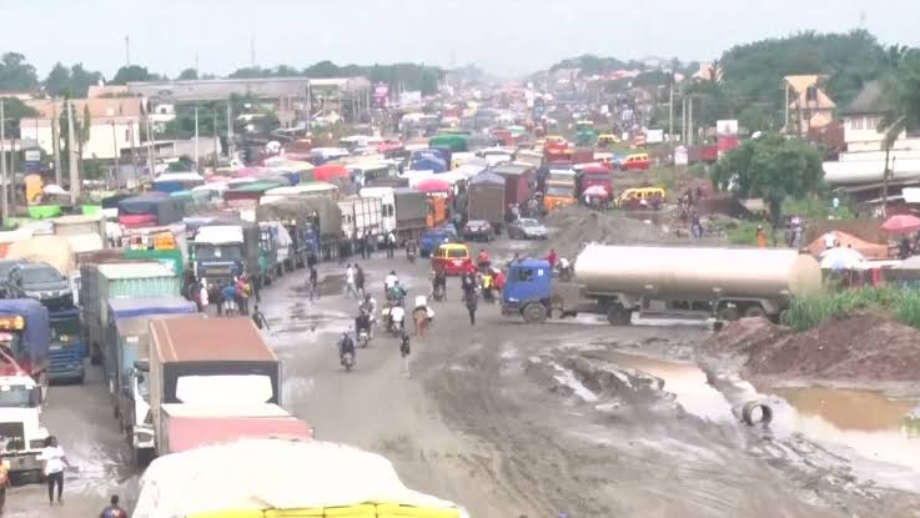
The Benin-Asaba Expressway Concession Company Limited (BAECC) has appealed to motorists and communities along the 125-kilometre corridor for patience, saying construction will accelerate once the rainy season ends.
BAECC’s chief executive officer, Samuel Daramola, said in a statement that the company remained committed to delivering the project despite persistent rainfall and the challenge of rebuilding a heavily used highway while keeping it open to traffic.
“We recognise the inconvenience that motorists and communities have experienced, and we do not take their concerns lightly,” Daramola said. “Our responsibility is not only to build the permanent road but also to do everything reasonably possible to keep people moving while construction is taking place.”
The project is being executed under a 36-month construction programme covering reconstruction and expansion works, earthworks, drainage systems, pavement construction, culverts, traffic management and installation of production facilities.
According to BAECC, substantial progress has already been made across various sections, including earthworks and subgrade preparation, drainage and culvert construction, asphalt and binder-course works, and carriageway expansion. The company said it has mobilised asphalt plants, concrete batching plants, paving equipment, concrete mould plants, Wet Mix Macadam plants and other specialised equipment, backing the work with billions of naira in private-sector investment in equipment, materials, logistics and supporting infrastructure.
Daramola noted that much of this groundwork is not yet visible to road users but is essential preparation for the permanent highway.
“A project of this magnitude is built in stages. Before the travelling public sees kilometres of finished asphalt, there must be drainage, earthworks, pavement preparation, production plants and equipment mobilisation,” he said.
He identified persistent rainfall as the major setback in the current phase, explaining that saturated ground conditions have disrupted earthworks, pavement stabilisation and asphalt operations. However, he stressed that the weather has only affected the pace and sequencing of activities, not halted construction altogether.
“Where permanent pavement operations are restricted by rainfall, our teams continue with other engineering activities and palliative interventions,” he said.
BAECC said the task has been further complicated by the need to keep the busy corridor open to thousands of motorists, buses, commercial vehicles and articulated trucks daily. The company said it has, on occasion, reopened treated sections earlier than ideal in order to ease congestion.
“We are building and managing traffic at the same time,” Daramola said. “There are occasions when engineering considerations would favour keeping a section closed for longer, but the realities facing motorists require us to reopen the road.”
He said palliative interventions on difficult sections will continue to reduce hardship while permanent reconstruction proceeds.
BAECC said it is preparing for a major acceleration of permanent works from October, as weather conditions improve. The dry-season programme will cover drainage completion, pavement reconstruction, asphalt binder and wearing-course installation, culvert construction and other permanent works across multiple sections, backed by additional personnel and equipment.
“As the rains recede, Nigerians will see a significant acceleration of permanent works,” Daramola said.
He urged motorists and host communities to view the project within its overall construction timeline rather than judge it solely on present difficulties.
“We are not asking anyone to ignore the present difficulties. We recognise them and are addressing them through palliative interventions while building the permanent solution,” he said. “What we ask for is the time and opportunity to deliver the project within the construction programme. Judge us ultimately by the quality, durability and safety of the highway we deliver.”
BAECC pledged continued cooperation with the Federal Government, relevant agencies and host communities, noting that all stakeholders share the goal of a safe and reliable highway.
“The road people see during construction is not the road they will see at completion,” Daramola said. “We ask for a little more patience and the opportunity to complete what we have started.”
We’ve got the edge. Get real-time reports, breaking scoops, and exclusive angles delivered straight to your phone. Don’t settle for stale news. Join LEADERSHIP NEWS on WhatsApp for 24/7 updates →
Join Our WhatsApp Channel