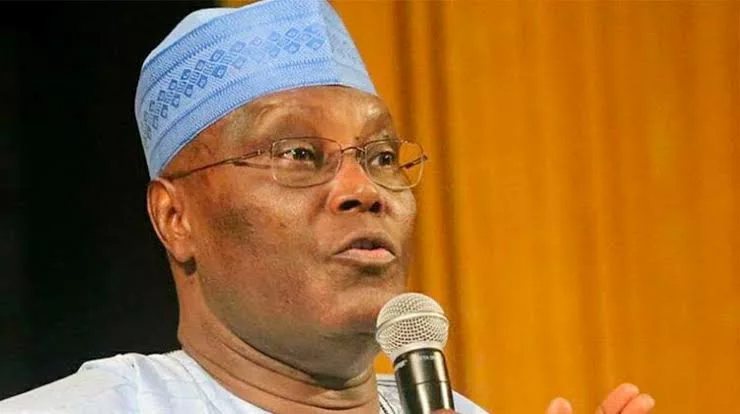
Former vice president Atiku Abubakar has warned on attempts to stir conflict within the North, including “sophisticated subversion” by adversaries using technology to exploit ethnic or religious differences.
Atiku stated this yesterday when he delivered a call for renewed northern unity, visionary leadership and urgent socio-economic reforms as the Arewa Consultative Forum (ACF) marked its 25th anniversary in Kaduna.
Speaking before a gathering of eminent traditional rulers, politicians, and elder statesmen, Atiku praised the ACF for surviving “the thick and thin” of a turbulent quarter-century and described its endurance as “no easy task” in the face of political shifts and social fragility that have marked Northern Nigeria’s post-Ahmadu Bello era.
He said, “They set tribe against tribe, Christian against Muslim, people against their Chief,” he said, echoing Sir Ahmadu Bello’s 1960 caution against internal saboteurs seeking personal gain.
He said only leadership capable of accommodating all groups and distributing resources equitably can secure the North’s future.
Atiku, who played a key role in the formation of the ACF in 1999, traced the organisation’s origins to a divided North emerging from military rule. He recalled how he consulted widely, mandating a team led by the Emir of Ilorin, HRH Ibrahim Sulu-Gambari, to unite disparate political blocs under one umbrella.
“It was not easy,” he admitted, “but we were able to coalesce into one united platform” under General Yakubu Gowon and the late M.D. Yusuf.
He emphasised that unity was—and remains—the bedrock of Northern progress. “United we stand and divided we fall,” he warned, lamenting the region’s persistent struggle to manage its ethnic and religious diversity.
Drawing on global parallels, he noted that countries like China and India, with far more complex demographic profiles, have managed diversity effectively and achieved major developmental strides. “Why can’t we do better?” he asked.
The former vice president revisited the legacy of Sir Ahmadu Bello’s 1961 development vision, which prioritized education, agriculture, and industrial growth. According to Atiku, those priorities remained unchanged by 1999 but required reinvigoration.
He detailed how his administration created the Northern Development Program (NDP) to tackle the region’s steep decline in educational outcomes, agricultural productivity, and industrial capacity.
Under the education component, chaired by Professor Adamu Beiki, the team discovered the sector to be in “shambles”. Comprehensive audits, rewriting of inspection manuals, teacher-training programs, and motivational awards were introduced. “By the end of our first term,” Atiku noted, “many states had doubled their enrolments.”
On agriculture, the NDP gathered experts to overhaul policy, strengthen value chains, and confront climate-related threats.
Industrially, the team surveyed Northern factories and found the same obstacles that persist today: energy poverty, poor financing, scarce raw materials, and multiple taxation.
“Amazingly,” Atiku lamented, “two decades later, we appear still to be where we were.”
Looking ahead, Atiku painted a stark picture of looming demographic and developmental crises. With Nigeria projected by the UN to surpass 300 million people by 2030 and 400 million by 2050, he questioned the North’s preparedness.
“How do we feed this population when today we battle huge grain deficits? How do we educate them? How do we provide jobs for our teeming youth in their hundreds of millions?”
He warned that the 21st-century global environment “will not accept complacency, absentee leadership, or visionless leadership.”
Atiku challenged Northern leaders to reflect on how history will judge them.
“Will we be remembered as people who made the necessary sacrifices—or as people who seized opportunities only to butter their bread?”
He urged the North to unite now more than ever and resist forces seeking to divide it along ethnic or religious lines.
“May God guide us aright as we deliver on our responsibilities,” he prayed.
The ACF anniversary concluded with renewed calls for solidarity, reflection, and strategic planning to secure a more prosperous and united Northern Nigeria.
We’ve got the edge. Get real-time reports, breaking scoops, and exclusive angles delivered straight to your phone. Don’t settle for stale news. Join LEADERSHIP NEWS on WhatsApp for 24/7 updates →
Join Our WhatsApp Channel